Supreme Court cancels Sonam Raghuvanshi's bail in honeymoon murder case
The Supreme Court has ordered Sonam Raghuvanshi to surrender after overturning her bail in a case involving the alleged murder of her husband in Meghalaya.
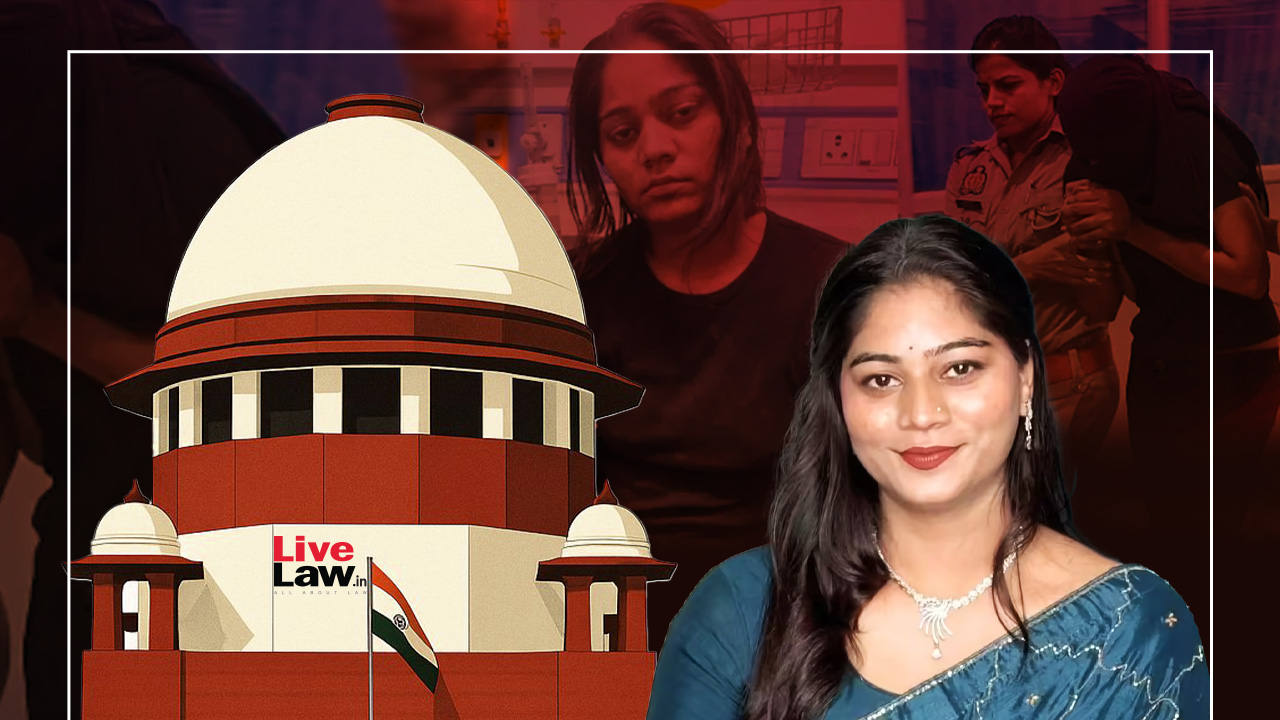
Supreme Court cancels Sonam Raghuvanshi's bail in honeymoon murder case
The Supreme Court on Thursday set aside the bail granted to Sonam Raghuvanshi, the prime accused in the alleged murder of her husband, Raja Raghuvanshi. The court ordered Raghuvanshi to surrender before the police within three weeks.
The ruling follows an appeal by the State of Meghalaya, which challenged the relief previously extended to the accused by a trial court and the High Court. The prosecution described the incident as a cold-blooded, pre-planned murder of the Indore-based businessman during a honeymoon trip to Meghalaya in May 2025.
According to investigators, Sonam conspired with three hired accomplices to assault her husband. His body was allegedly thrown into a deep gorge near Sohra (Cherrapunji) and was recovered ten days after he was reported missing. Prosecution records state that Sonam remained untraceable following the death and was eventually arrested on June 9, 2025.
The legal controversy centered on the communication of the grounds of arrest. Sonam had argued that she was not properly informed of the grounds, citing a discrepancy in the arrest memo. Specifically, the document referred to Section 403(1) of the Bharatiya Nyaya Sanhita instead of Section 103(1), which pertains to murder. Relying on the Supreme Court's decision in Mihir Rajesh Shah, Sonam's legal team contended this error entitled her to bail.
Solicitor General Tushar Mehta, representing the State of Meghalaya, argued that this was a minor typographical error that did not prejudice the accused. He maintained that such a technical discrepancy should not outweigh the gravity of the offense or the potential risk of influencing key witnesses.
A Bench of Justice MM Sundresh and Justice PB Varale rejected the reasoning used by the lower courts. The Bench distinguished between a complete failure to serve grounds of arrest and the provision of inadequate particulars.
"It is not as if the respondent was not served with the grounds of arrest. There is difference between non-service and giving adequate reasons thereunder. While the first category might vitiate the arrest, in the second one has to see the prejudice,"
Supreme Court Bench, via LiveLaw
The Court noted that Sonam had acknowledged receipt of the grounds of arrest and relevant documents before the Magistrate. The Magistrate had recorded her satisfaction regarding compliance, leading the Bench to conclude that both lower courts committed an error by granting bail based on previous judgments.
The Court further clarified that even if an arrest is found defective for non-compliance with the requirement of serving grounds, the investigating agency is not barred from making a fresh arrest for investigation purposes.
Regarding the decision to cancel bail, the Bench highlighted that previous orders rejecting Sonam's bail on merits had already attained finality. While acknowledging the principle that bail is the rule and jail is the exception
, the Court stated that continued enlargement at this stage might hinder the ongoing trial.
While Sonam Raghuvanshi’s legal team maintained that the case relies entirely on circumstantial evidence and that she was falsely implicated, the apex court quashed the bail to protect the integrity of the trial.
The Court has granted Sonam three weeks to surrender. However, the Bench observed that if the trial is not concluded within six months, she will be at liberty to move a fresh bail application.