Humans have a measurable bias toward walking anticlockwise, new research confirms—but the reason remains stubbornly unclear after years of experiments.
Scientists at the University of Navarra and the University of Tokyo have documented the phenomenon across cultures, from Spanish supermarkets to Japanese museums, and even in virtual reality simulations. The bias persists regardless of handedness, gender, or cultural background, though it is more pronounced in children. While the exact mechanism remains unknown, the discovery could reshape how we design public spaces, from evacuation routes to crowd flow in stadiums.
Why Do Humans Walk Anticlockwise? The Science Behind the Bias
Researchers first noticed the pattern during pandemic-era experiments designed to study safe distancing in crowded spaces. When analyzing footage from a circular arena in Spain, they observed that pedestrians—regardless of handedness or turning preference—consistently drifted in an anticlockwise (counterclockwise) direction. The effect held true even when accounting for right-handedness, right-footedness, and right-eye dominance, ruling out simple cultural or anatomical explanations.
Dr. Iñaki Echeverría Huarte, lead researcher at the University of Navarra, described the phenomenon as “surprisingly consistent.” “If you simply ask someone to start walking, whether they are wandering around a museum, a supermarket, or even an empty room, it is surprisingly likely that they will drift counterclockwise,” he told The Guardian. The team later replicated the findings in Japan, where Dr. Claudio Feliciani at the University of Tokyo observed the same bias among pedestrians in urban environments.
The bias appears to be deeply rooted in human biomechanics. “None of us is perfectly symmetrical,” Echeverría Huarte noted. “The way each person’s brain gathers sensory information and coordinates it with the muscles seems to tip them gently to one side.” Yet despite extensive testing—including experiments where participants pretended to have a broken leg—the exact cause remains elusive. “We have tested several ideas and the bias stubbornly keeps showing up,” he admitted. “The exact mechanism is still an open question.”
Beyond Humans: The Left-Turn Bias in Other Species
The anticlockwise bias isn’t unique to humans. Researchers at the University of Bristol have documented a similar left-turn preference in rock ants when exploring unknown nests, suggesting an evolutionary or neurological underpinning. While the human bias is more pronounced in crowds—where individual tendencies amplify into a collective rotation—the phenomenon raises intriguing questions about how perception and movement are hardwired into biology.
Echeverría Huarte speculates that understanding the bias could improve crowd simulations, evacuation planning, and even urban design. “It can help us make other discoveries which may be more important than this one,” he said, hinting at broader implications for spatial cognition. Meanwhile, Feliciani’s work in Japan suggests the effect is not tied to any single culture or environment, reinforcing the idea that it may stem from fundamental biological processes.
What Happens Next? The Research Roadmap
The study, published in Nature Communications, marks the first peer-reviewed confirmation of the bias, but the work is far from over. Researchers plan to explore whether the phenomenon extends to other species, how it might influence navigation in virtual environments, and whether it has any clinical relevance—for instance, in patients with neurological disorders affecting movement.
One lingering question is whether the bias could be reversed under certain conditions. Early experiments with virtual reality and simulated leg injuries have not altered the trend, but Echeverría Huarte remains optimistic. “We don’t know why it happens, but we think that by understanding the reasons, we could better understand how we perceive the world,” he said. The next phase of research may involve brain imaging to uncover the neural pathways driving the effect.
Why This Matters: From Supermarkets to Space Stations
The implications of this discovery stretch far beyond academic curiosity. In crowded spaces like airports, stadiums, or disaster evacuation routes, even subtle biases in movement could have significant consequences. If humans naturally drift anticlockwise, architects and urban planners might need to adjust the layout of high-traffic areas to optimize flow. Similarly, in space stations or confined environments like submarines, understanding movement patterns could improve safety protocols.
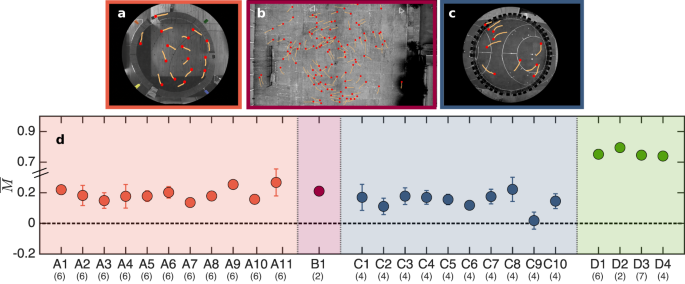
Feliciani’s observation that the bias is more pronounced in children also opens doors for developmental research. Could this be a learned behavior, or is it an innate trait that fades with age? Answering such questions might shed light on how the brain develops spatial awareness—a critical skill for navigation, sports, and even daily tasks like driving.
The Unanswered Questions: What We Still Don’t Know
Despite the clarity of the findings, the study leaves more questions than answers. Why does the bias exist? Is it purely biological, or does culture play a role? Could it be linked to the way the brain processes sensory input? And if so, what does that tell us about human perception more broadly?
Echeverría Huarte’s team has ruled out several hypotheses, including the Coriolis effect (Earth’s rotation influencing movement) and cultural norms. Yet the bias persists, suggesting a deeper explanation. “It’s a problem I’ve had since I was a baby,” Derek Zoolander’s fictional character once quipped about his inability to turn left—a joke that now takes on a new light. If even the most basic of human movements is subtly biased, what else might we be overlooking?
The research also raises ethical questions about how we design spaces for humans. If people naturally move in one direction, should we adapt our environments to accommodate that, or is this just another quirk of biology that we’ll eventually learn to override? For now, the answer remains anticlockwise—and the mystery, unsolved.
This article synthesizes findings from The Guardian and Nature Communications.
Find more reporting in our Technology section.
