
Sleep Quality as a Biomarker for Genetic Vulnerability

The relationship between sleep and neurodegeneration remains one of the most complex areas of aging research. While it is well-established that Alzheimer’s disease can interfere with healthy sleep patterns—partly due to the buildup of tau protein tangles in the brain—it is less clear whether poor sleep acts as an independent risk factor. Recent findings from a study published in The Journal of Prevention of Alzheimer’s Disease offer a clearer picture for a specific demographic: older women.
Researchers at the University of California San Diego examined 69 women participating in the Women Inflammation Tau Study. By utilizing brain scans to measure tau accumulation and standardized tests to evaluate memory, the team identified a distinct pattern. Poor sleep was significantly associated with worse visual memory and greater tau buildup, but this was observed exclusively in women with a higher genetic predisposition to the disease. Women with lower genetic risk did not exhibit these same correlations, suggesting that sleep disturbances may be a specific marker for those already biologically vulnerable to Alzheimer’s.
As reported by UC San Diego Today, this research underscores the potential of using sleep assessments as a low-cost, non-invasive tool for identifying individuals who might benefit from early monitoring.
The Bidirectional Cycle of Cognitive Decline
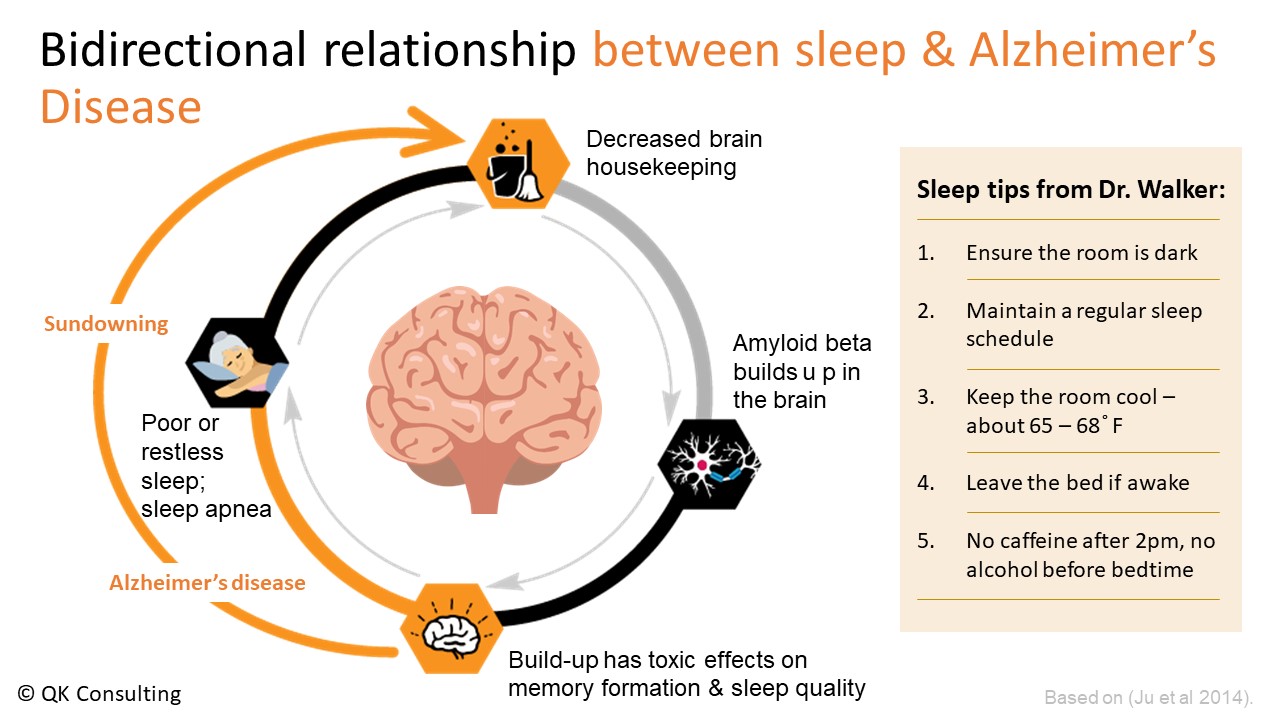
The connection between brain health and rest is increasingly viewed as a feedback loop. According to reporting from News-Medical, evidence suggests that sleep disruption occurs well before the appearance of beta-amyloid plaques or clinical symptoms, potentially starting decades in advance. Phosphorylated tau protein appears to accumulate earliest in the brain regions responsible for regulating sleep-wake cycles, creating a detrimental cycle.
“This bidirectional relationship creates a vicious cycle in which sleep disruption and AD pathogenesis mutually reinforce each other, contributing to progressive cognitive and functional decline.” (Source: News-Medical)
This cycle is particularly concerning for women, who account for nearly two-thirds of all Alzheimer’s cases. While women often report higher levels of sleep dissatisfaction than men, they are frequently diagnosed and treated for these sleep issues at lower rates. The research suggests that because sleep disturbances can contribute to the accumulation of tau proteins, addressing sleep quality may represent a modifiable target for intervention.
Balancing Sleep Duration and Lifestyle Factors
Beyond genetic risk, broader population-level research highlights the importance of sleep duration. A study conducted by researchers at York University, involving an analysis of 69 previous studies, investigated how daily habits—specifically sleep duration, physical activity, and sedentary time—impact dementia risk. The findings emphasize that moderation is essential for long-term brain health.
According to The Jerusalem Post, the data indicates that sleep shorter than seven hours per night is linked to an increase of about 18 percent in the risk of developing dementia. Conversely, sleep duration exceeding eight hours is associated with an even greater risk, reaching approximately 28 percent.
These findings suggest that while chronic sleep deprivation is harmful, excessive sleep may also signal underlying health concerns. Experts caution that these figures represent statistical correlations rather than direct proof of causation; prolonged sleep may be an early symptom of developing neurodegenerative diseases rather than the primary cause of them.
Future Directions in Clinical Intervention

The medical community is increasingly focused on how these findings can be translated into public health strategies. Charlotte Sørensen, a doctoral student at the Karolinska Institutet, notes that sleep is a multifaceted aspect of biology that requires more nuanced study. Her work emphasizes that different features of sleep—such as consistency, timing, and daytime alertness—relate to different biological markers.
Researchers involved in the recent studies suggest that sleep hygiene could eventually be incorporated into standard Alzheimer’s prevention initiatives. As ScienceAlert reports, the focus remains on the potential for intervention.
“Sleep complaints may represent a promising Alzheimer’s disease risk factor,” and “Improving sleep may be a potential intervention target for Alzheimer’s disease mitigation and prevention, particularly for older women.” (Source: ScienceAlert)
While current studies have limitations, such as the reliance on self-reported sleep data and the lack of long-term longitudinal tracking, the association between sleep patterns and tau accumulation provides a compelling avenue for future research. In the coming years, clinicians may move toward more routine screening of sleep quality in aging populations, particularly among those with documented genetic risks, to better manage the transition from healthy aging to cognitive impairment. Patients concerned about changes in their sleep quality or memory should consult their healthcare provider for personalized assessment and guidance.
