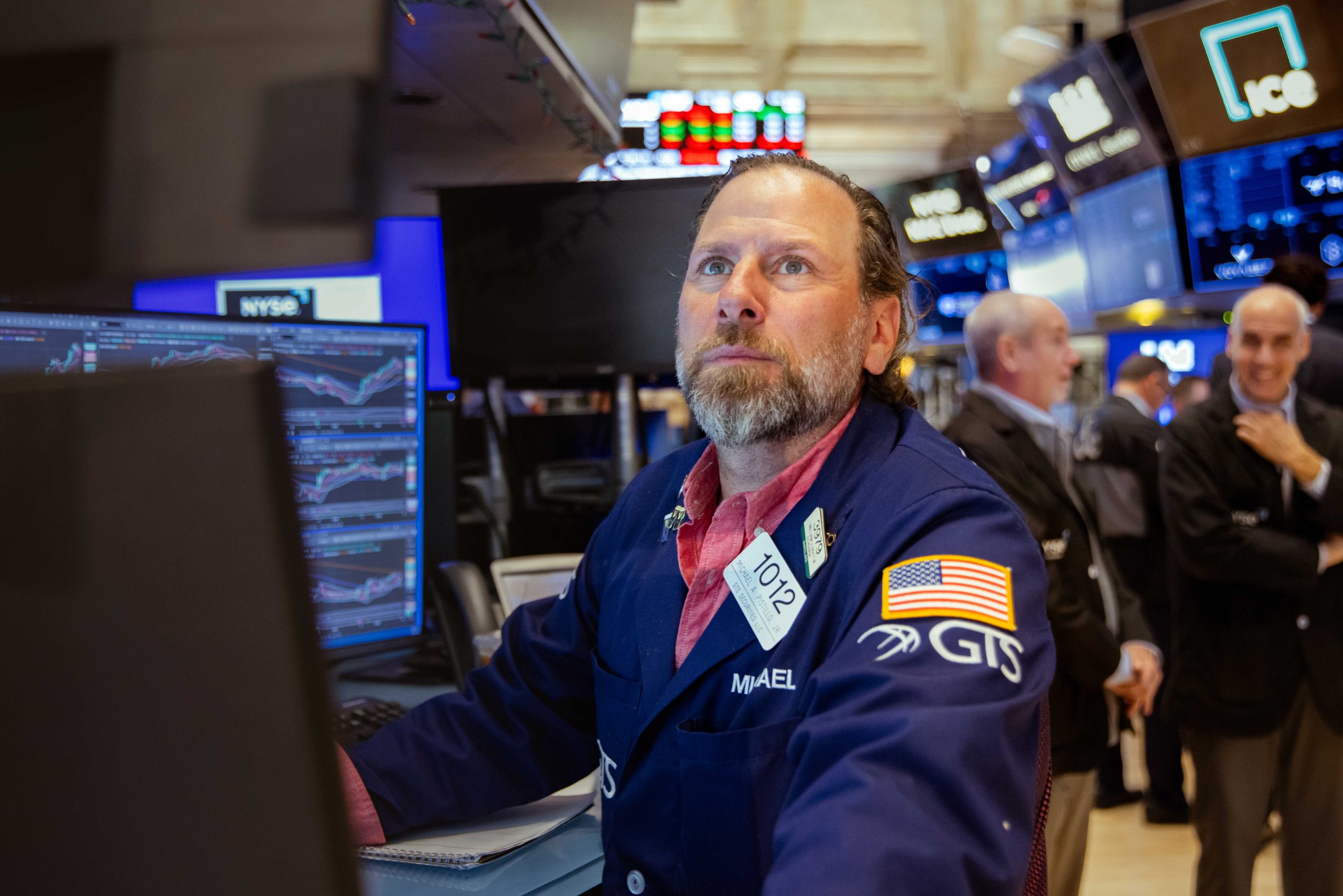
The S&P 500 rose 0.3% to close at 7,405.73 on Monday, June 8, 2026, as investors pivoted back to artificial intelligence-linked chip stocks following a sharp sell-off. Meanwhile, crude oil prices pared gains as the United States and Iran signaled a move toward an immediate ceasefire despite ongoing regional military strikes.
Market Rebound and the AI Valuation Narrative
After a bruising Friday session that saw the Nasdaq Composite drop 4.2%—its worst decline since April 2025—Wall Street found its footing on Monday. The recovery was driven largely by a resurgence in the semiconductor sector, which had been at the center of the recent volatility. Micron Technology surged nearly 10% after losing 13% of its value on Friday, while the iShares Semiconductor ETF gained nearly 6%.
Market sentiment remains sensitive to the rapid ascent of AI-related valuations. According to AP News, the recent sell-off was fueled by concerns that chip stocks had become overextended. The growth of companies like Marvell Technology—which is set to join the S&P 500—has been meteoric; its stock has more than tripled in 2026, a pace that some analysts view as a potential warning sign.
“Blockbuster offerings have marked the peak of excess in past market cycles, so there seems to be an awkward silence around what this could signal for sentiment,” said Callie Cox, chief market strategist at Ritholtz Wealth Management, via CNBC. Cox noted in a follow-up client memo on Monday that the “concentration risk” within the top 10 constituents of the S&P 500 currently accounts for 37% of the index’s total market capitalization, a level not seen since the height of the dot-com era.
Data from FactSet released Monday morning shows that Nvidia, despite Monday’s recovery, remains down 8.2% over the last five trading sessions. Trading volume in the Philadelphia Semiconductor Index (SOX) reached 145 million shares on Monday, significantly higher than the 30-day moving average of 112 million, suggesting high institutional participation in the rebound. Susquehanna Financial Group analyst Christopher Rolland reported to clients that despite the volatility, “backlog demand for H200 AI processors remains unfulfilled,” providing a fundamental floor for the sector even as speculative froth is stripped away.
Middle East Conflict and Energy Market Volatility
Geopolitical tensions remained a primary catalyst for market instability on Monday. Israel conducted what the IDF described as a “large-scale strike on strategic defense systems” in response to Iranian attacks. The escalation briefly pushed the price of Brent crude oil to $98 per barrel overnight.

However, prices regressed as diplomatic efforts gained traction. President Donald Trump stated that Israel and Iran “are looking to do an immediate ceasefire,” and Iran’s Ministry of Foreign Affairs confirmed to CNBC that its military operations against Israel had concluded. By the end of the trading day, West Texas Intermediate settled at $91.30, while Brent crude advanced 1.25% to $94.25 a barrel.
White House Press Secretary Karine Jean-Pierre clarified in an 11:00 a.m. EST briefing that the administration is “actively mediating through regional partners in Oman and Qatar” to ensure the de-escalation holds. Despite this, the U.S. Energy Information Administration (EIA) issued an emergency bulletin at 2:00 p.m. stating that Strategic Petroleum Reserve (SPR) releases remain “on hold” until the situation in the Strait of Hormuz stabilizes. Shipping giant Maersk confirmed in a statement to the London Stock Exchange that vessel insurance premiums for tankers operating in the Persian Gulf rose by 15% on Monday, adding a persistent cost-push factor to global energy logistics that energy analysts at Goldman Sachs suggest could keep a “geopolitical premium” of $5 to $8 per barrel on crude prices through the end of Q3.
Bank of America’s Cautionary Indicators
While the broader market remains resilient, some institutional analysts are flagging structural risks. Strategists at Bank of America, led by Savita Subramanian, noted that a growing number of “bear market signposts” have emerged. By May, seven of the bank’s 10 indicators had flashed red, including extreme price-to-earnings ratios and high dispersion within the tech sector.
The bank’s analysis highlights that while the S&P 500 has returned 8% so far this year, the index is “statistically expensive on 17 of 20 metrics.” The dispersion between the best- and worst-performing tech stocks is now at its widest point since February 2000, leading strategists to warn that such extreme price action may signal rising instability.

Subramanian’s team further highlighted in their Monday note that corporate buyback authorizations for Q2 have slowed by 12% compared to Q1 2026, which they interpret as CFOs becoming “wary of deploying cash at current valuations.” Furthermore, the bank’s proprietary “Sell Side Indicator” (SSI) reached 59.8 on Monday, sitting just 0.2 points away from a “sell” signal for the first time since 2021. Investors are also watching the volatility index (VIX), which, despite Monday’s gains, remains elevated at 22.4, well above its long-term average of 19.0, indicating that institutional hedging remains active.
Economic Outlook and Upcoming Catalysts
Despite the risks, many market participants maintain a focus on underlying U.S. economic fundamentals. William Northey, investment director at U.S. Bank Asset Management, observed that consumer strength and corporate earnings cycles have largely outweighed Middle East-related concerns. He cautioned, however, that a prolonged conflict could create “inflation pressures that are beyond transitory.”
Northey pointed to the May jobs report released last Friday, which showed a 0.3% increase in hourly wages, as evidence of “stickiness” in the labor market that may complicate the Federal Reserve’s path toward interest rate normalization. Federal Reserve Governor Christopher Waller is scheduled to speak at a policy forum in Washington D.C. on Wednesday morning, where markets expect him to clarify if the recent market volatility impacts the FOMC’s trajectory for the July meeting.
Looking ahead, the market is bracing for the public debut of Elon Musk’s SpaceX on Friday. This event is expected to serve as a significant test for the AI valuation narrative, as investors weigh whether the current bull market can extend through the end of the year. Morgan Stanley strategist Michael Wilson remains relatively optimistic, noting that corrections are often “ultimately healthy” if the market is to reach higher targets. However, Wilson’s team also warned in a Monday research note that the IPO market’s “liquidity vacuum” effect—where new, high-profile listings draw capital away from existing mega-cap tech stocks—could put further pressure on the S&P 500’s performance in the final weeks of June. SpaceX has confirmed a target valuation of $210 billion for its initial offering, a figure that remains under intense scrutiny from retail platforms like Robinhood and E*TRADE, which have both reported record-high user interest in pre-IPO allocation requests.
