
US-Venezuela Oil Deal: Tensions Rise Amid Political Turmoil
In a startling declaration, US President Donald Trump announced that Venezuela’s interim government would supply between 30 to 50 million barrels of oil to the United States, asserting that the revenues generated would be under his control as president. The announcement, made through Trump’s Truth Social platform, indicated that Energy Secretary Chris Wright would oversee the immediate execution of this plan. This move comes amidst escalating tensions following the US’s alleged military operations in Venezuela, including the capture of former President Nicolás Maduro.
Legal and Diplomatic Complexities
While Trump’s statement presents a lucrative opportunity for US oil interests, it lacks clarity regarding the legal framework for such a deal. The US government has previously accused Venezuelan tankers of circumventing sanctions intended to limit the sale of oil from both Venezuela and Iran, complicating the potential transaction. Without a robust legal basis, US officials may face significant challenges in executing this plan amid international scrutiny and potential repercussions from allies and adversaries alike.
Impact on Oil Corporations
The impending involvement of major oil companies like ExxonMobil and ConocoPhillips, both of which faced disruption due to former President Hugo Chávez’s nationalization policies, raises questions about the broader implications for US-Venezuelan relations. Trump’s suggestion that the US would assist in rebuilding Venezuela’s oil infrastructure signals a potential thaw in relations with these corporations, who have long sought to re-enter the market. However, Chevron, which has maintained operations in Venezuela, now finds itself navigating a precarious position between supporting a transition government and obeying existing sanctions.
Political Responses and Internal Dynamics
Amid this unfolding scenario, interim President Delcy Rodriguez has insisted that Venezuelans remain in control of their country’s governance. Rodriguez, previously Maduro’s vice president, has expressed reluctance to fully align with US interests, countering Trump’s assertions that his administration would oversee Venezuelan affairs in a post-Maduro transition. Rodriguez’s dual approach of conciliatory gestures paired with defiant rhetoric underscores the internal power dynamics at play, particularly as she seeks to maintain the support of hardliners within the military and government.
In her statements following US military actions targeting Maduro, Rodriguez emphasized that her government remains sovereign and in charge, casting doubt on the viability of any foreign oversight. “The government of Venezuela is in charge in our country, and no one else,” she asserted, reinforcing national pride amidst international pressures.
Military Losses and Civilian Concerns
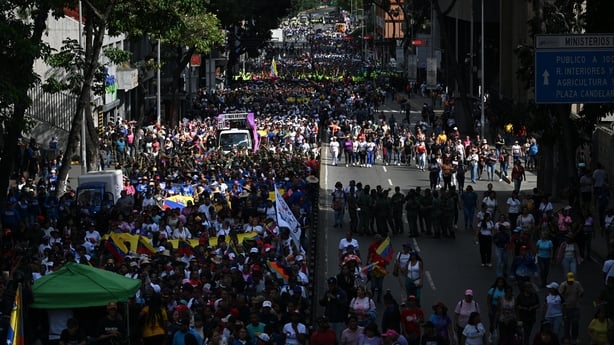
The military’s recent acknowledgment of 23 member fatalities, including five generals, during US strikes adds a stark dimension to the conflict, stirring anger and frustration within the country. Cuba, a longstanding ally, reported 32 military personnel casualties, intensifying criticisms directed at American involvement. While the Venezuelan government has not released civilian casualty figures, the escalating violence raises urgent humanitarian concerns and complicates any future diplomatic negotiations.
International Implications and Future Directions
The vicissitudes of Venezuelan politics have not gone unnoticed internationally, as opposition leader María Corina Machado critiques Rodriguez’s capabilities while urging the US to alter its approach. Machado characterized Rodriguez as complicit in Venezuela’s corruption and negativity, questioning her reliability from an investment perspective. Trump’s assertive stance, warning of severe repercussions for Rodriguez should she fail to align with US objectives, augments an already volatile situation. Recent constitutional stipulations implying elections must follow a formal declaration of Maduro’s absence add a critical timeframe to the unfolding events.
The current geopolitical climate surrounding Venezuela is further complicated by historical allegiances and trade dynamics. The implications of this oil deal and the accompanying military actions extend beyond immediate political gain, potentially reshaping the dynamics of US engagement in Latin America. The situation remains fluid, necessitating close monitoring as developments unfold.
For additional context, the United Nations has cautioned against violations of international law during these operations, emphasizing the need for diplomatic resolutions aimed at benefiting Venezuelan citizens while respecting sovereignty.
