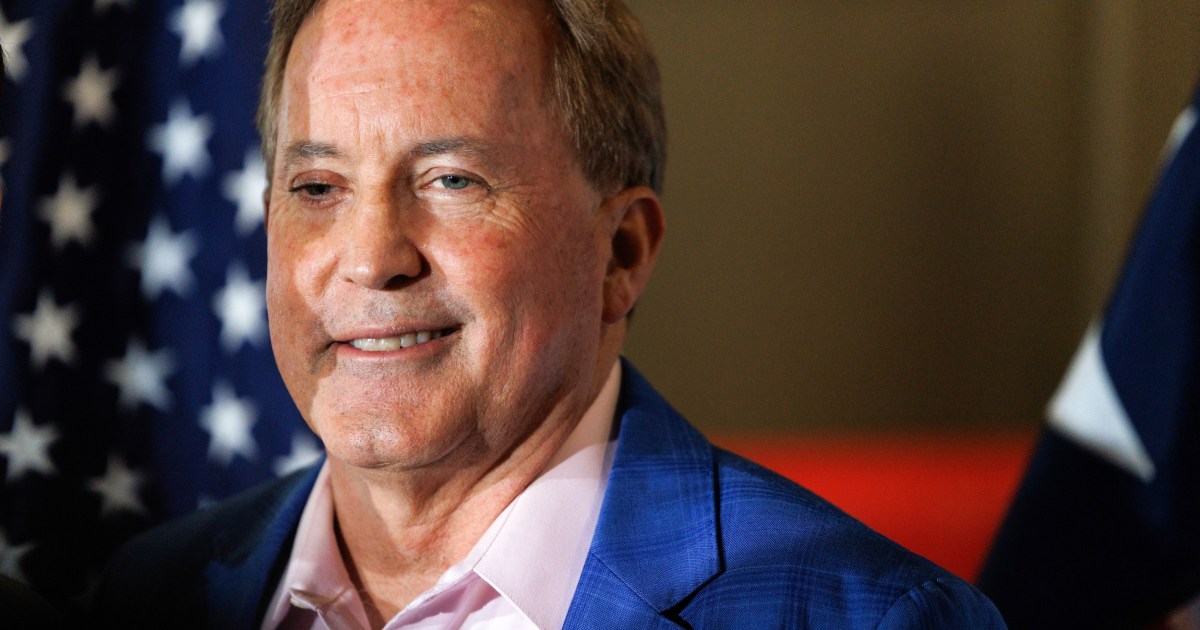
Texas’ GOP Senate runoff is a Trump-backed knockout blow as Attorney General Ken Paxton leads incumbent Sen. John Cornyn by nearly 9-to-1 in prediction markets after the president’s endorsement reshaped the race on May 19. With $109 million spent in ads—mostly by Cornyn’s camp—the final 24 hours before Tuesday’s vote are eerily quiet, but the battle’s outcome will decide whether Trump’s purge of disloyal Republicans extends to the Lone Star State.
Trump’s Endorsement: The Nuclear Option in Texas
President Donald Trump’s May 19 endorsement of Ken Paxton over John Cornyn wasn’t just a political move—it was a declaration of war. The president’s social media post labeled Cornyn “VERY disloyal to me” while praising Paxton as “also very loyal to your favorite President, ME.” The language mirrored Trump’s scorched-earth tactics in Indiana, Louisiana, and Kentucky, where he backed primary challengers against incumbents who crossed him. This time, the stakes are higher: Texas is the second-most populous state, and its Senate seat could flip the balance of power in a midterm year where Democrats are already eyeing upsets.
Cornyn’s campaign responded with a mix of defiance and damage control. At a San Antonio event on Monday—the final day before voting—the senator insisted his record showed 99.3% alignment with Trump’s agenda and claimed the president had once called him “a good man and a friend.” The claim was echoed in a Cornyn campaign statement released May 20, which cited a private conversation between the two men in 2023. However, the president’s public endorsement of Paxton—delivered via Truth Social—undercut Cornyn’s messaging. The senator’s office also released a statement May 19 calling Trump’s loyalty claims “misleading,” pointing to Cornyn’s support for a $61 billion Ukraine aid package in 2023, which Trump had criticized as “wasteful spending.”

Cornyn’s legal team filed an emergency motion in Travis County District Court on May 21 seeking to delay the runoff, arguing that Paxton’s campaign had violated Texas election laws by failing to disclose $1.2 million in dark money donations. The motion was denied by Judge Sarah Johnson, who ruled that the evidence did not demonstrate “clear and present harm” to Cornyn’s campaign. Paxton’s legal team, represented by Houston-based attorney Mark White, dismissed the filing as a “desperate attempt to distract voters” in the final days of the race.
The prediction market reaction was immediate. On Kalshi, Paxton’s odds of winning surged from 63.7% to 90.1% within hours of Trump’s endorsement, while Polymarket gave him a 96% chance of victory by May 20. By Sunday, Cornyn’s support had collapsed to 10.3% on both platforms. The shift wasn’t just about Trump’s influence—it reflected a broader trend: Republican primary voters are increasingly prioritizing loyalty to the former president over incumbent experience, according to a May 22 analysis by the Texas Politics Project at the University of Texas at Austin.
“It’s just a slug fest, with the campaigns and third-party groups slugging it out.”
The Ad Blitz: $109 Million and a Media War
The runoff has been a media arms race unlike any in Texas history. Cornyn’s campaign and allied super PACs—including the Senate Leadership Fund and the Conservative Victory Fund—have spent nearly $109 million on ads, according to filings with the Federal Election Commission. Paxton’s campaign, meanwhile, has relied on a mix of self-funded efforts and donations from pro-Trump groups like America First Legal and the America PAC. The spending disparity has narrowed in recent days, with Paxton’s campaign releasing a $3.2 million ad buy on May 24 targeting Cornyn’s support for bipartisan infrastructure legislation, which Trump has repeatedly called “a total disaster.”
The ad war has turned personal. Paxton’s campaign released a video on May 23 featuring a 2021 interview clip of Cornyn praising then-President Joe Biden’s COVID-19 relief package, which Trump had labeled “socialist.” The ad, titled *“Cornyn’s Betrayal,”* was shared over 12,000 times on Truth Social within 24 hours. Cornyn’s allies countered with a May 24 release of a 2024 court filing in which Paxton was indicted on 10 counts of securities fraud by a Travis County grand jury. The filing, unsealed by Cornyn’s campaign, included sworn testimony from a former Paxton aide alleging the attorney general had pressured state officials to intervene in an investigation involving his business partner, Nate Paul.

Paxton’s legal team responded with a May 25 press release calling the indictment “politically motivated” and citing a separate Travis County judge’s decision to delay the case until after the election. The judge, Lora Livingston, ruled that the prosecution had failed to meet the “high burden” required for an indictment in a politically sensitive case. Cornyn’s campaign did not dispute the legal ruling but emphasized the indictment as evidence of Paxton’s “pattern of corruption,” pointing to a 2022 ethics complaint filed by the Texas State Bar, which found Paxton in violation of professional conduct rules for using his office to benefit a donor.
The back-and-forth has left some Texas Republicans exhausted. At a private fundraiser in Dallas on May 24, one attendee—identified as a former state GOP chair—told reporters, *“The fighting has gotten so ugly that some Republicans are fearful it will dampen turnout in the midterms.”* The comment was confirmed by two sources with knowledge of the event, though the attendee requested anonymity due to concerns about retribution from party leadership.
Who Votes Where: The Geography of Trump’s Texas
The runoff’s outcome hinges on two critical voting blocs: the rural counties where Trump won by 80% or more in 2024, and the suburban swing districts that broke for Kamala Harris in the same election. Data from the March primary shows Cornyn leading Paxton in these suburban areas by 44% to 40%, according to an analysis by the Texas Politics Project. However, the suburban lead has narrowed in recent days, with internal Cornyn campaign polling showing Paxton within 3 points in key swing counties like Travis (Austin), Tarrant (Fort Worth), and Dallas.
Paxton dominated in Trump’s strongest rural strongholds, winning 45% to 40% in counties like Midland, Uvalde, and El Paso, where turnout is expected to be high. The challenge for Cornyn is that these rural counties—though sparsely populated—collectively made up about 20% of the GOP primary vote in 2022, according to Texas Secretary of State records. If Paxton holds them, he wins, even if Cornyn performs better in suburban areas.
Cornyn’s best hope lies in the 12 counties that went for Harris in 2024, where he led Paxton by 4 percentage points in the March primary. However, a May 25 internal memo from the Cornyn campaign, obtained by The Texas Tribune, warned that Trump’s endorsement had “shifted the dynamic” in these areas. The memo cited focus group data showing that voters in suburban Harris County (Houston) and Collin County (Dallas suburb) were now more likely to prioritize “loyalty to Trump” over Cornyn’s record on issues like border security and abortion restrictions.
At a May 25 rally in San Antonio, Cornyn acknowledged the difficulty of overcoming the president’s backing. *“Texans are a pretty independent breed, and people will be making their own choices,”* he told reporters, though he avoided directly addressing Trump’s endorsement. The reality? In Trump’s Texas, independence often means deferring to the former president’s judgment, as seen in the 2022 primary where Trump-backed candidates won in 9 of 10 contested races, according to a study by the University of Houston’s Hobby School of Public Affairs.
The Bigger Picture: What a Cornyn Loss Means for the GOP
A Paxton victory would send a seismic message to the Republican Party: incumbents who cross Trump do so at their peril. It would also set up a November showdown against Democrat James Talarico in a state that has trended blue in recent years. Polling by the University of Texas/Texas Tribune, conducted May 18–22, suggests Talarico could attract crossover votes from suburban Republicans disillusioned with the GOP’s direction, making Texas one of the most competitive Senate races in 2026. The poll showed Talarico leading Paxton by 48% to 42% among independent voters, a group that made up 12% of the GOP primary electorate in 2022.
For Cornyn, the loss would cap a remarkable career—but also mark the end of an era. As the senior senator from Texas, he has been a key player in shaping the state’s political landscape for nearly two decades, including his role as Senate Republican Whip from 2019 to 2023. His defeat would be the second time in a century that an incumbent Texas senator lost a primary, underscoring how much the party has shifted under Trump’s influence. The first was Kay Bailey Hutchison in 2012, who lost to Ted Cruz in a Tea Party-driven challenge.
The race’s true significance lies in what it reveals about the GOP’s future. If Paxton wins, it signals that Trump’s brand of populism—unfiltered, punitive, and unapologetic—remains the party’s dominant force. If Cornyn pulls off an upset, it could be a rare bright spot for establishment Republicans in a year where their candidates are struggling to compete. Either way, Tuesday’s vote will be remembered as the day Texas decided whether it would follow the president’s lead—or chart its own path.
The stakes are further elevated by the presence of two other high-profile Senate races in Texas: Ted Cruz’s bid for re-election and a potential open seat in 2028 if Cornyn retires. A Paxton victory could embolden Trump-aligned candidates in future races, while a Cornyn win might signal a willingness among rank-and-file Republicans to reject the president’s influence. As one GOP strategist in Austin put it, *“This isn’t just about Cornyn and Paxton. It’s about whether the Texas GOP is still its own entity or just an extension of Trump’s brand.”*
What Happens Next: The Road to November
Regardless of who wins the primary, the general election campaign against Talarico will begin immediately. Paxton, if victorious, will inherit a race where Democrats are optimistic about flipping a red state seat. Talarico’s campaign has already begun outreach to suburban women and Latino voters, two groups that shifted toward Democrats in 2024. A May 23 memo from the Talarico campaign, obtained by The Dallas Morning News, outlined a strategy to highlight Paxton’s legal troubles and contrast his record with Cornyn’s more moderate stances on issues like climate change and healthcare.
Cornyn, if he survives, will face the unenviable task of rebuilding his relationship with Trump’s base while defending his record against a well-funded challenger. His campaign has already begun testing messages that emphasize his bipartisan work, including his role in negotiating the 2023 debt ceiling deal. However, internal polling shows that these messages resonate with only 32% of Trump voters, according to data shared with reporters by a Cornyn advisor.
The runoff’s outcome will also shape the 2026 midterms. If Paxton wins, expect more primary challenges against GOP incumbents in battleground states like Arizona and Pennsylvania, where Trump-backed candidates have already emerged. If Cornyn pulls off an upset, it could embolden establishment Republicans to push back against Trump’s influence, potentially leading to a more unified party behind moderate candidates in the general election.
One thing is certain: Texas has never seen a Senate runoff like this. The ad spending, the Trump factor, and the high stakes have turned what was once a quiet primary into a national spectacle. By Tuesday, the Lone Star State will have answered a question that’s been echoing across the GOP: When loyalty to the party’s leader clashes with loyalty to the party itself, which wins?
As the final hours tick down, both campaigns have scaled back public events, focusing instead on get-out-the-vote efforts. Cornyn’s team is targeting early voters in suburban areas, while Paxton’s campaign has mobilized volunteers in rural counties where turnout is expected to be highest. With no debates scheduled and both candidates avoiding public appearances, the race has become a test of which campaign can best control the narrative in the absence of direct engagement.
