
April Employment Growth and Market Volatility
The latest data from the U.S. Bureau of Labor Statistics indicates that the labor market remains on solid footing, even as the pace of job creation fluctuates. While the 115,000 jobs added in April represent a decline from the 185,000 created in March, the figure outperformed the 55,000 forecast by analysts. This trend of month-to-month volatility has defined the employment landscape over the past year, prompting cautious optimism among market observers.
“Evidence of the underlying resilience of this economy and of this labor market, despite all of the slings and arrows of outrageous concerns about the Middle East and unemployment and inflation and the Fed,” Scott Clemons, chief investment strategist at Brown Brothers Harriman
Clemons noted that while the recent gains are positive, they do not yet constitute a long-term trend. He added, “I’m not sure that’s completely gone away. We get another two or three months of solid job gains, then I feel a little bit more comfortable,” via theshopmag.com.
Wage Trends and the Federal Reserve’s Mandate

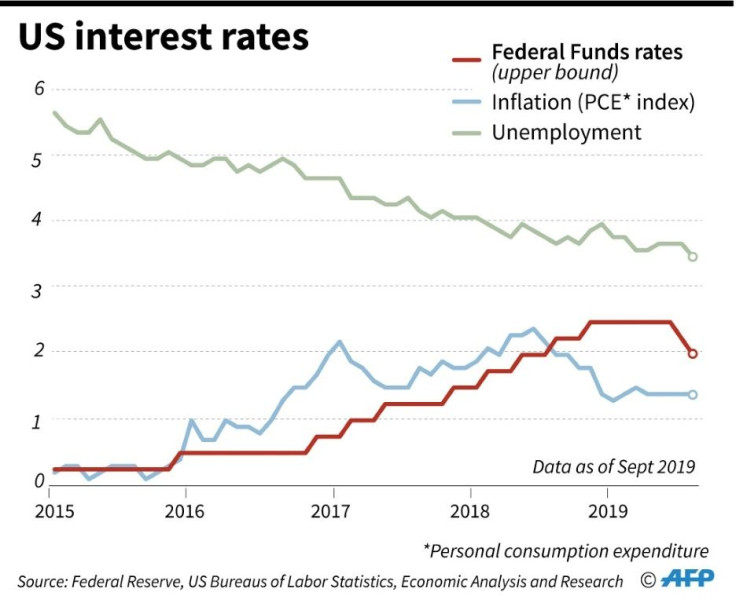
Wage growth has shown signs of cooling, with average hourly earnings increasing 0.2 percent for the month and 3.6 percent on an annual basis. These figures arrived below economist forecasts of 0.3 percent and 3.8 percent, respectively, as reported by theshopmag.com. This deceleration in wage growth, combined with the latest employment figures, suggests the Federal Reserve will maintain its current posture.
“[Overall,] more solid jobs data leaves the Fed where it’s been for a while—watching and waiting, focused on the inflation side of its mandate. Rate cuts still aren’t on the near-term horizon, but the absence of inflationary threats in today’s report should quiet some of the chatter about a potential hike,” Ellen Zentner, chief economic strategist for Morgan Stanley Wealth Management
However, the path forward for the Federal Open Market Committee (FOMC) remains complex. According to Lindsay Rosner, head of multi-sector fixed income investing at Goldman Sachs asset management, the Federal Reserve will likely shift its focus toward containing upside inflation risks. Rosner suggests that the committee may move to remove its easing bias in June, signaling that the hawks on the committee are currently gaining influence, as noted in recent economic reporting.
Structural Shifts in Hiring and Unemployment
While the headline unemployment rate remains at 4.3 percent, deeper indicators reveal underlying shifts in the workforce. A broader measure of unemployment, which accounts for discouraged workers and those employed part-time for economic reasons, rose to 8.2 percent, an increase of 0.2 percentage point.
The household survey, which informs the unemployment rate calculation, showed a decline of 226,000 workers, bringing the participation rate down to 61.8 percent, the lowest level recorded since October 2021. Experts at RBC suggest that the interpretation of payroll gains is evolving, noting that retirements often create openings that, when backfilled, do not necessarily manifest as net payroll growth. Furthermore, a precipitous decline in immigration means the economy requires fewer new jobs to maintain a stable unemployment rate.
Economic Pressures and Consumer Behavior

Looking ahead, the labor market faces pressure from rising input costs. Producer Price Index (PPI) data has re-accelerated in 2026, indicating that firms are dealing with significant price pressures. While there is a risk that these costs could lead to margin compression and subsequent headcount reductions, such a scenario has not yet materialized on a large scale.
Initial jobless claims have remained rangebound between 200k and 220k since mid-February, confirming that firms are largely avoiding layoffs at this stage. Consumer behavior also remains a critical variable; consumer credit increased by $3.7B in April as households continue to buffer spending against higher costs, according to RBC. Whether the economy can sustain this trajectory depends on how energy prices evolve and how businesses manage the pass-through of higher input costs in the coming months.
