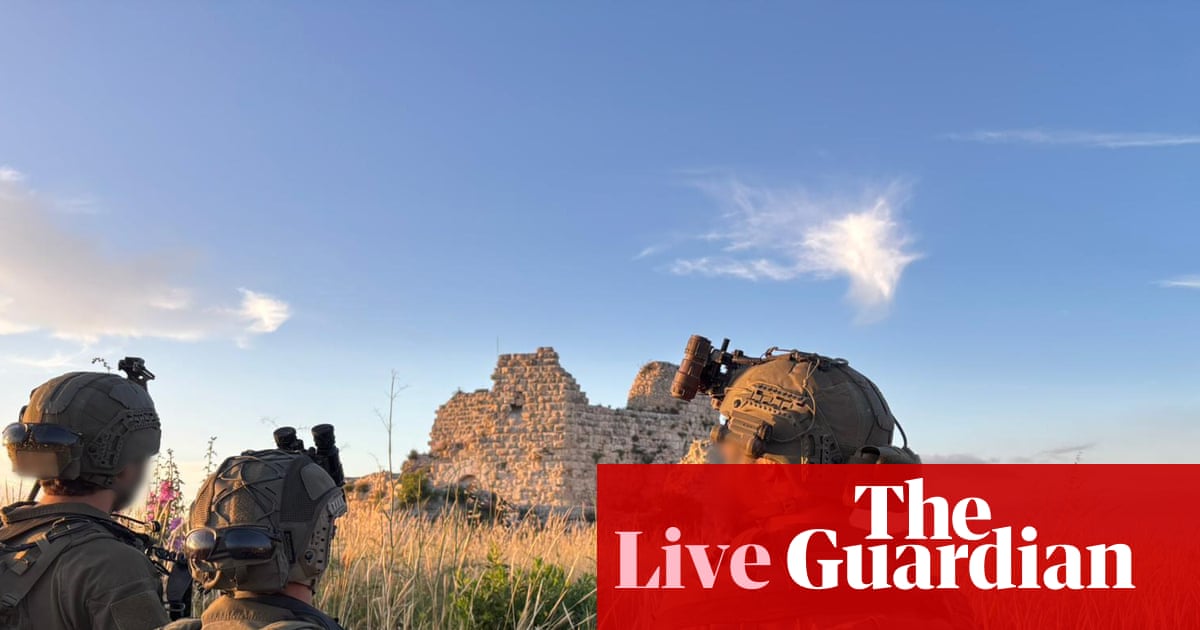
Israeli troops have seized Beaufort Castle, a Crusader-era fortress in southern Lebanon, marking the deepest military incursion into the country since Israel’s withdrawal in 2000. The capture, confirmed Sunday by the Israeli military, comes amid escalating clashes with Hezbollah and just days before critical U.S.-brokered talks between Israel and Lebanon. The castle, a symbol of Israel’s 1982 victory over the Palestine Liberation Organization, now stands as a flashpoint in a war that has killed hundreds and risks dragging the region deeper into conflict.
Why Beaufort Castle Matters: A Fortress with 1,000 Years of Bloodshed
The Beaufort fortress, perched atop Lebanon’s green hills near Nabatiyeh, is more than a medieval ruin—it’s a geopolitical time capsule. Built by Crusaders in the 12th century, it has been contested by Saladin’s forces, the Ottomans, the French mandate, the PLO, and Israel itself. The Israeli military first captured it in 1982 during its invasion of Lebanon, holding it until its withdrawal two decades later. When Israel left in 2000, the castle was partially restored and opened to tourists, its stone walls standing as a silent witness to shifting power in the region.
This week’s recapture is no accident. According to the Associated Press, Israeli forces launched an operation in the Beaufort Ridge and Suluki Valley to dismantle Hezbollah infrastructure and eliminate direct threats to Israeli civilians. The operation followed days of airstrikes and ground fighting in nearby villages, where Israeli troops clashed with Hezbollah fighters in the rugged terrain. The castle’s strategic location—overlooking the Litani River and parts of southern Lebanon—makes it a prize worth fighting for.
The Israeli military’s Arabic spokesperson, Avichay Adraee, posted a photograph on X showing soldiers inside the castle, while Defense Minister Israel Katz declared on Telegram: “Forty-four years after the heroic Battle of Beaufort, and on this day commemorating the soldiers who fell in the First Lebanon War (1982), our troops have returned to the summit of Beaufort and once again raised the Israeli flag there.” The timing is deliberate—Israel is sending a message that its military reach extends far beyond the border, even as a nominal ceasefire has held since April 17.
—Israel Katz, Israeli Defense Minister, via The Guardian
Lebanese officials condemned the incursion as a violation of sovereignty. The Lebanese Armed Forces (LAF) released a statement Sunday calling the operation “a flagrant aggression” and warning of “serious consequences.” The LAF’s public relations office emphasized that Israel’s actions “endanger regional stability” and urged the international community to intervene. Meanwhile, Hezbollah’s military wing, known as the Islamic Resistance, claimed responsibility for multiple attacks on Israeli forces in the area, including a drone strike near the border town of Metulla earlier this week.
Witnesses in the region reported heavy fighting in the Suluki Valley, where Israeli troops advanced under cover of artillery fire. Local residents described seeing armored vehicles and infantry moving toward Beaufort Castle under the cover of darkness. One resident, speaking to the Associated Press, said: “We heard explosions all night. The Israelis were moving fast, and Hezbollah fighters were trying to slow them down.”
The War’s Escalation: How Beaufort Fits Into a Broader Campaign
Beaufort’s fall is the latest escalation in a war that began on March 2, when Hezbollah fired rockets into northern Israel—two days after the U.S. and Israel launched strikes on Iran’s main backer. Since then, Israel has expanded its operations deep into Lebanon, sending troops across the Litani River, which had long served as an unofficial boundary. The Israeli military now designates the area from the Litani up to the Zahrani River as a combat zone, a move that has forced some residents to flee while others remain trapped in the crossfire.
Hezbollah, meanwhile, has responded with thousands of missile and drone strikes against Israeli troops in southern Lebanon and northern Israel. The group claimed two attacks overnight targeting Israeli forces in the southwestern town of Bayada, near the border, according to The Guardian. The Lebanese Health Ministry reports that the death toll in the country since March has reached 3,371, including civilians and combatants—a figure that underscores the war’s devastating human cost.
On the Israeli side, the military announced Sunday that one soldier was killed the previous day by a Hezbollah explosive drone, bringing the total number of Israeli military deaths since early March to 25. The casualties reflect a war that has grown increasingly brutal, with both sides digging in for a prolonged conflict. The capture of Beaufort is not just a military victory—it’s a psychological one, a reminder of Israel’s past dominance in Lebanon and a warning that this war may not end anytime soon.
Israeli Prime Minister Benjamin Netanyahu addressed the nation Sunday, stating that the operation was necessary to “eliminate threats to our citizens.” He added: “We will not tolerate attacks on our soil, and we will respond with all necessary force.” The statement came as Israeli airstrikes continued in southern Lebanon, targeting what the military described as “Hezbollah command centers and weapons depots.”
In a separate development, the Israeli military confirmed that it had intercepted a ballistic missile launched from Lebanon toward Haifa early Sunday morning. The missile was shot down by Israel’s Iron Dome defense system, marking the 47th successful interception since the war began. However, Hezbollah’s ability to launch multiple missiles in rapid succession has overwhelmed Israel’s air defenses in some areas, leading to civilian casualties.
Diplomacy on the Brink: What Happens Next?
The timing of Beaufort’s capture could not be worse for diplomacy. Just days after the incursion, the U.S. State Department is set to host direct talks between Lebanon and Israel on June 2 and 3—a meeting that was already fraught with tension. The Israeli military’s deepening presence in Lebanon risks derailing negotiations before they even begin. Lebanon’s government, already strained by the war’s economic and humanitarian toll, may struggle to justify any concessions to Israel while its territory remains under attack.
Yet the stakes are higher than ever. Israel’s push into Lebanon is part of a broader strategy to weaken Hezbollah’s military capabilities, but it also risks entangling Israel in a quagmire. The Litani River, once a red line, is now a battleground. If Israel continues its advance, Hezbollah may respond with even more aggressive strikes, drawing the conflict into a wider regional war. The U.S. has a delicate balancing act: supporting Israel’s security while preventing the crisis from spiraling into a full-blown conflict that could destabilize the entire Middle East.
Meanwhile, the war in Gaza remains a ticking time bomb. Israeli Prime Minister Benjamin Netanyahu has ordered his military to seize control of 70% of the Gaza Strip, a move that threatens to collapse the fragile ceasefire and plunge the territory into further devastation. The humanitarian consequences could be catastrophic, with aid groups already warning of famine conditions. If Israel’s offensive in Lebanon succeeds in weakening Hezbollah, it may come at the cost of deepening its isolation and prolonging its conflicts on multiple fronts.
Lebanese Foreign Minister Abdallah Bou Habib criticized Israel’s actions in a statement released Sunday, calling them “a clear violation of international law.” He urged the U.N. Security Council to intervene and condemn the incursion. The Lebanese government has also suspended all diplomatic engagements with Israel until further notice, a move that complicates the upcoming U.S.-brokered talks.
In a rare public address, Hezbollah’s Secretary-General, Hassan Nasrallah, did not directly comment on Beaufort but reaffirmed the group’s commitment to resisting Israel. In a recorded speech broadcast on Hezbollah’s Al-Manar TV, he warned: “The Zionist entity’s aggression will not go unanswered. Every Israeli soldier in Lebanon is a target.” The speech came as Israeli forces continued their push deeper into Lebanese territory.
The Human Cost: Civilians Caught in the Crossfire
The war’s toll on civilians is staggering. In Lebanon, the Lebanese Health Ministry’s death toll of 3,371—including combatants and civilians—paints a grim picture. Israeli airstrikes have targeted villages near the border, displacing thousands and leaving infrastructure in ruins. The Associated Press reports that some residents have fled the area, while others remain trapped in towns under constant bombardment.
In Israel, the threat of Hezbollah’s missile barrages has forced northern cities into a state of siege. Schools have been converted into bomb shelters, and families live in fear of the next strike. The psychological impact is as devastating as the physical one. For those who remember the 2006 war between Israel and Hezbollah, this conflict feels like a return to the past—only worse. With no end in sight, civilians on both sides are paying the price for a war that shows no signs of stopping.
In a press conference Sunday, U.N. Secretary-General António Guterres condemned the escalation, stating: “The suffering of civilians must end. All parties must exercise maximum restraint and return to the negotiating table.” The U.N. has deployed additional monitors to the Lebanese-Israeli border to assess the humanitarian impact of the conflict.
Local aid organizations, including the Lebanese Red Cross, have reported a surge in requests for medical assistance. Hospitals in southern Lebanon are overwhelmed, with doctors treating patients for shrapnel wounds and trauma-related injuries. The World Health Organization (WHO) has warned of a “catastrophic” situation if the fighting does not cease soon.
What Comes Next? Three Scenarios for the War’s Future
The capture of Beaufort Castle is a major military achievement for Israel, but it does not guarantee victory.
- Escalation Risk: If Israel continues its advance into Lebanon, Hezbollah may respond with even more aggressive strikes, potentially drawing Iran directly into the conflict. The U.S. would likely intervene to prevent a regional war, but its leverage is limited.
- Diplomatic Deadlock: The upcoming U.S.-brokered talks between Israel and Lebanon are unlikely to produce a breakthrough. Lebanon’s government may refuse to negotiate while its territory remains under attack, while Israel may demand concessions that Lebanon cannot deliver.
- Humanitarian Collapse: The war in Gaza is already on the brink of catastrophe. If Israel’s offensive in Lebanon succeeds in weakening Hezbollah, it may come at the cost of deepening the humanitarian crisis in Gaza, with famine and displacement becoming inevitable.
The most likely outcome is a prolonged stalemate, with both sides digging in and the international community struggling to find a way out. The capture of Beaufort Castle is a symbol of Israel’s military prowess, but it is also a warning: this war is far from over, and the cost—human, economic, and political—will continue to rise.
For now, the focus remains on the battlefield. But as the dust settles over Beaufort’s ancient stones, one question looms: how much more bloodshed will it take before this war ends?
