US strikes Iran after drone attack on ship in Strait of Hormuz
U.S. aircraft carried out retaliatory strikes against Iranian targets in the Strait of Hormuz following a drone attack on a Singapore-flagged commercial vessel.
- Headline Dispatch: US strikes Iran after drone attack on ship in Strait of Hormuz
- Core Takeaway: U.S. aircraft carried out retaliatory strikes against Iranian targets in the Strait of Hormuz following a drone attack on a Singapore-flagged commercial vessel.
- Source Synthesis: Continuous live monitoring aggregated across major news wires and independent bureaus.
US strikes Iran after drone attack on ship in Strait of Hormuz
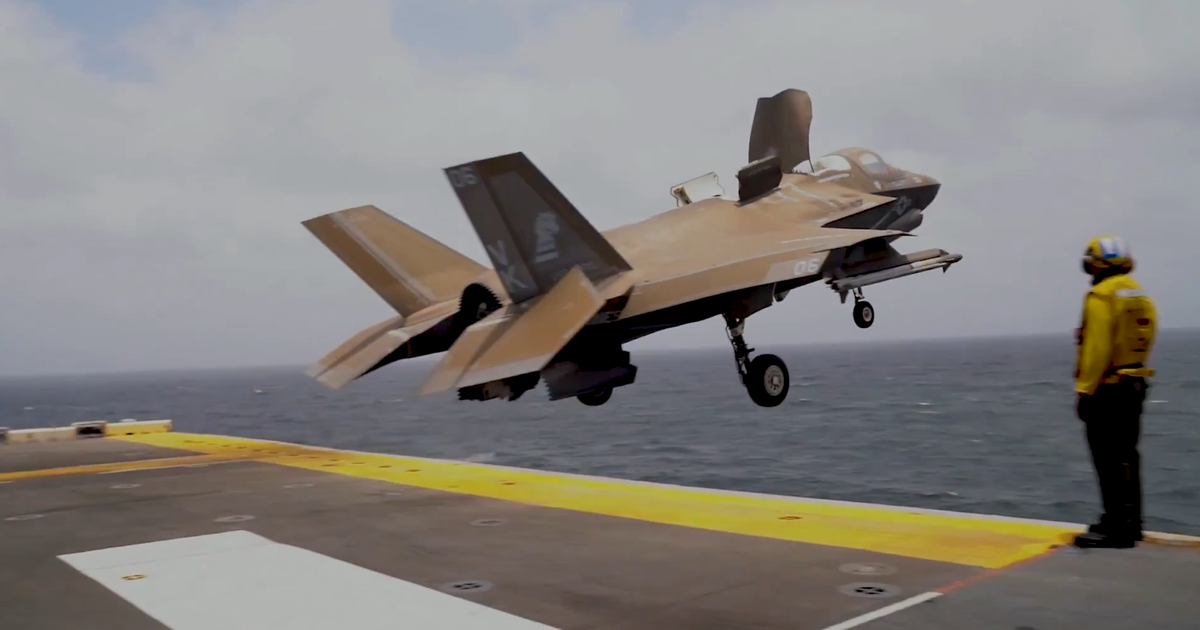
U.S. Aircraft carried out retaliatory strikes against Iranian targets on Friday, after an Iranian drone attack on a commercial vessel in the Strait of Hormuz. U.S. Central Command stated that the operation targeted coastal radar sites as well as Iranian drone and missile storage facilities. The military described the action as a powerful response
to dangerous behavior
and unwarranted aggression that violated a ceasefire agreement.
The strikes, which lasted about an hour, hit multiple targets along the Strait of Hormuz and on Iran's Qeshm Island. A U.S. Official told reporters the goal was to send a strong message regarding freedom of navigation and provide a course correction
while remaining limited enough to avoid a full restart of the conflict. Iran's Revolutionary Guards claimed to have repelled an attack on Sirik Island and vowed a swift and decisive
response.
President Donald Trump condemned the initial Iranian provocation as a foolish violation
of the ceasefire. On Truth Social, the president stated that Iran shot at least four
attack drones at ships, noting that the U.S. Knocked down three. He described the vessel that was hit as a large and very expensive Cargo Carrying Ship
.
The vessel, the Singapore-flagged Ever Lovely, was struck on its upper deck. Despite the damage, the shipping operator Evergreen Marine reported that the crew, vessel, and cargo remained unharmed and the ship proceeded on its way.
Maritime Tensions and Evacuations
The attack caused immediate disruptions to maritime safety operations. Arsenio Dominguez, Secretary-General of the UN's International Maritime Organization (IMO), announced a temporary suspension of efforts to evacuate 11,000 sailors and 600 ships trapped in the Gulf. However, Dominguez updated on Friday that 2,500 seafarers and 115 vessels had successfully evacuated through the strait since Tuesday.
Disputes continue over the legal passage of ships through the waterway. While Oman and the IMO established two temporary shipping lanes, including a southern route near the Omani coast, Iran has rejected this arrangement. The Islamic Revolutionary Guard Corps (IRGC) warned that any route not coordinated with Iran is illegal, unacceptable, and extremely dangerous
.
Tracking data from MarineTraffic.com showed some vessels continuing to use the Omani route despite the attacks, while others diverted north toward the Iranian-designated route. Iran's Persian Gulf Strait Authority warned that vessels using unauthorized routes would not be covered by safe passage guarantees or insurance.
Diplomatic Frameworks and Regional Conflict
The military escalation occurs as the U.S. And Iran attempt to navigate a memorandum of understanding signed on June 17. The two nations have established a direct communication line to prevent further incidents, following direct talks in Switzerland on Sunday.
Parallel to the tensions with Iran, U.S. Secretary of State Marco Rubio announced Friday that the government of Lebanon and the government of Israel have agreed to a framework for lasting peace and security
. However, this agreement did not include Hezbollah, the Iran-backed militia. The Israeli prime minister's office stated it will maintain its security zone along the Yellow Line in Lebanon until Hezbollah and other terrorist organizations are disarmed.
Hezbollah's general secretary, Naim Qassem, rejected these demands, calling the push for disarmament Israel's agenda
and asserting that the memorandum of understanding between the U.S. And Iran constitutes an official acknowledgment of the defeat of the United States and Israel
. Qassem demanded that Israel withdraw unconditionally
from Lebanese territory.
Economic and Political Fallout
The volatility in the region impacted global markets. On Friday, the Nasdaq Composite fell more than 1% and the Frankfurt exchange dropped 1.5%. In Asia, South Korea's Kospi closed down nearly 6%, sparking a 20-minute trading halt. However, international benchmark Brent crude oil prices dropped about 4% to approximately $72 a barrel as some fears regarding the reopening of the strait eased.
Politically, the conflict has strained relations with the Gulf Cooperation Council (GCC). Iran's Foreign Ministry spokesperson, Esmaeil Baqaei, condemned a recent GCC meeting attended by Secretary Rubio, accusing the member nations of seeking protection from the greatest violator of security
.
In a separate diplomatic exchange, Baqaei mocked President Trump's claims that food is desperately needed in Iran
, citing U.S. Statistics on domestic food insecurity. President Trump had previously asserted that Iran would be required to purchase U.S. Wheat, corn, and soy using frozen Iranian funds.
Amidst the continuing friction, Pakistan has acted as a primary mediator. Foreign Minister Ishaq Dar confirmed that 22 Iranian crew members from the oil tanker Lenore/Davina, which was seized by the U.S. On June 5, were transferred to the Iranian consulate in Karachi for repatriation.
Fresh rounds of technical talks between the U.S. And Iran are scheduled to resume in Switzerland at the beginning of next week.
How significant is this development?
Participate in our community survey on the trajectory and real-world impact of this news.