US strikes Iranian targets after drone attack on cargo ship
US Central Command targeted Iranian facilities on Qeshm Island after a commercial vessel was attacked, marking the first US strike since a ceasefire extension.
- Headline Dispatch: US strikes Iranian targets after drone attack on cargo ship
- Core Takeaway: US Central Command targeted Iranian facilities on Qeshm Island after a commercial vessel was attacked, marking the first US strike since a ceasefire extension.
- Source Synthesis: Continuous live monitoring aggregated across major news wires and independent bureaus.
US strikes Iranian targets after drone attack on cargo ship
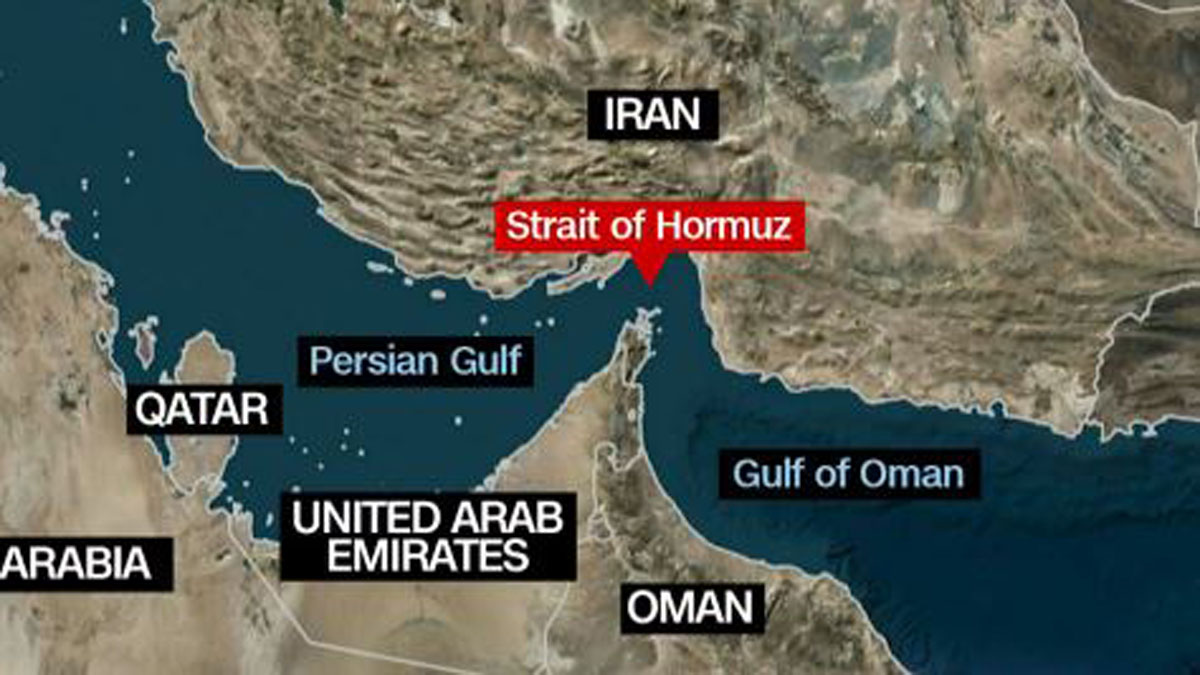
United States aircraft launched retaliatory strikes against Iranian targets on Friday, following a drone attack on a commercial cargo vessel in the Strait of Hormuz. The strikes targeted radar sites as well as drone and missile storage facilities on Iran's Qeshm Island and along the strait, according to U.S. Central Command.
The military action marks the first time the U.S. Has struck Iran since the two nations agreed to extend a ceasefire last week. U.S. Central Command described the operation as a powerful response
to dangerous behavior
and unwarranted aggression
that violated the ceasefire and undermined the freedom of navigation.
President Donald Trump blamed Iran for the incident, which occurred on Thursday. He described the attack as a foolish violation
of the ceasefire agreement. The target was the Ever Lovely, a Singapore-flagged ship owned by Taiwan-based Evergreen Marine that had been stranded in the Gulf for more than 100 days.
According to President Trump, four drones were fired at the vessel. He stated that U.S. Forces shot down three, while one struck the upper deck of the very expensive ship
.
"We knocked down three of them. One of them, I guess — we didn’t miss it. Nobody saw it coming,"
Donald Trump, President of the United States, via WHDH
Evergreen Marine reported that the crew, vessel, and cargo remained unharmed and the ship was able to proceed. The British military had previously noted the vessel was hit by a projectile off the coast of Oman.
Maritime Tension and Diplomatic Friction
The attack occurred amid a dispute over shipping routes. Oman and the International Maritime Organization (IMO) established two temporary shipping lanes, including one skirting the Omani coast. Iran’s Islamic Revolutionary Guard Corps (IRGC) rejected these routes as illegal, unacceptable, and extremely dangerous
, insisting that only Tehran-approved routes are legal.
The Ever Lovely had been using the southern route along the Omani coast. The incident forced the IMO to suspend efforts to evacuate stranded ships and sailors from the Gulf. IMO Secretary-General Arsenio Dominguez stated that 115 vessels and 2,500 seafarers had been evacuated since Tuesday, but about 500 ships and 11,000 sailors remain trapped.
Tensions extended to other regional capitals. A technical glitch caused a missile warning in Dubai on Friday, startling residents. Shortly after, UAE Foreign Minister Sheikh Abdullah bin Zayed Al Nahyan spoke with Iranian Foreign Minister Abbas Araghchi to emphasize the importance of adhering to the interim deal between the U.S. And Iran.
Meanwhile, Iran condemned a meeting of the Gulf Cooperation Council (GCC), which included U.S. Secretary of State Marco Rubio. Iranian Foreign Ministry spokesperson Esmaeil Baqaei criticized GCC members for seeking protection from the greatest violator of security
, referring to the United States.
Fragile Peace and Proxy Conflicts
The military escalations come as the U.S. And Iran operate under a 60-day memorandum of understanding (MoU). Negotiators are attempting to finalize terms regarding sanctions relief, Iran's stockpile of highly enriched uranium, and the administration of the Strait of Hormuz.
Vice President JD Vance defended the retaliatory strikes on social media, stating that violence will be met with violence
and suggesting that if Iran had disagreements with the MoU, they can pick up the phone
.
Simultaneously, Secretary of State Marco Rubio announced a framework agreement between the governments of Israel and Lebanon to establish lasting peace and security
. However, the deal did not include the Iran-backed militia Hezbollah. Naim Qassem, general secretary of Hezbollah, rejected the project, demanding that Israel withdraw completely
and unconditionally
from Lebanon.
Israeli Prime Minister Benjamin Netanyahu called the framework a great achievement
but insisted Israel will maintain its security zone in southern Lebanon until Hezbollah is disarmed. In Al-Mansouri, Israeli drones have begun dropping leaflets ordering Lebanese civilians to evacuate a danger zone
.
Economic and Diplomatic Aftermath
The volatility impacted global markets on Friday. The Nasdaq Composite fell more than 1% and the Frankfurt index shed 1.5%. In Asia, South Korea's Kospi closed down almost 6% following a trading halt. However, Brent crude oil prices dropped about 4% to approximately $72 a barrel as immediate fears eased.
In a separate diplomatic development, Pakistan facilitated the return of 22 Iranian crew members from the oil tanker Lenore/Davina, which U.S. Forces had boarded on June 5. Pakistan's foreign minister Ishaq Dar stated that the crew were transferred to the Iranian consulate in Karachi.
Despite the strikes, reports indicate the U.S. And Iran have established a communications line to prevent further accidents, following direct talks in Switzerland. But the effectiveness of this line is disputed; IRGC spokesperson Brigadier General Hossein Mohebbi called the claim of a direct communication line a complete lie
.
How significant is this development?
Participate in our community survey on the trajectory and real-world impact of this news.