President Donald Trump is scheduled to undergo a routine annual medical and dental assessment at Walter Reed National Military Medical Center on Tuesday, May 26, 2026. This visit marks the president’s third examination at the facility since the start of his second term, occurring as he nears his 80th birthday in June.
A Heightened Schedule of Medical Evaluations
The upcoming appointment is characterized by the White House as a “routine annual dental and medical assessment” that serves as “part of his regular preventive health care.” This visit follows a pattern of frequent medical checkups that sets the current administration apart from its predecessors. Since returning to office, the president has visited Walter Reed for medical evaluations three times, a frequency that has drawn public attention and scrutiny regarding his physical condition.
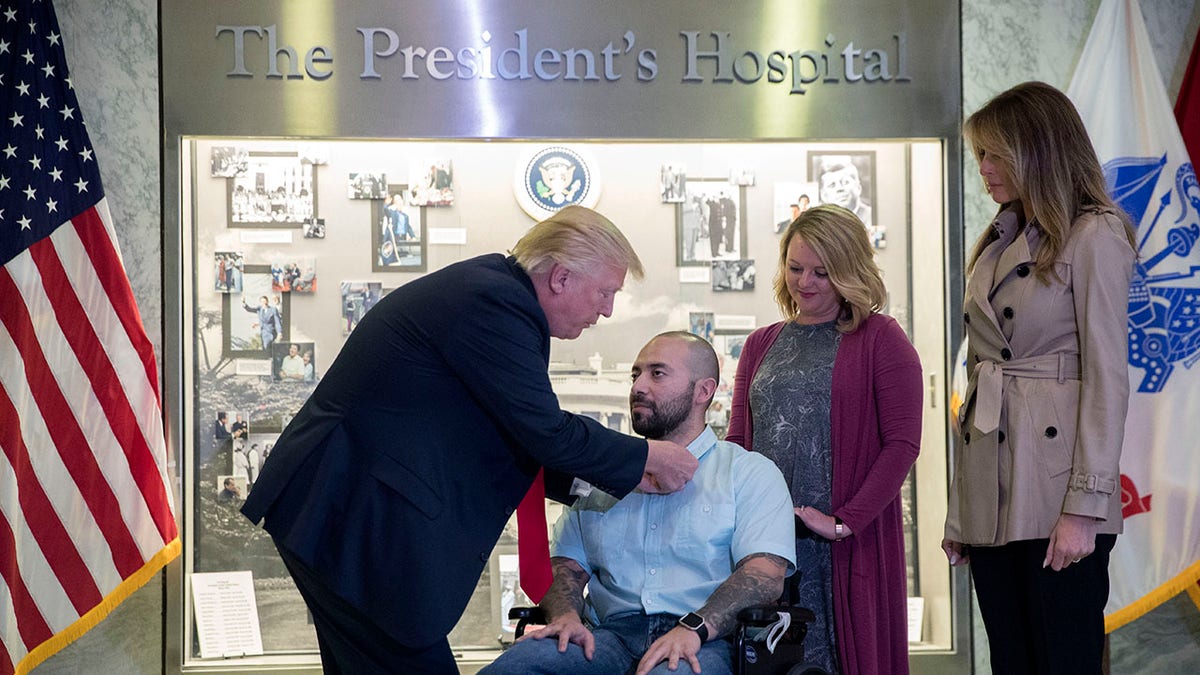
The timeline of these visits illustrates a consistent focus on the president’s health status. Following an annual physical in April of last year, the president reported that he “aced” the cognitive test and the White House released a memo reporting that Trump was in “excellent health.” Just a few months later, in October, he returned to Walter Reed for what was described as a “scheduled follow-up” — which sparked renewed concerns about his health. By December, the White House revealed that Trump received a CT scan to further assess his “cardiovascular and abdominal health.”
Addressing Public Scrutiny and Physical Symptoms
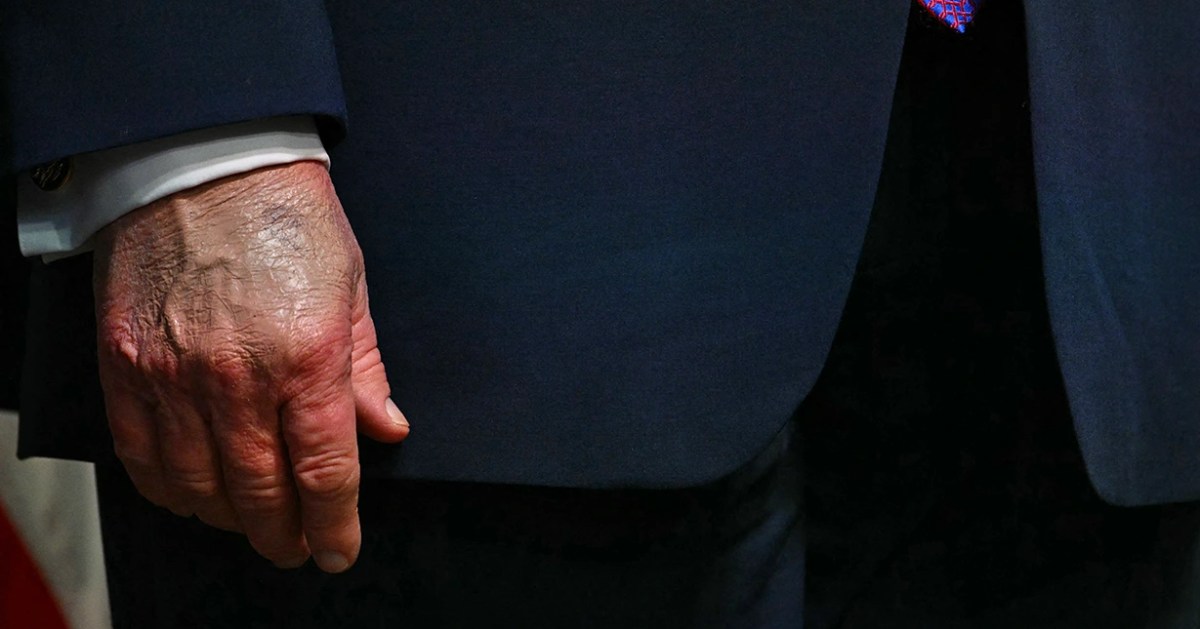
Public discourse surrounding the president’s health has intensified alongside recent photographic evidence of physical ailments. Observers have pointed to visible swelling in his lower legs and deep bruising on his hands, which the president has been seen covering with makeup at public events. In January, the president addressed these concerns directly, telling the Wall Street Journal that he regretted the October CT scan due to the resulting public speculation and attributed the hand bruising to high aspirin intake.

Recent reports have also highlighted specific dermatological concerns. According to White House physician Sean Barbabella, the president has been utilizing a common cream as a “preventative skin treatment” to address a persistent neck rash. This disclosure was provided by the physician’s office to contextualize the president’s recent appearance and address ongoing public inquiries regarding his physical symptoms.
For more on this story, see Trump to Visit Walter Reed for Medical Exams Amid Heightened Health Scrutiny.
Concerns have also extended to the president’s energy levels and mental acuity. While critics have highlighted instances of the president appearing to move cautiously on stairs or nodding off during appearances, the White House has consistently pushed back against these characterizations. Regarding reports of the president falling asleep, officials have maintained that he was simply “resting his eyes,” and that other images were merely instances of him blinking.
The political stakes remain high as the president approaches his 80th birthday. According to reporting by MS NOW, a Washington Post-ABC News-Ipsos poll conducted last month indicated that 44% of Americans believe the president is in good enough health to serve effectively, a decline from 54% in September. Furthermore, only 40% expressed confidence in his mental acuity for the office.
Administration Defense and Political Context
The White House has maintained an aggressive posture in defending the president’s vitality, emphasizing his rigorous work schedule. White House Communications Director Steven Cheung has frequently utilized social media to showcase the president’s engagement with global leaders and complex policy negotiations, such as the ongoing efforts regarding a U.S.-Iran peace deal.

“This man is focused and determined,” Cheung wrote on X. “Can’t stop, won’t stop.”
The administration’s legislative agenda has also continued alongside the medical scrutiny. In December 2025, the House approved a $900 billion defense policy bill designed to codify elements of the president’s national security agenda and provide pay increases for U.S. troops. Furthermore, in broader fiscal policy, the president recently defended the Justice Department’s $1.7 billion “anti-weaponization” fund, stating that he “gave up a lot of money” by allowing its creation, despite claims that he was not involved in the project’s inception.
Despite the mounting discourse, the political impact of these health questions remains uneven. As noted by NPR, Republican lawmakers continue to pursue the president’s endorsement, and even members in highly competitive districts have continued to campaign alongside him. The administration continues to frame the medical visits as standard procedure, with White House physician Capt. Sean Barbabella previously stating that the president “remains in excellent overall health.”
As the president undergoes this latest assessment, the tension between his official medical reporting and public observation continues to define a significant portion of the current political narrative. Whether this routine visit serves to quiet the scrutiny or fuel further debate depends heavily on the forthcoming details released by the White House following the examination.
