
Nvidia and Microsoft unveiled a transformative PC processor at Computex 2026, sparking market shifts and redefining AI hardware competition. The RTX Spark, combining Nvidia’s Blackwell GPU with Microsoft’s N1X Arm-based CPU, marks a direct challenge to Intel, AMD, and Apple in the $200 billion PC market, with Nvidia shares rising 4% post-announcement. Yahoo Finance reported the chip’s 1 petaflop AI performance and 120-billion-parameter model support, while Tom’s Hardware speculated on N1X laptops running Windows on Arm, and VentureBeat detailed Microsoft’s Surface RTX Spark Dev Box, a desktop tool for local AI model development.
RTX Spark: A PC Revolution or a Niche Play?
The RTX Spark’s debut signals Nvidia’s ambition to dominate the PC processor space, a domain long dominated by Intel and AMD. By integrating a 128GB unified memory pool and Arm-based architecture, the chip aims to deliver “a new era of PC,” as Tom’s Hardware noted, with Microsoft’s endorsement suggesting broader appeal. However, technical limitations persist: the GB10 Superchip’s shared memory architecture offers 273 GB/s bandwidth, far below traditional laptops with dedicated GPUs. “You can certainly game on GB10, but it’s not the platform’s strongest suit,” Tom’s Hardware reported, warning of steep pricing—$5000 for GB10-based systems—due to silicon shortages.

Microsoft’s Strategic Bet: Local AI Without Cloud Costs
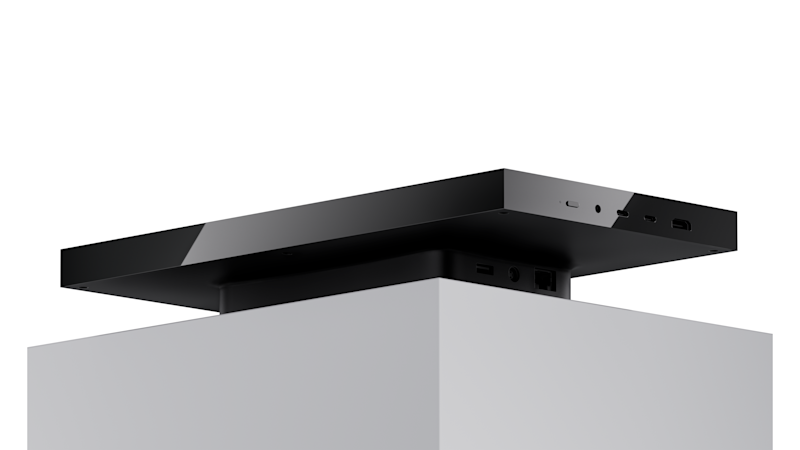
Microsoft’s Surface RTX Spark Dev Box, unveiled at Build 2026, epitomizes the company’s pivot toward fixed-cost AI development. Pavan Davuluri, Microsoft’s executive vice president of Windows and Devices, emphasized that “these class of devices, we think, will get to about 100 billion parameter model running,” VentureBeat quoted. The Dev Box’s 128GB unified memory allows developers to run 120-billion-parameter models locally, bypassing cloud costs. Andrew Hill, Microsoft’s Surface vice president, framed the move as a “change that equation,” enabling developers to “reserve frontier model calls for truly frontier problems” while handling routine tasks on local hardware. This strategy could weaken Azure’s dominance, though Microsoft reiterated that cloud services remain essential for “state-of-the-art models.”
For more on this story, see Nvidia Invests in AI PCs with RTX Spark Superchip.
Market Reactions: Winners, Losers, and Cathie Wood’s Shift
The announcement sent ripples through the semiconductor sector. Dell, HP, and Arm surged as partners, while Intel, AMD, and Qualcomm fell, reflecting investor repositioning. Yahoo Finance highlighted Ark Invest’s Cathie Wood, who shifted $63 million into Nvidia while selling $56 million of AMD—a stark reversal from her previous skepticism. “AI’s value will ultimately accrue to implementation companies, not semiconductor manufacturers,” she had argued earlier, but the RTX Spark’s potential to disrupt PC architecture may have swayed her. The move underscores the chip’s perceived threat to traditional PC incumbents, though its success hinges on adoption by OEMs and developers.
Technical Challenges and the Path Forward
Despite the hype, the RTX Spark’s real-world impact depends on overcoming technical and economic hurdles. The GB10 Superchip’s shared memory model, while innovative, risks performance bottlenecks for resource-intensive tasks. Tom’s Hardware noted that N1X laptops, if released, would need to differentiate through AI-driven workflows rather than gaming. Microsoft’s Dev Box, meanwhile, targets developers but faces questions about pricing and adoption. “The model size is one thing, but for the model to be effective, it needs enough context,” Davuluri VentureBeat said, hinting at the complexity of balancing hardware capabilities with software ecosystems.

This follows our earlier report, Nvidia Unveils RTX Spark, Its CPU Challenge to Intel and AMD.
What’s Next for the AI PC Race?
The RTX Spark’s success will depend on partnerships, pricing, and developer ecosystems. Microsoft’s collaboration with Nvidia could accelerate Windows on Arm adoption, but the platform’s appeal to mainstream users remains uncertain. For Nvidia, the chip represents a bold expansion beyond data centers, though its PC ambitions may face resistance from entrenched rivals. As Yahoo Finance noted, Nvidia’s 20% year-to-date gains lag behind the 90% rise in the Semiconductor ETF, suggesting market skepticism. Yet the company’s pivot to PCs, coupled with Microsoft’s strategic bets, could redefine AI’s hardware landscape—provided the technology delivers on its promise.
