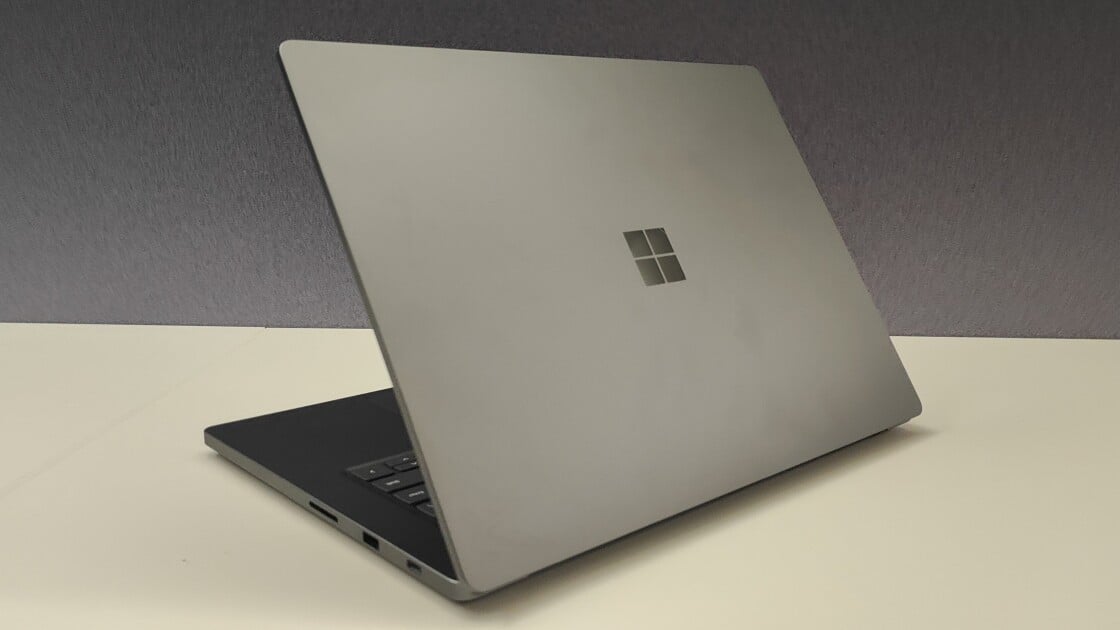
Nvidia CEO Jensen Huang unveiled the RTX Spark superchip at Computex in Taipei on Monday, June 1, 2026, marking the company’s strategic entry into the PC processor market. Developed in collaboration with MediaTek, the chip aims to power a new generation of Windows AI PCs, competing directly with established CPU manufacturers.
A New Architecture for Personal AI

The RTX Spark represents a fundamental shift in how Nvidia positions its hardware within the consumer ecosystem. By combining a 20-core Arm-based CPU with an integrated GPU equivalent to a GeForce RTX 5070, the company is attempting to consolidate the components of an AI workstation into a single system-on-a-chip. As reported by PCMag, this hardware is optimized for Windows on Arm and includes a dedicated neural processing unit to handle Microsoft’s Copilot+ features.
The platform is designed to support up to 128GB of unified memory, a specification that puts it in direct competition with high-end devices like the MacBook Pro. According to WIRED, this configuration addresses a long-standing gap in the Windows market, where high-performance AI tasks previously required external server access or multiple discrete GPUs. The RTX Spark utilizes a 3nm process node, which MediaTek engineers claim reduces power consumption by 25% during active inferencing tasks compared to previous-generation discrete mobile graphics solutions.
Reinventing the User Experience

Jensen Huang has framed this development not merely as a hardware upgrade, but as a total transformation of the computing interface. During his keynote, he emphasized that the era of manual application launching is giving way to agentic workflows.
“For forty years, you launched apps. Click. Type. With RTX Spark and Microsoft Windows, you ask — and the PC does the work. RTX Spark brings everything NVIDIA has built — CUDA, RTX, our AI platform — into a single superchip. Local agents. Frontier models. Creative workflows. RTX games. All on a laptop. This is the new PC. The personal AI computer.” Jensen Huang, founder and CEO of NVIDIA, via NVIDIA Newsroom
The ambition here is to move the heavy lifting of artificial intelligence from the cloud to the “edge.” As CNBC noted, this move allows Nvidia to extend its influence beyond the data center. Industry analysts suggest that this strategy is a clear attempt to capture the entire AI stack.
“Nvidia getting into the space is Jensen recognizing that he wants to own every bit of the AI stack in some shape,” Tom Mainelli, IDC analyst, via CNBC
Technical Specifications and Developer Support
The RTX Spark architecture introduces “Nvidia Tensor-Link,” a proprietary interconnect that allows the CPU and GPU to share the 128GB of memory pool with zero-copy latency, according to technical documentation shared at the Computex event. This is critical for Large Language Models (LLMs) that require massive memory bandwidth to maintain low-latency responses during local execution.
Developers can access the RTX Spark via a specialized version of the CUDA toolkit, which Nvidia confirmed will be available in a beta release starting in Q3 2026. This toolkit includes optimized libraries for the new neural processing unit, allowing developers to offload background tasks such as real-time video noise reduction and predictive text generation without impacting the primary GPU performance.
Market Impact and Future Hardware
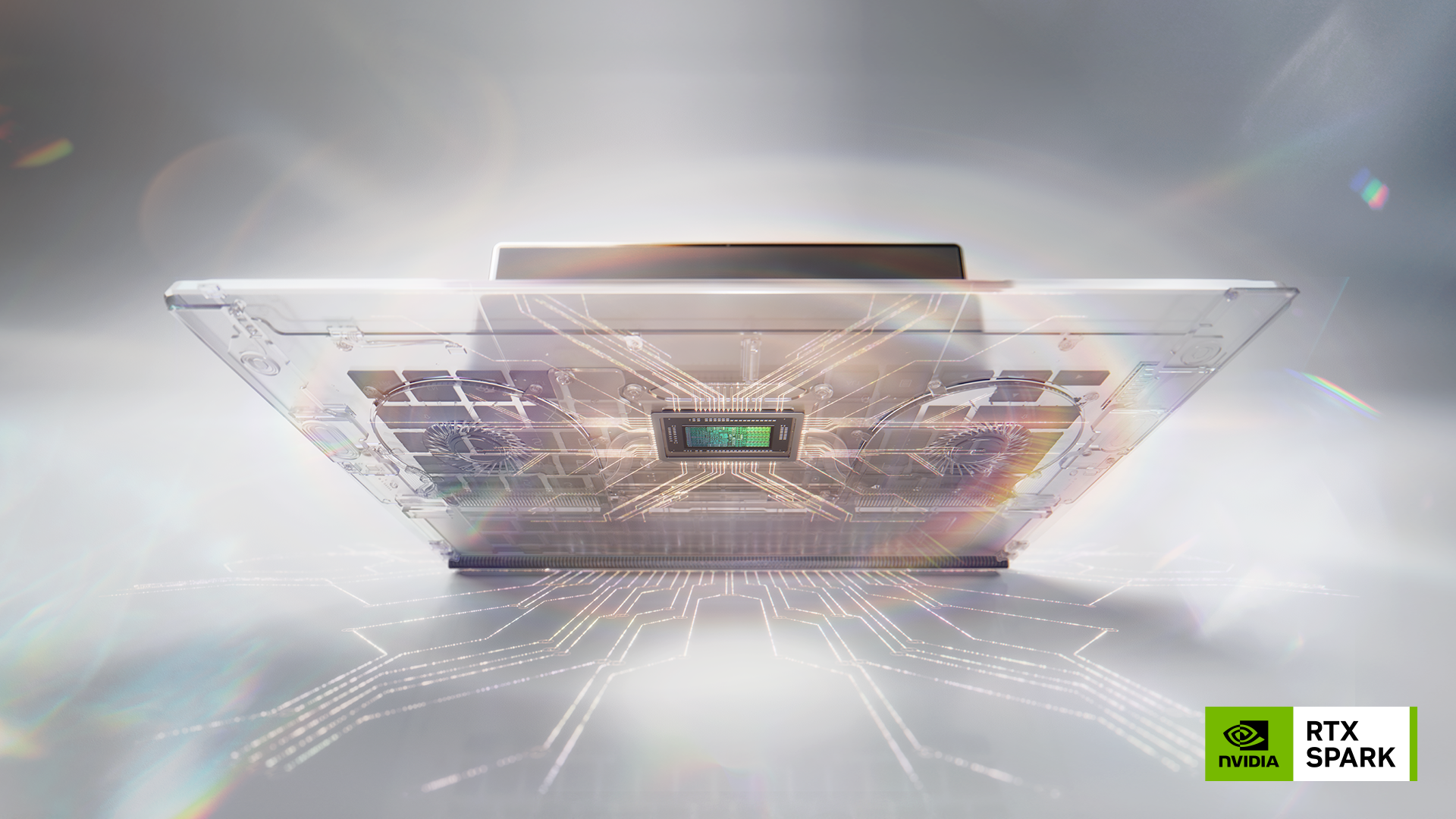
The announcement has already sent ripples through the financial sector. Shares of traditional CPU manufacturers experienced a decline on Monday, while Nvidia saw its own stock value increase by more than 6%. The company currently boasts a market capitalization of approximately $5.4 trillion, reinforcing its position as a dominant force in the global technology landscape.
Partnerships are central to this rollout. Major OEMs, including ASUS, Dell, HP, Lenovo, and MSI, are expected to release compact desktops and slim laptops utilizing the RTX Spark chip this fall, with Acer and GIGABYTE following shortly after. Microsoft’s Surface Laptop Ultra stands out as the flagship device for this new class, featuring a 15-inch Mini-LED display and a design that prioritizes both aesthetics and thermal efficiency.
The collaboration with Microsoft extends beyond hardware integration. As noted by NVIDIA Newsroom, the RTX Spark platform includes new security primitives and the implementation of NVIDIA OpenShell to ensure that personal agents run securely on local devices. This security framework utilizes hardware-level encryption keys stored within the chip’s secure enclave, preventing unauthorized access to the user’s local model cache.
Reviewers at the event noted that the initial reference designs for the RTX Spark laptops maintain a chassis thickness of under 16mm, a significant achievement given the thermal requirements of an integrated RTX 5070-class GPU. By utilizing advanced vapor chamber cooling, the OEMs aim to maintain peak performance during sustained AI workloads, a metric that Nvidia claims is 40% higher than current-generation ultra-portable Windows laptops. The industry is now watching to see if these machines can successfully challenge the current duopoly of Intel and AMD, as well as Apple’s proprietary Silicon, in the months to come.
