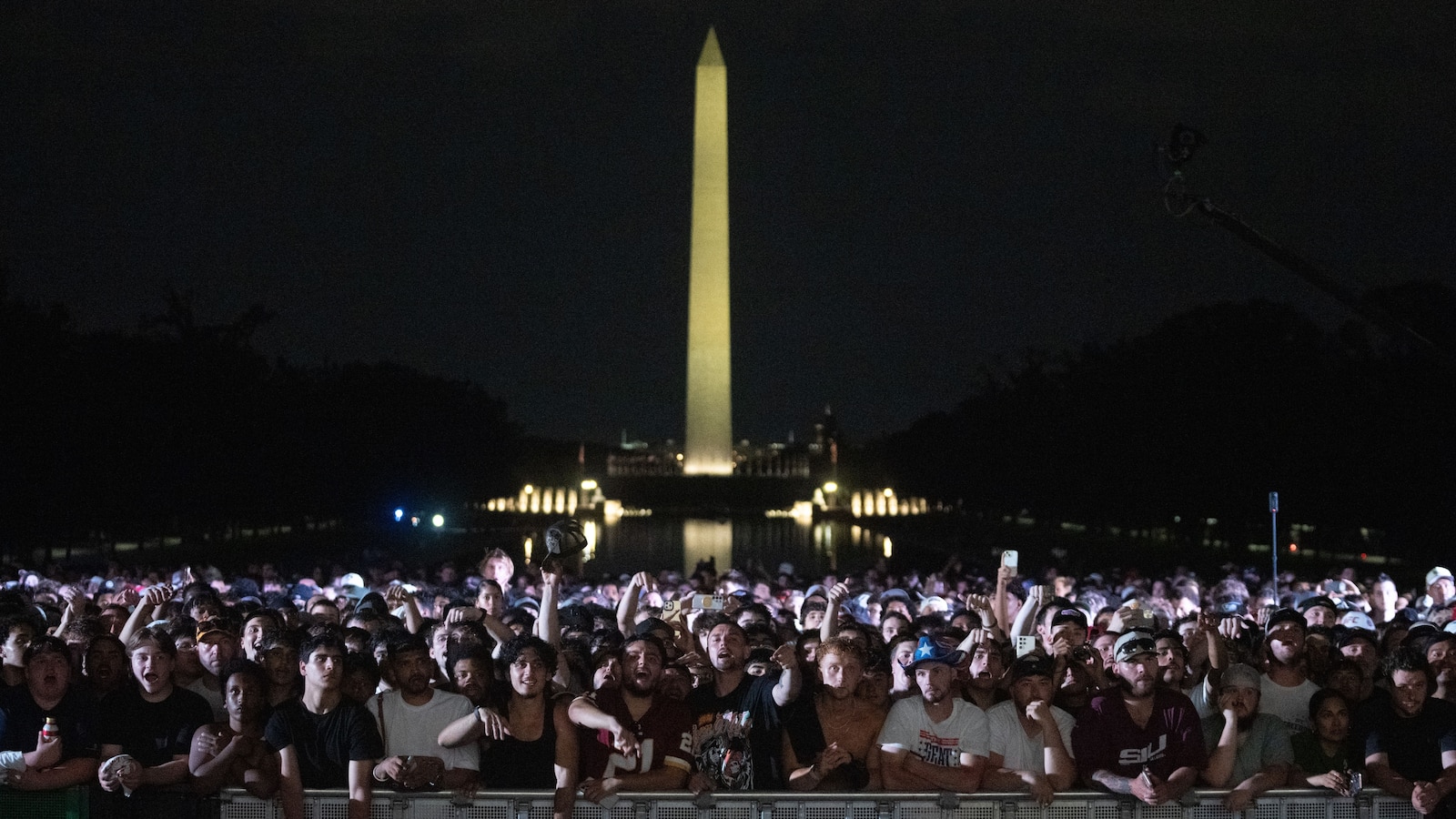
Mixed martial arts fighters held a public news conference at the Lincoln Memorial on Friday, June 12, 2026, ahead of a high-profile fight weekend marking the nation’s 250th anniversary and President Donald Trump’s 80th birthday. The event, which culminates in bouts staged outside the White House, has drawn thousands of fans despite legal challenges and logistical hurdles.
Federal Litigation and the White House Venue
The spectacle, dubbed UFC Freedom 250, faced immediate scrutiny from the Public Integrity Project, a watchdog group that sought to block the event from federal land. In a lawsuit, the organization characterized the planned fights as a “private, commercial, corrupt use of our most sacred national monuments for private gain,” according to reporting by The Associated Press. Despite these objections, a federal judge ruled on Friday that the White House was permitted to proceed with the event.

The legal battle centered on the National Park Service’s permit process for the National Mall and White House grounds, which are traditionally reserved for public protests, inaugurations, and civic ceremonies. The court’s decision to allow a commercial sporting event on federal property set a notable precedent for the administration of the D.C. landscape. While the court cleared the way for the fights, the scale of the investment remains significant. The UFC has stated it spent $60 million on the weekend’s festivities, an expenditure President Trump has publicly hailed as “the greatest show on earth,” as noted by The Independent.
Fan Demographics and Political Misconceptions
The gathering in Washington D.C. has attracted a diverse international crowd, including fans who traveled from as far as Western Australia. David Halstead, an attendee from Albany, Western Australia, credited President Trump with having “put UFC on the map,” according to ABC News. However, observers on the ground suggest that the political profile of the sport’s audience is more complex than some assume.
Ipsos Sports polling conducted during February and March indicates that only about 1 in 10 U.S. adults identify as mixed martial arts fans. The data reveals that while the fan base skews male and nonwhite, it does not align exclusively with one political party. Ricardo Rodriguez, a 24-year-old attendee, addressed this directly:

“One misconception is that everyone who watches UFC is a Trump supporter, but that’s not the case,” said Ricardo Rodriguez, 24, explaining he loves the physicality of the sport. “People also expect a knock out every time,” he said.
The intersection of athletics and political branding is not entirely new to the sport, but the scale of this integration on the White House lawn represents a departure from standard promotion. Typically, UFC events are hosted in large-scale arenas or stadiums capable of housing the specific structural requirements of the Octagon and the necessary broadcasting infrastructure. The logistical challenge of erecting this infrastructure on the South Lawn required specialized engineering to ensure the safety of both the fighters and the historic grounds.
Historical Context and Community Engagement
Some fans have brushed off criticism regarding the use of the White House grounds by drawing comparisons to the past. Tracy Philbeck, who traveled from Charlotte, North Carolina, to see Justin Gaethje compete, noted that hosting fights at the “People’s House” aligns with the legacy of Theodore Roosevelt. Roosevelt was an avid amateur boxer who maintained a tradition of sparring during his time in office. This historical nod serves as a common talking point among supporters who argue that physical culture has long been a part of the executive branch’s identity.
Beyond the main event, the organization has focused on community outreach. At the Midtown Youth Academy in the District of Columbia, UFC fighter Randy Brown participated in a community event, sparring with local teenagers. Gloria Lee, the gym’s executive director, described the visit as a meaningful moment for the local youth, noting, “It’s just been a thrilling week, and I was about to fall out when he came in the door!” Such outreach programs are a staple of the promotion’s efforts to expand its footprint in new markets, often involving high-profile fighters visiting urban community centers to demonstrate techniques and emphasize the discipline required for professional competition.
Looking Toward the Octagon
As the weekend progresses, attention shifts to the lightweight title bout between American Justin Gaethje and Georgian Ilia Topuria. The bout holds significant weight for the lightweight division rankings, as both fighters have been building momentum in recent months. Gaethje, known for his relentless pressure and striking power, faces a tactical challenge against Topuria, who has maintained an undefeated streak in his ascent to the top of the division. For fans like Ellie Louizes, who practices Muay Thai and jujitsu, the weekend is a showcase for the technical evolution of the sport. Louizes, who attended with her boyfriend Jacob Purvis, observed that while female fans remain a minority, the sport’s appeal continues to broaden, adding that “female fighters are often way more aggressive” than their male counterparts.
With the Octagon now positioned on the South Lawn, the focus remains on whether the event’s high-profile setting can sustain the momentum generated by the $60 million investment. The outcome of the main event will directly influence the trajectory of the lightweight title picture for the remainder of the year. As the fighters prepare to step inside the cage, the atmosphere on the White House grounds reflects a unique collision of professional sports, national history, and political theater.
Find more reporting in our Sports section.
