
U.S. Commerce Secretary Howard Lutnick warned ASML in late June 2026 that one of its extreme ultraviolet (EUV) lithography machines may have entered China in violation of export controls, according to Bloomberg News. ASML denied the claim, stating it has never shipped EUV tools or related components to China, while the U.S. government raised questions about the integrity of its semiconductor export regime.
U.S. Concerns and ASML’s Response
The U.S. Commerce Department raised the issue during meetings with ASML executives, citing concerns that an EUV machine—critical for manufacturing advanced chips—could have bypassed restrictions. Bloomberg reported that Lutnick emphasized the machines’ “small quantities” and “requirement for constant upkeep,” suggesting they are unlikely to be moved without detection. ASML’s spokesperson reiterated that the company has never exported EUV systems or components to China, noting that its most advanced EUV tools are “roughly the size of a school bus” and weigh 180 tons. “ASML has never shipped an EUV machine to China nor have we shipped to China any component, module or equipment specially designed to be used in an EUV machine,” the statement said.
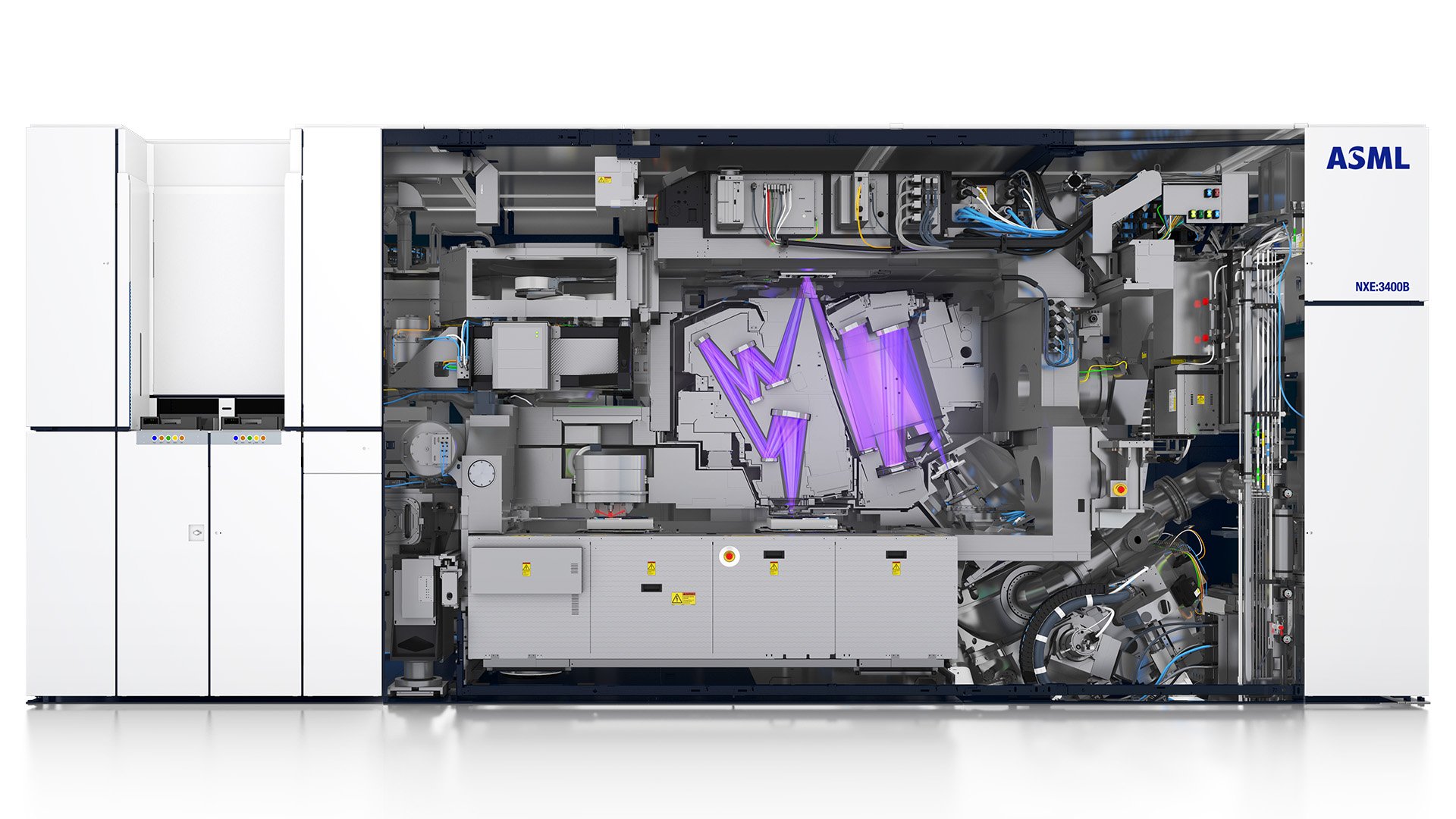
The U.S. government’s allegations come amid broader tensions over China’s semiconductor ambitions. Reuters previously reported in 2024 that Chinese scientists had developed a prototype EUV machine using former ASML engineers, likening the effort to a “Manhattan Project.” This context fuels suspicions that China may be replicating ASML’s technology through reverse engineering or insider knowledge.
China’s EUV Ambitions
Startup Fortune highlighted that the U.S. warning coincides with China’s covert domestic EUV program, which reportedly relies on former ASML engineers. The article noted that the U.S. export controls are designed to block such transfers, but the alleged presence of an EUV machine in China challenges the effectiveness of these measures. “This raises serious questions about the integrity of the U.S.-led semiconductor export regime,” the outlet wrote, underscoring the strategic stakes for global tech competition.

The situation reflects a broader struggle over control of advanced chipmaking technology. EUV machines are essential for producing cutting-edge semiconductors used in everything from smartphones to artificial intelligence systems. By restricting access to these tools, the U.S. aims to curb China’s technological rise, but reports of potential leaks or circumvention highlight the difficulty of enforcing such policies.
Implications for U.S.-China Tech Rivalry
The allegations could escalate tensions between Washington and Beijing, particularly as both nations vie for dominance in semiconductors. The U.S. has already imposed stringent export restrictions on Chinese tech firms, while China has invested heavily in self-reliance. The potential presence of an EUV machine in China would represent a significant setback for U.S. efforts to limit Beijing’s access to advanced manufacturing capabilities.
Analysts suggest the incident may prompt the U.S. to tighten its export controls further or increase surveillance of ASML’s operations. However, the lack of concrete evidence complicates the response. “Without proof, the U.S. risks undermining its own credibility if it accuses ASML without data,” said a semiconductor industry observer, speaking on condition of anonymity.
ASML, a key supplier to global chipmakers, faces a delicate balancing act. While it must comply with U.S. regulations, it also seeks to maintain its market position in China, where demand for advanced chips is growing. The company’s denial of the allegations may help it avoid immediate fallout, but the controversy could linger as regulators investigate.
What Comes Next?
The outcome hinges on the U.S. government’s ability to verify the claim. If evidence emerges that an EUV machine entered China, it could lead to sanctions against ASML or expanded export restrictions. Conversely, if the allegations prove unfounded, the incident may be seen as an overreach that strains U.S.-Dutch relations. Either way, the episode underscores the fragility of global supply chains and the challenges of enforcing tech export controls in an era of rapid innovation.
For now, the situation remains unresolved. ASML has not commented further, and the U.S. Commerce Department has not provided additional details. As the tech rivalry between the U.S. and China intensifies, the fate of EUV technology will remain a focal point of geopolitical and economic strategy.
Find more reporting in our Business section.
