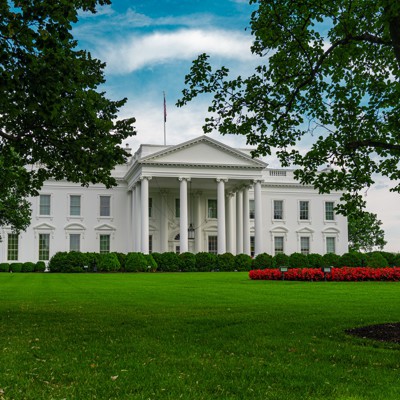
President Trump signed two executive orders on June 22, 2026, mandating the development of “commercially relevant” quantum computers by 2028 and accelerating national security protections against quantum-enabled cyber threats to 2031. The initiative directs federal agencies to utilize existing funding to secure the quantum research enterprise against foreign espionage and competition.
White House Directive for Commercially Relevant Quantum Computing
The administration’s primary goal is the deployment of a machine “powerful enough for scientific research” by 2028. According to the White House, this effort aims to usher in “a new era of commercial capabilities.” While the orders do not authorize new congressional appropriations, they instruct agencies including the Department of Energy, the Department of Commerce, and NASA to reallocate existing budgets toward quantum infrastructure and supply chain improvements.
Industry stakeholders remain divided on the feasibility of this timeline. Nvidia CEO Jensen Huang, who previously suggested that useful quantum systems were at least 15 years away, has recently signaled a more optimistic outlook. Despite the ambition of the 2028 target, administration officials acknowledged that the technical specifications for what constitutes a “commercially relevant” system have not yet been finalized and will be determined by the Department of Energy.
This directive mirrors the structured approach seen in the National Quantum Initiative Act of 2018, which originally set the framework for federal investment in quantum information science. However, by setting a specific deadline of 2028, the executive orders shift the policy from long-term basic research toward an applied, mission-driven procurement model similar to the Manhattan Project or the Apollo program, where federal demand drives private sector engineering milestones.
Counterintelligence and Security Mandates for Federal Agencies
Beyond hardware development, the administration is prioritizing the protection of U.S. quantum research from foreign adversaries. A forthcoming directive will task the FBI and the broader intelligence community with shielding the sector from espionage, according to reporting from Nextgov/FCW. The strategy is designed to combat the risk of “Q-day,” the theoretical point at which quantum computers could compromise current encryption standards.
“Quantum is exactly the kind of target foreign intelligence services prioritize. It is a small field, the talent is concentrated in a handful of universities and companies, and the work sits at the seam between fundamental research and national and economic security.”
Trump signs executive order to invest in quantum computing that will make Moore's Law possible
Michael McLaughlin, former U.S. Cyber Command official, via Nextgov/FCW
Experts like McLaughlin argue that the quantum sector is a “soft target” because of its concentrated talent pool and the ease with which foreign entities can co-opt suppliers or acquire intellectual property through private equity. The new policies seek to mitigate these threats by implementing stricter personnel security programs for academic labs and conducting deeper reviews of foreign vendor access. This follows established precedents in the semiconductor sector, where the Committee on Foreign Investment in the United States (CFIUS) has increasingly scrutinized acquisitions involving dual-use technologies that possess both civilian and military applications.
Investment and Funding Landscape
While the executive orders leverage existing federal resources, the government has already established a substantial financial footprint in the sector.
Photo: Yahoo Finance
$2 billion: Total grants announced by the Trump administration last month to support machine development.
$1 billion: Funding allocated specifically to IBM’s quantum efforts.
$100 million: Individual grants provided to various other firms in the quantum ecosystem.
The Commerce Department has been instructed to draft plans for expanding this federal investment, as the administration views quantum dominance as a prerequisite for long-term national security. Michael Kratsios, director of the White House Office of Science and Technology Policy, stated that “these policies will drive transformational growth in existing and entirely new industries.”
The Path to 2031 and Beyond
The government’s timeline for post-quantum cryptography migration is set for 2031, a move intended to provide a buffer against future decryption threats. This transition involves replacing current public-key encryption algorithms with new, quantum-resistant standards currently being vetted by the National Institute of Standards and Technology (NIST). The 2031 date serves as a critical deadline for federal agencies to achieve “crypto-agility,” ensuring that sensitive national security data remains protected against “harvest now, decrypt later” attacks, where adversaries steal encrypted data today with the intent to unlock it once quantum hardware matures.
The success of these directives depends on the government’s ability to coordinate across disparate departments and private sector partners. Whether the U.S. can successfully foster a self-sustaining quantum industry while simultaneously erecting barriers against foreign espionage remains the central challenge of the administration’s current technology policy. Success will likely depend on maintaining the balance between open academic collaboration, which has historically fueled American innovation, and the rigid security protocols required to protect emerging national security assets.

.png "Counterintelligence and Security Mandates for Federal Agencies")

