The Nintendo Switch 2 ecosystem just got a major upgrade with two competing docks that redefine portability and feature density. JSAUX’s $59.99 6-in-1 Gaming Dock crams four Joy-Con 2 chargers, a Pro Controller slot, 4K/60Hz HDMI output, and even an RJ45 port into a foldable design—while GuliKit’s $29.99 ultra-light dock weighs just 105 grams and fits in a backpack. Both challenge Nintendo’s $124.99 official dock, which remains the gold standard for home setups but was never built for travel.
Why Nintendo’s Official Dock Is Now Just One Option
Nintendo’s official Switch 2 dock has always been the most reliable choice for home use, but its 383-gram weight and fixed design make it impractical for anything beyond a permanent entertainment center setup. The company’s magic trick—sliding the console in and out to switch between handheld and TV modes—works flawlessly at home, but the dock itself was never designed for mobility. That gap is exactly what JSAUX and GuliKit are targeting with their new accessories, each offering a radically different approach to portability and functionality.
Photo: Yanko Design
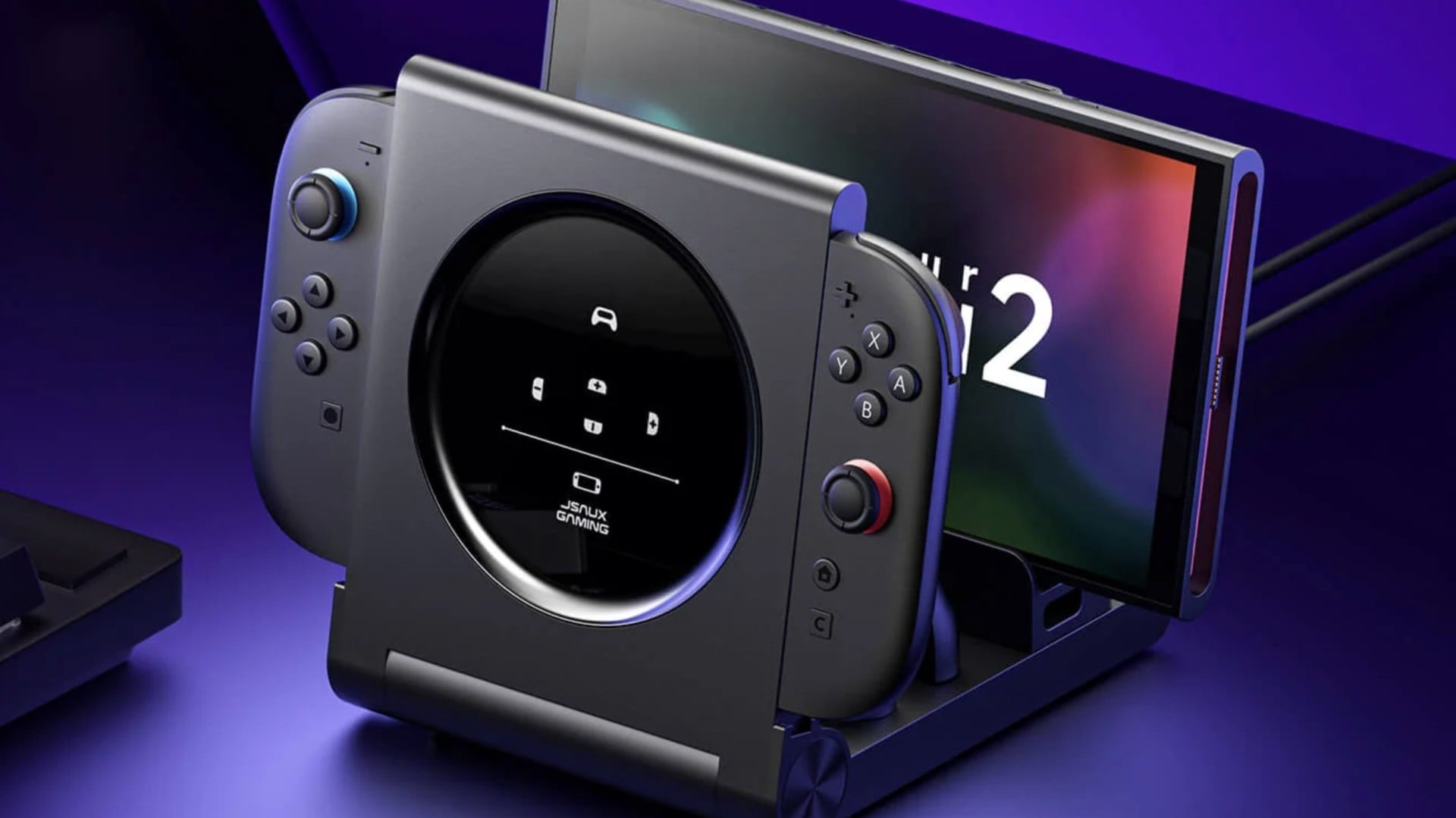
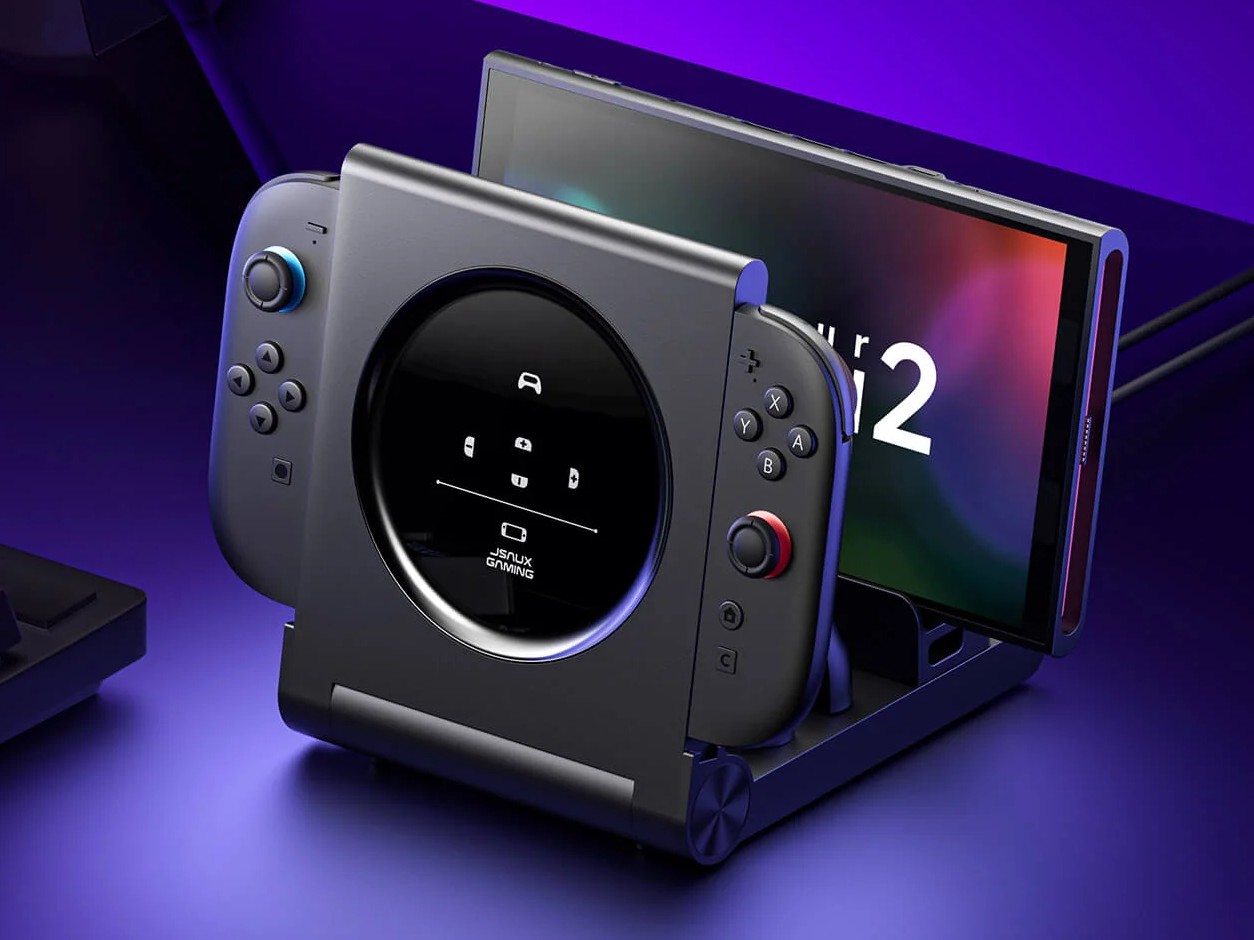
JSAUX’s 6-in-1 Gaming Dock reported by Nintendo Life is a feature-packed beast. For $59.99, it charges four Joy-Con 2 controllers simultaneously, includes a Pro Controller slot that doubles as a console charger when paired with an included adapter, and supports 4K/60Hz and 2K/120Hz output. It even adds an RJ45 port for wired 1000Mbps internet and slots for four game cartridges and four microSD cards. The trade-off? It’s heavier at 405 grams and requires more space than Nintendo’s official dock, though its foldable design helps mitigate that. The dock’s LED indicators and compact storage make it a strong candidate for gamers who want a secondary dock for travel or a secondary setup.
Photo: Notebookcheck
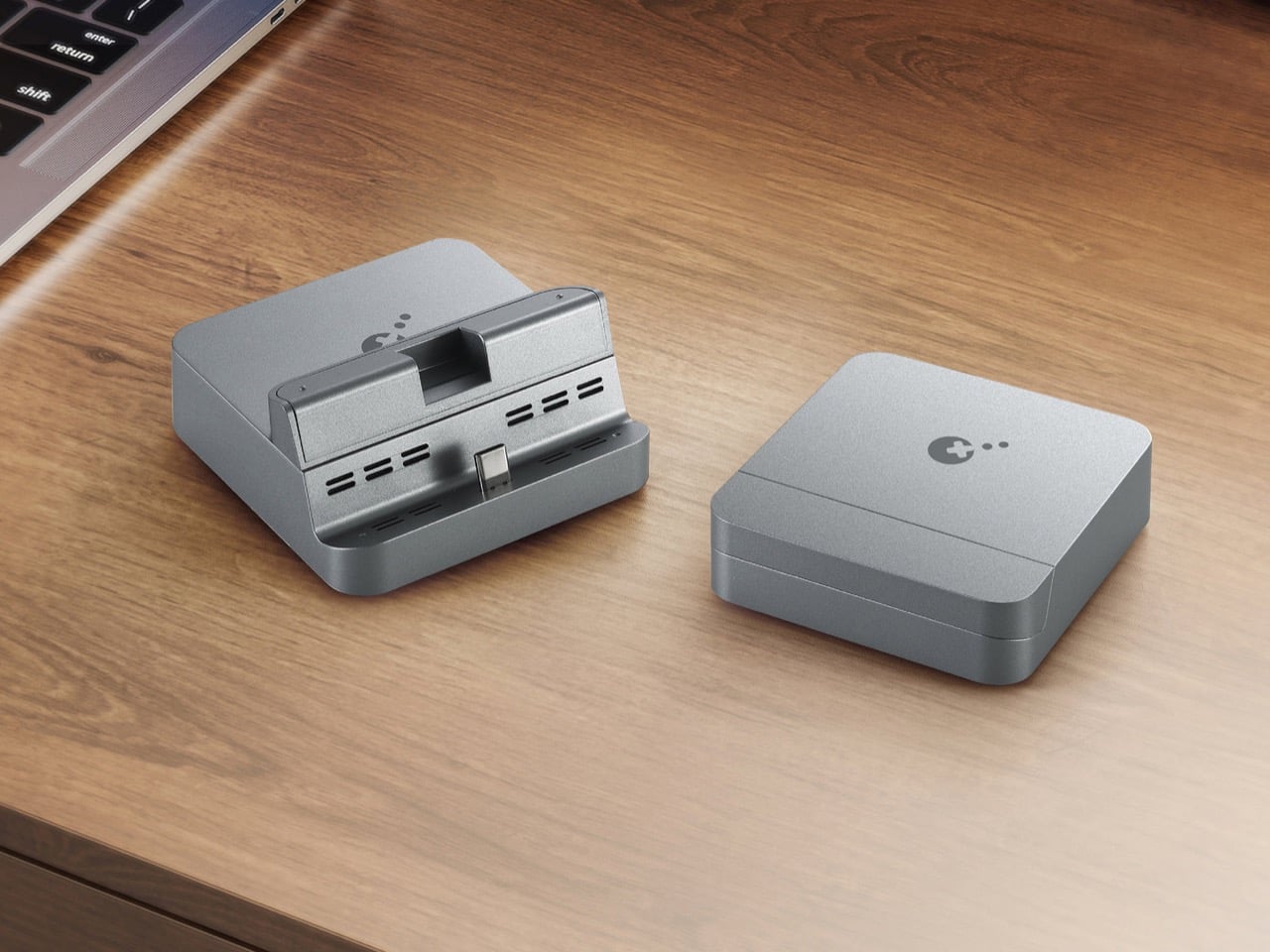
But where JSAUX leans into feature density, GuliKit’s approach is about sheer portability. Weighing just 105 grams—72% lighter than Nintendo’s dock—the GuliKit TV Docking Station highlighted by Yanko Design is designed to disappear into a backpack or suitcase. It supports 4K/60Hz output, includes a USB-A port for accessories, and even features a sliding USB-C connector to accommodate protective cases. At $29.99, it undercuts most third-party Switch accessories that offer full 4K output, positioning itself as the ultimate travel dock. The Verge noted its ability to switch between TV Docking Mode and Desktop Charging Mode, making it versatile for both home and on-the-go use.
Feature Showdown: JSAUX vs. GuliKit vs. Nintendo
Feature
JSAUX 6-in-1 Dock ($59.99)
GuliKit Dock ($29.99)
Nintendo Official Dock ($124.99)
Weight
405g
105g
383g
Portability
Foldable, but bulky
Ultra-compact, fits in backpack
Fixed, not portable
Controller Charging
4 Joy-Con 2 + 1 Pro Controller
2 Joy-Con (standard Switch)
2 Joy-Con (standard Switch)
HDMI Output
4K/60Hz, 2K/120Hz, 1080p/120Hz
4K/60Hz (with HDR)
4K/60Hz (Switch 2)
Networking
1000Mbps RJ45 port
None
None
Storage
4 game cartridges + 4 microSD slots
None
None
Price
$59.99
$29.99
$124.99
The table above highlights the stark differences between the three docks. JSAUX’s offering is a power user’s dream, packing in more features than most gamers will ever need—especially with its RJ45 port for wired internet and built-in game storage. GuliKit’s dock, meanwhile, strips away the extras to focus on what matters most for travelers: weight, size, and simplicity. Nintendo’s official dock remains the most reliable for home use, but its lack of portability and high price make it a poor choice for anything beyond a permanent setup.
Notebookcheck pointed out that JSAUX’s dock is significantly cheaper than Nintendo’s official model, which retails for $124.99 and includes an AC adapter. While the official dock is still the most polished option for home use, the third-party alternatives are filling critical gaps—particularly for gamers who need portability or additional features like wired networking.
What This Means for Nintendo’s Ecosystem
The launch of these third-party docks signals a shift in how Nintendo’s ecosystem is evolving. For years, the company’s official dock was the only real option for TV play, and its design reflected that—built for permanence, not mobility. But as the Switch 2 pushes for broader adoption beyond the living room, accessories like JSAUX’s and GuliKit’s are addressing real pain points: weight, portability, and feature expansion.
Omnicentro Switch Dock – Jsaux Omnicentro Compact Portable Switch Dock
GuliKit’s dock is particularly notable because it proves that portability doesn’t have to come at the expense of performance. At just 105 grams, it’s light enough to carry anywhere, yet still delivers 4K output and robust charging capabilities. This kind of innovation could pressure Nintendo to reconsider its own docking strategy, especially if demand for travel-friendly setups grows. As Yanko Design observed, the Switch’s magic trick of seamless handheld-to-TV switching has always been limited by its dock’s bulk. GuliKit’s solution suggests that the next generation of docks might prioritize mobility just as much as functionality.
JSAUX’s dock, on the other hand, is a masterclass in feature cramming. For gamers who want a secondary dock with networking, storage, and multi-controller charging, it’s an attractive option. However, its size and weight make it less ideal for true portability compared to GuliKit’s model. The fact that both companies are offering compelling alternatives—at prices far below Nintendo’s official dock—suggests that the market is ripe for innovation in this space.
Who Should Buy Which Dock?
The choice between JSAUX’s and GuliKit’s docks comes down to priorities:
Gamers on the go: GuliKit’s dock is the clear winner for portability. Its ultra-lightweight design and compact size make it ideal for travel, whether you’re taking the Switch 2 on vacation, to a friend’s house, or just want to avoid lugging around the official dock. The $29.99 price tag is also a steal compared to Nintendo’s $124.99 model.
Power users with home setups: JSAUX’s 6-in-1 dock is packed with features that casual users may not need, but it’s a game-changer for those who want wired networking, built-in storage, and the ability to charge multiple controllers at once. If you’re setting up a secondary gaming station or need extra ports, this is the dock for you.
Home console users who prioritize reliability: Nintendo’s official dock remains the best choice for those who want the most polished, stable experience at home. It’s not portable, but it’s the most feature-complete and well-supported option.
One question remains: Will Nintendo respond to these third-party innovations? The company has historically been cautious about third-party accessories, but the success of these docks could push Nintendo to rethink its own offerings—or at least loosen its grip on the ecosystem. For now, gamers have more options than ever, and the choice depends entirely on their needs.
What’s Next for Nintendo’s Accessory Market?
The introduction of these docks is just the beginning. As more companies enter the Switch 2 accessory space, we can expect to see innovations in charging, connectivity, and even form factors. The success of GuliKit’s ultra-light dock suggests that portability will be a key focus moving forward, while JSAUX’s feature-rich design shows that gamers are hungry for more than just basic functionality.
Nintendo has always controlled its ecosystem tightly, but the rise of third-party docks could signal a shift. If these accessories gain traction, we may see more companies experimenting with modular designs, wireless charging, or even cloud-saving solutions tailored to the Switch 2. The question is whether Nintendo will continue to dominate the market—or if it will finally embrace a more open ecosystem, as other console manufacturers have done.
For now, gamers have a clear choice: stick with Nintendo’s official dock for reliability, opt for GuliKit’s ultra-portable solution for travel, or go all-in on JSAUX’s feature-packed alternative. The Switch 2’s accessory market is evolving faster than ever, and these two docks are leading the charge.
Leo Andersson covers innovation, AI, and cybersecurity. A former engineer turned journalist from Stockholm, Leo has contributed to major tech outlets across Europe. His analytical style and deep understanding of technology trends define Globally Pulse’s forward-looking reporting.