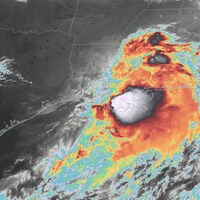
Post-Tropical Storm Arthur continues to generate life-threatening conditions across the Gulf Coast and Southeast as of Thursday, June 18, 2026. Despite losing its tropical status late Wednesday, the system is driving widespread flash flooding, severe thunderstorms, and tornado threats from Texas to the Florida Panhandle, with officials warning the danger will persist through the weekend.
Flash Flooding and Severe Weather Across the Gulf Coast
The transition of Arthur into a post-tropical low-pressure system has not diminished its capacity for destruction. According to The Washington Post, the region has already recorded more than 150 instances of flooding and rainfall totals ranging from 6 to 9 inches since the start of the week. In Louisiana, the impact has been particularly acute; WDSU reported that areas within the Bayou and River Parishes experienced rainfall rates exceeding seven inches per hour, leading to significant street flooding in cities like Kenner.
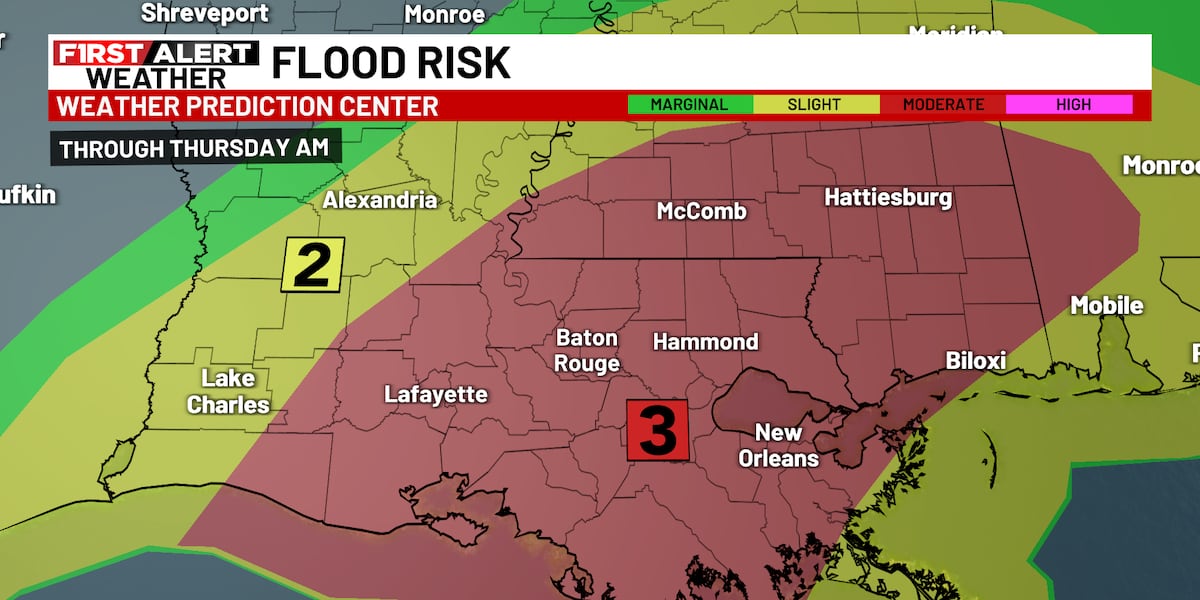

The National Hurricane Center (NHC) has maintained a high alert for life-threatening flash flooding, noting that these hazards are expected to remain the primary concern for southern Louisiana, Mississippi, Alabama, southwestern Georgia, and the Florida Panhandle. The threat is compounded by the potential for tornadoes. In New Orleans, a confirmed tornado touched down near City Park, causing damage to centuries-old oak trees, as detailed in reports from local media.
Meteorological agencies categorize flash flooding as one of the most dangerous weather-related hazards because it occurs rapidly, often within six hours of heavy rainfall. The current situation is exacerbated by the geographic vulnerability of the Gulf Coast, where low-lying coastal plains struggle to drain water when soil is already saturated. Emergency management agencies across these states have activated local flood response protocols, urging residents to avoid driving through flooded roadways, which remains the leading cause of weather-related fatalities in the United States.
Modeling Discrepancies and Rainfall Forecasts
Forecasters are navigating significant uncertainty regarding the exact placement and volume of the remaining rainfall. WAFB noted that while previous guidance suggested drier conditions, updated model runs—specifically the High-Resolution Rapid Refresh (HRRR) model—now indicate corridors of 5 to 10 inches of additional rainfall. The phenomenon of “training,” where storms move repeatedly over the same saturated ground, has forced officials to maintain a Level 3/4 moderate risk of flooding through Thursday morning.
“The HRRR model, which had previously been much drier, now shows corridors of 5″-10″ rainfall, but the placement is notably different.”
WAFB, Baton Rouge
The reliance on high-resolution convective models like the HRRR is standard practice for meteorologists tracking tropical remnants. Unlike global models, which provide a broader view of atmospheric circulation, these localized models are designed to capture the intensity of individual storm cells. When these models show divergence—or “discrepancies”—it highlights the chaotic nature of tropical moisture interacting with local terrain. For the public, this uncertainty necessitates a broad approach to safety, as rainfall totals can vary wildly over just a few miles.
The Path Forward and Potential Redevelopment
As the remnants of the system track eastward, the Weather Prediction Center (WPC) expects the circulation to move through the Carolinas before emerging into the western Atlantic by late Friday or early Saturday. Experts are keeping a close watch on this transition, as global models suggest a possibility for the system to redevelop. This process, often referred to as “extratropical transition” or “re-intensification,” occurs when a post-tropical system moves over warm ocean waters and begins to draw energy from the sea surface rather than temperature contrasts in the atmosphere.

Michael Lowry, a hurricane specialist at WPLG-TV, noted that the system will likely merge with an advancing cold front as it zips across Georgia and the Carolinas. While the National Hurricane Center confirms there is a signal in the global models for low-pressure development over the western Atlantic, the exact nature of this potential redevelopment remains unclear. Forecasters intend to monitor model trends closely over the next 48 hours to evaluate the risk of a new tropical cyclone forming.
“Ongoing heavy rainfall could prolong the flood threat into the weekend.”
National Hurricane Center
The process of monitoring a system as it moves off the coast is a routine part of the National Hurricane Center’s mission. When a system exits the landmass, it enters a “data-sparse” region where satellite imagery becomes the primary tool for assessment. If the system shows signs of organizing—such as the development of a closed wind circulation and organized convection—the NHC will issue new advisories. This serves as a critical checkpoint for residents in coastal regions, as a redeveloping system could bring renewed threats of storm surge and high winds to Atlantic coastal areas.
For residents in the affected states, the immediate concern remains the next 24 to 48 hours. While the heaviest precipitation is expected to conclude by Friday, the ground remains saturated, and any additional heavy rain could exacerbate existing flooding issues. The broader Atlantic basin is expected to remain quiet for the remainder of June, with no significant development projected for the middle to latter part of next week. Authorities continue to emphasize that even as Arthur dissipates, the hydrological impact—the runoff and river rising—will follow the storm’s path for several days.
Find more reporting in our News section.
