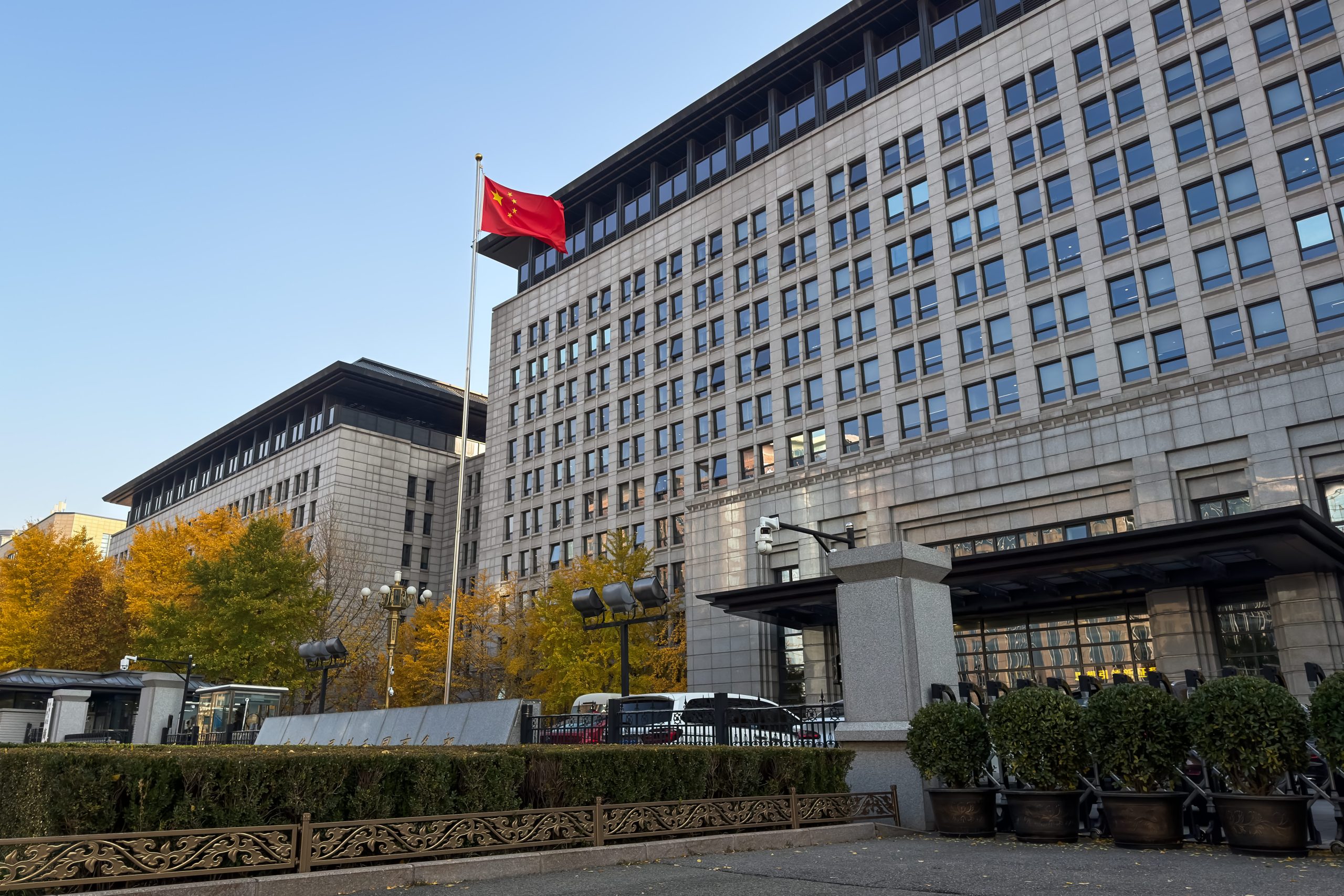
“China on Monday imposed trade restrictions on 10 U.S. firms and barred 46 American companies from government procurement, retaliating against the Pentagon’s designation of Chinese tech firms as military-linked. The move, reported by CNBC and NPR, marks a diplomatic escalation amid U.S.-China tensions. The Commerce Ministry cited national security concerns, while the Finance Ministry emphasized protecting Chinese interests. The actions follow the U.S. adding companies like Alibaba and Baidu to its 1260H list, which restricts defense contracts. Analysts note the measures are largely symbolic, given the limited U.S. business presence in China.”
China’s Dual-Pronged Response to U.S. Sanctions

The Chinese Commerce Ministry on Monday placed 10 U.S. companies on its export control list, barring the export of “dual-use” items—goods with both civilian and military applications—to entities like MP Materials Corp, USA Rare Earth, and drone makers Teal Drones and Jaia Robotics. The Finance Ministry separately excluded 46 American firms, including Lockheed Martin and Raytheon, from participating in government procurement projects. “The export ban was both to safeguard China’s national security and in response to what it called the U.S. government’s ‘wrongful expansion’ of its so-called List of Chinese Military Companies,” according to NPR.
The restrictions target firms linked to defense and technology sectors, with the Commerce Ministry emphasizing that Chinese companies could still apply for export approvals for “genuinely necessary” goods. The move directly counters the U.S. Defense Department’s recent addition of Chinese tech giants like Alibaba Group and Baidu to its 1260H list, which bars federal agencies from contracting with listed companies. “The 1260H designation does not impose immediate sanctions but bars the U.S. Department of Defense from awarding direct contracts to affected companies starting June 30, with restrictions on indirect procurement following in 2027,” CNBC reported.
Timeline of Escalation and Reactions

The U.S. action, announced earlier this month, expanded the 1260H list to include firms across artificial intelligence, biotech, and consumer electronics. China’s response came days after a May 2026 summit between President Xi Jinping and former President Donald Trump, which both sides hailed as a reset in relations. “The Commerce Ministry said at the time that the American sanctions run counter to the consensus that Chinese leader Xi Jinping and U.S. President Donald Trump reached during Trump’s visit to China in May,” NPR noted.
China’s countermeasures include a ban on third-country entities transferring dual-use items from China to the targeted U.S. firms. The Finance Ministry’s exclusion order, however, did not provide a rationale. “The designation prevents them from getting U.S. military contracts,” NPR reported of Baidu’s response to its inclusion on the 1260H list. The company called the allegations “totally baseless,” a sentiment echoed by other affected firms.
Analysts Weigh In on Symbolic vs. Substantive Measures
Despite the breadth of the restrictions, analysts suggest the measures are more symbolic than substantive. Han Shen Lin of The Asia Group, cited by CNBC, noted that most targeted U.S. companies have “little or no meaningful business exposure in China,” rendering the export bans largely ineffective. Dan Wang of Eurasia Group added that China’s response reflects a strategy of “model example” diplomacy, aiming to deter further U.S. escalation without destabilizing broader trade relations.
The 1260H list, while not immediately crippling, has already influenced private-sector behavior. “The designation is likely to deter other federal agencies and commercial partners from doing business with listed companies,” CNBC reported. This aligns with historical patterns: in 2021, Xiaomi successfully challenged its 1260H designation in court, leading to its removal. However, the current round of designations includes larger firms with greater global reach, complicating potential legal challenges.
What Comes Next for U.S.-China Trade Relations?

The immediate fallout centers on the 10 companies named in the Commerce Ministry’s order, including Aveox Inc, Ball Aerospace & Technologies Corp, and Oshkosh Defense. These firms, many of which operate in defense or rare earth sectors, face indirect pressure as U.S. agencies and partners navigate the evolving regulatory landscape. “The latest countermeasures provide a ‘model example’ of how China will likely handle mild escalation from the U.S. while keeping the broader relationship stable,” Wang said.
However, the long-term implications remain unclear. The 2027 deadline for indirect procurement restrictions under the 1260H list could create ripple effects across supply chains, particularly in tech and defense industries. Meanwhile, China’s dual-use ban may strain collaborations between U.S. and Chinese firms in sectors like aerospace and materials science. “The U.S. has drawn a broad line around sensitive technology, from AI to consumer electronics,” analysts noted, highlighting the strategic competition at play.
Global Implications and Industry Reactions
The restrictions have already prompted responses from affected industries. Lockheed Martin, a major defense contractor, has not publicly commented on its exclusion from Chinese procurement, while Raytheon and General Dynamics faced similar bans in 2021. The Commerce Ministry’s emphasis on “genuinely necessary” exports suggests a potential loophole for companies seeking approvals, though the process remains opaque.
Globally, the move underscores the growing friction in U.S.-China trade relations. “China’s actions reflect a broader strategy of reciprocity in trade disputes,” said a spokesperson for the Chinese Ministry of Commerce, though the statement was not attributed to a named official. For now, the focus remains on how the impact of these restrictions will influence future negotiations between the two nations as global markets continue to monitor the escalating trade tensions between Beijing and Washington in the coming months.
Find more reporting in our News section.
