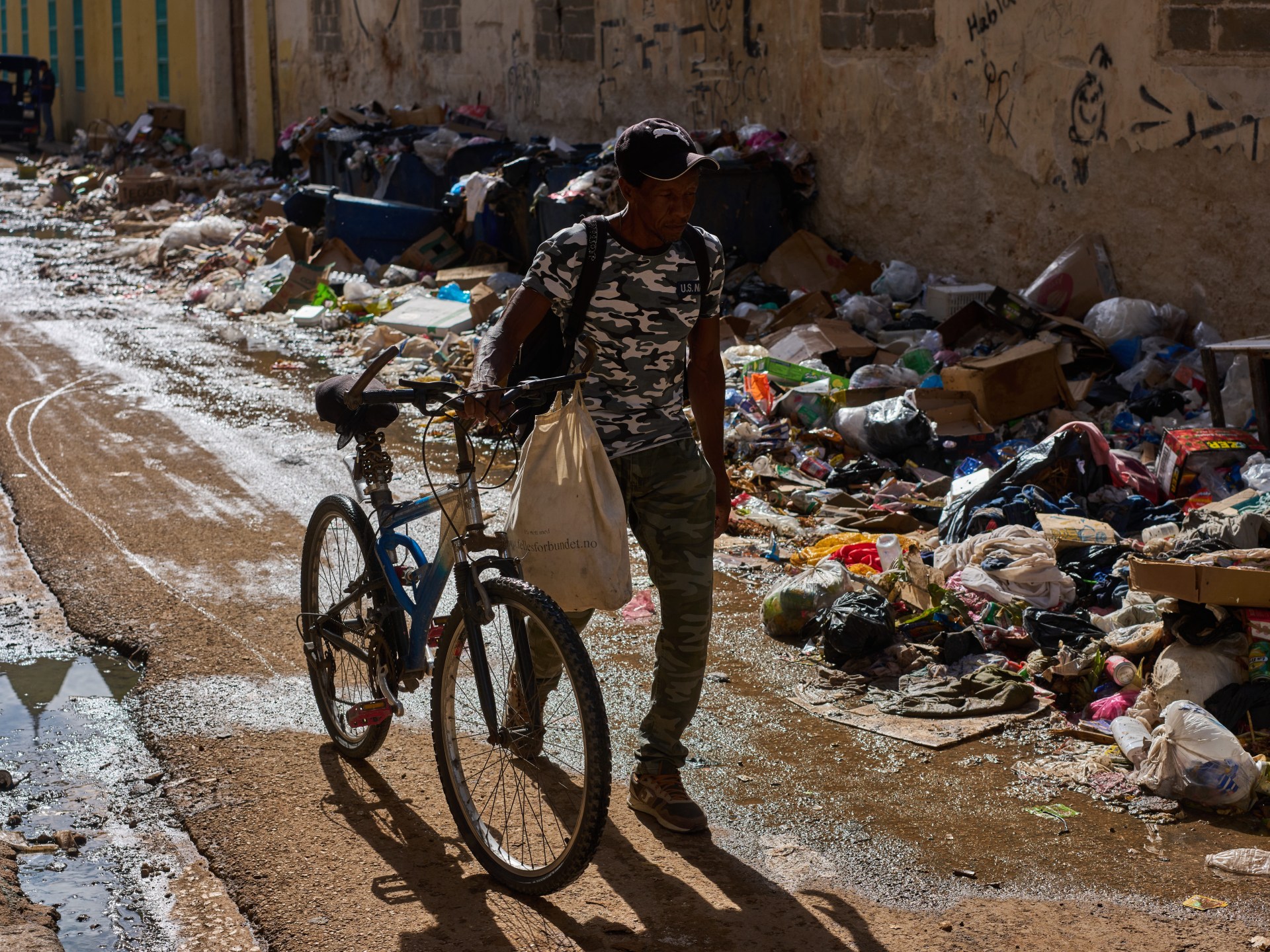
Brazil’s Federal Highway Police intercepted 108 Cuban migrants in a single operation on June 10, 2026—the largest humanitarian rescue of its kind in Roraima state, officials confirmed. The crackdown, part of a broader crackdown on human smuggling networks, comes as Cuban asylum applications in Brazil surged past Venezuelans for the first time, with nearly 42,000 requests filed in 2025 alone, according to Folha de S.Paulo and The Guardian. The exodus reflects a crisis on the island, where a U.S. oil blockade and economic collapse have pushed thousands to seek refuge via Guyana and Suriname.
The surge in Cuban migration has strained Brazil’s asylum system, prompting a response from multiple levels of government. In a statement released June 11, Brazil’s Justice Ministry confirmed the operation was coordinated with the Federal Police and Roraima’s state government, citing intelligence indicating the smugglers had been operating for at least six months. “These networks exploit the vulnerability of migrants, subjecting them to extreme conditions,” said Justice Minister Flávio Dino in a press conference. “Our priority is to dismantle these operations while ensuring the safety of those being trafficked.”
Dino’s remarks came amid growing diplomatic tensions between Brazil and the U.S., where the Trump administration’s 2025 parole program for Cubans, Haitians, Nicaraguans, and Venezuelans was terminated in March 2025 after Congress failed to allocate funding. The program, which had processed over 12,000 applications before its suspension, was criticized by human rights groups for its arbitrary caps and delays. A State Department spokesperson told reporters, “The U.S. remains committed to addressing irregular migration, but our resources are limited. We urge Brazil to strengthen its border security measures to prevent exploitation by smugglers.”
Cuba’s government has largely remained silent on the exodus, though officials have acknowledged economic hardships in recent statements. In April 2026, Cuban Foreign Minister Bruno Rodríguez Parrilla told the UN Human Rights Council that the island faced “unprecedented challenges” due to “external aggression,” a reference to U.S. sanctions. However, he did not address the migration crisis directly. Meanwhile, the Cuban government has increased patrols along the northern coast, where many migrants attempt to leave by boat, but officials admit these efforts are insufficient to stem the flow.
Why Brazil? The Shift from Venezuela to Cuba
Cuba has overtaken Venezuela as the top source of asylum seekers in Brazil, a reversal driven by Trump administration policies and economic desperation. While Venezuela’s migration crisis has drawn global attention for years, Cubans now file more asylum requests—19,419 in 2025 compared to 9,850 Venezuelans, per The Guardian. The shift reflects Brazil’s reputation as a haven: its asylum system grants access to healthcare, work permits, and education while applications are processed, unlike the U.S., where Trump’s 2025 parole program for Cubans, Haitians, Nicaraguans, and Venezuelans was scrapped.
The shift also highlights Brazil’s regional role as a mediator in Latin American migration. In a 2025 report, the Organization of American States (OAS) noted that Brazil had become the primary destination for Cubans fleeing economic collapse, partly due to its geographic proximity and relatively open asylum policies. “Brazil’s asylum system is one of the most accessible in the region, but it is not designed to handle this scale of migration,” said OAS Secretary General Luis Almagro in a statement to El País. “The backlog in processing and integration is becoming a serious challenge.”

Brazil’s National Committee for Refugees (CONARE) has faced criticism for its slow response. In a letter to the Justice Ministry in May 2026, the UN High Commissioner for Refugees (UNHCR) warned that the committee’s processing times—averaging 18 months for Cubans—were unsustainable. “The current system is collapsing under the weight of demand,” said UNHCR’s Andrés Ramires in an interview with ReliefWeb. “We are seeing cases where migrants arrive with severe health conditions due to the journey, only to face further delays in accessing care.”
For migrants like Roberto Hernandez Tello, 59, Brazil was the only viable option. “I love Cuba, but with the crisis it’s impossible to live there now,” Tello told The Guardian. His son lives in the U.S., but Trump’s policies blocked legal entry. Instead, Tello joined the thousands now heading to Brazil’s northern states—Roraima and Amapá—where 57.6% of Cuban immigrants now reside, according to Brazil’s Justice Ministry, cited by Al Jazeera.
Tello’s story is echoed by others in Boa Vista, where a makeshift Cuban community has emerged near the border with Guyana. Local authorities report that many migrants arrive with little more than the clothes they wore, having sold their homes or life savings to pay smugglers. “We see families who have spent their entire life savings on this journey, only to arrive and find no work,” said Boa Vista Mayor Pedro Brito in an interview with Folha de S.Paulo. “The city’s infrastructure is not equipped to handle this influx, and tensions with locals are rising.”
The Smuggling Networks: How Cubans Cross Into Brazil
The June 10 operation disrupted a network transporting migrants in “precarious conditions,” with some reporting no food for days, per the Justice Ministry. Five “coyotes” were arrested, including one running a WhatsApp group advertising packages from Havana to Boa Vista, Guyana, for US$1,400, Folha de S.Paulo reported. The route—via Guyana or Suriname—avoids U.S. scrutiny and exploits Brazil’s porous northern border, where smugglers use “trochas” (unmonitored trails) to bypass checkpoints.

Guyana’s government has expressed growing concern over the use of its territory for smuggling operations. In a joint statement with Brazil’s Foreign Ministry in May 2026, Guyana’s President Irfaan Ali warned that the country was becoming a “transit zone” for migrants bound for Brazil. “We are not a destination for migrants, and we will not tolerate the exploitation of our borders for illegal trafficking,” Ali said. However, Guyana’s limited resources and underdeveloped border infrastructure have made it difficult to fully monitor the flow.
Suriname, another key transit country, has also seen increased migrant traffic. In a report to the UN Security Council in April 2026, Suriname’s Interior Minister Ronnie Brunswijk acknowledged that his country was being used as a “gateway” for Cubans heading to Brazil. “We are working with Brazil to strengthen border security, but the demand far exceeds our capacity,” Brunswijk told reporters. “Many of these migrants are desperate and willing to pay any price to reach safety.”
Coyotes charge US$50 to bribe local police and another US$1,150 for the final leg to Manaus, according to migrants interviewed by Al Jazeera. The operation was part of Operation Safe Route, launched in December 2024 by Brazil’s Federal Police in collaboration with Roraima’s state government. Since its inception, the operation has led to the arrest of 47 smugglers and the “rescue” of 297 migrants, according to a statement from Federal Police Director Jorge Campos.
Campos emphasized that the operation was not targeting migrants but rather the criminal networks exploiting them. “These are not just smugglers—they are organized crime groups that profit from human suffering,” Campos said. “Our goal is to dismantle these operations and hold the perpetrators accountable.” However, critics argue that the operation has done little to address the root causes of migration, such as Cuba’s economic crisis.
In a separate development, the U.S. Department of Homeland Security (DHS) has increased surveillance along the Florida Straits, where some Cubans attempt to reach the U.S. by boat. A DHS spokesperson told Reuters that the agency had intercepted 1,200 Cuban migrants in the first five months of 2026, up from 800 in the same period in 2025. “We are seeing a shift in migration patterns as Cubans seek alternative routes to the U.S.,” the spokesperson said. “This puts additional pressure on countries like Brazil, which are now bearing the brunt of the crisis.”
Asylum Surge: Brazil’s System Under Strain
Brazil’s asylum applications have skyrocketed by over 2,000% since 2010, with Cubans now leading the pack. In 2025 alone, refugee requests from Cubans exceeded those from Venezuelans—a first, per UNHCR. The National Committee for Refugees (CONARE) expects 17,000 refugees this year, but critics warn the system is ill-equipped. “CONARE remains almost the same since its creation,” UNHCR’s Andrés Ramires told ReliefWeb, calling for expansion to handle the influx.
The backlog is particularly acute in Roraima, where the state government has declared a public health emergency due to the influx of migrants. In a letter to the federal government in May 2026, Roraima Governor Antonio Denarium requested additional funding to address the crisis. “We are seeing an unprecedented number of migrants arriving with no resources, straining our healthcare and social services,” Denarium said. “The federal government must step in to provide support before the situation becomes unmanageable.”
Brazil’s asylum system is governed by the 1997 Refugee Law, which grants protection to those fleeing persecution or violence. However, the law does not explicitly address economic migrants, leading to legal ambiguities. In a 2025 ruling, Brazil’s Federal Court of Appeals (STJ) upheld the right of Cubans to seek asylum on humanitarian grounds, but the decision did little to speed up processing times. “The legal framework is clear, but the bureaucracy is not,” said human rights lawyer Maria Silva, who represents several Cuban asylum seekers in São Paulo.

The backlog is visible in cities like Curitiba, where Cuban softball leagues have formed among migrants. Ernesto Alberto Keiser Limonta, 30, arrived last year and now plays for Team Cuba. “I chose Curitiba because it’s prosperous and safe,” he told The Guardian. Yet challenges remain: refugees struggle to validate degrees, face discrimination, and often can’t access benefits like the BPC welfare program, despite legal eligibility.
Limonta’s experience is not unique. A 2025 report by the Brazilian Institute of Geography and Statistics (IBGE) found that 62% of Cuban refugees in Brazil reported difficulty finding formal employment, despite having professional qualifications. “Many of these migrants are doctors, engineers, and teachers, but they are forced to take low-paying jobs because their credentials are not recognized,” said IBGE researcher Carlos Mendez. “This creates a brain drain from Brazil’s own workforce.”
The situation has also led to tensions between migrants and local communities. In Boa Vista, protests erupted in April 2026 when Cuban migrants were accused of taking jobs from locals. The city’s mayor, Pedro Brito, attempted to mediate but acknowledged the strain on resources. “We are doing our best to integrate these migrants, but the government must provide more support,” Brito said. “Without additional funding, we risk social unrest.”
What Comes Next: Migration and Policy
The June 10 interception highlights Brazil’s dual role: a refuge for Cubans and a battleground against smugglers. With asylum requests up 40,000% since 2014, the government faces pressure to reform CONARE and integrate migrants faster. Meanwhile, Cuba’s crisis shows no signs of easing. “Migration flows of Cubans to Brazil were never intense,” the Justice Ministry noted, but the 2022 rebound has been “vigorous,” Al Jazeera reported. For now, Brazil remains the primary destination—but as coyotes adapt routes and smuggling networks evolve, the exodus is far from over.
In response to the crisis, Brazil’s Justice Ministry has proposed a series of reforms to streamline the asylum process. In a draft bill submitted to Congress in June 2026, the ministry proposed creating specialized asylum courts to reduce processing times and expanding access to temporary work permits for refugees. “These measures are necessary to prevent the system from collapsing under the weight of demand,” said Justice Minister Flávio Dino. “We must also address the root causes of migration, including economic instability in Cuba.”
The bill has faced resistance from some lawmakers, who argue that it does not go far enough. Senator Jair Bolsonaro, a vocal critic of migration, told reporters that the government should instead focus on “securing the border” rather than expanding asylum rights. “Brazil is not a welfare state for migrants,” Bolsonaro said. “We must prioritize our own citizens.” However, his remarks have been widely criticized, including by the UNHCR, which has urged Brazil to adopt a more humanitarian approach.
Internationally, the crisis has drawn attention from regional bodies. In a statement issued in June 2026, the Community of Latin American and Caribbean States (CELAC) called on member countries to coordinate a regional response to the migration crisis. “This is not just a Brazilian problem—it is a hemispheric challenge,” said CELAC Secretary General Mario Vargas Llosa. “We must work together to address the root causes of migration and provide safe and legal pathways for those in need.”
For migrants like Limonta, the next step is securing residency. But with processing delays and bureaucratic hurdles, the wait—and the uncertainty—continues. In an interview with Al Jazeera, Limonta expressed hope that Brazil would provide a better future, but he also acknowledged the challenges ahead. “I came here for a better life, but the process is slow and difficult,” he said. “I just want to work, to contribute, and to build a future for my family.”
As the crisis deepens, Brazil’s ability to manage the influx of Cuban migrants will test its commitment to humanitarian values. With no end in sight to Cuba’s economic struggles, the flow of asylum seekers is likely to continue, placing further strain on Brazil’s already stretched resources. The June 10 operation serves as a reminder of the human cost of migration—and the urgent need for a coordinated response.
