
A breakthrough drug called apitegromab could help people using GLP-1 weight-loss medications like Wegovy and Mounjaro retain muscle mass while shedding fat, according to a phase 2 clinical trial published Monday in *Nature Medicine*. The study, led by researchers in the U.S., found that participants taking apitegromab alongside tirzepatide (the active ingredient in Mounjaro) lost 55% less lean body mass than those on tirzepatide alone—suggesting a potential solution to a long-standing side effect of these increasingly popular drugs.
The Muscle-Loss Problem GLP-1 Drugs Create
GLP-1 medications—including semaglutide (Wegovy, Ozempic) and tirzepatide (Mounjaro)—have revolutionized weight loss, helping millions shed pounds by suppressing appetite and improving insulin sensitivity. But they come with a hidden cost: up to 40% of the weight lost isn’t fat at all. It’s lean body mass—muscle, bone density, and organs—that shrinks alongside fat, leaving users weaker and more prone to metabolic decline. As obesity expert Prof. Alexander Miras of Ulster University noted, “This means that [people] may be less able to lift heavy weights, for example, or walk up a hill.” The loss of muscle isn’t just cosmetic; it’s a functional setback, undermining the very mobility these drugs are supposed to improve.
The *Guardian* reported that studies have shown GLP-1 drugs can reduce lean body mass by 25–40% of total weight loss, a figure that alarms cardiometabolic specialists like Prof. Naveed Sattar of the University of Glasgow. “Lean body mass burns more calories than fat tissue and is linked to a lower risk of type 2 diabetes,” Sattar said. “Losing it doesn’t just make you weaker—it could worsen long-term metabolic health.” The new trial, however, offers a glimmer of hope by targeting the root cause: myostatin, a protein that naturally limits muscle growth.
How Apitegromab Works—and What the Trial Found
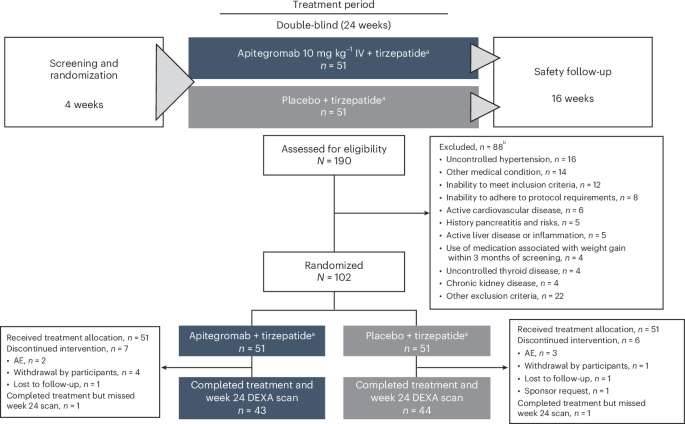
Apitegromab, developed by Scholar Rock, is a monoclonal antibody designed to block myostatin, effectively “unlocking” muscle growth even as the body sheds fat. In the 24-week *EMBRAZE* trial—published in *Nature*—102 participants were split into two groups: 51 received apitegromab alongside tirzepatide, while the other 51 took tirzepatide with a placebo. Both groups lost similar amounts of total weight, but the apitegromab group retained **1.6kg (3.5lb) more lean mass** than the placebo group—a 55% improvement in muscle preservation.

“This new medication may help reduce the effects of GLP-1-based drugs on muscle strength and therefore improve functionality even further compared to someone not on the new medication who is just taking tirzepatide,” Miras said. The trial’s lead authors emphasized that while total weight loss remained unchanged, the composition of that loss shifted dramatically: participants on apitegromab lost **14.6% of their weight as lean mass**, compared to **28.6%** for those on placebo alone. Side effects were comparable between groups, with most adverse events rated as mild.
Yet the study’s limitations are stark. It was small (102 participants), short-term (24 weeks), and skewed toward women—factors that leave open questions about long-term safety and broader applicability. Prof. Sattar cautioned that “it’s too early to say whether this actually benefits people’s health or ability to move or function better.” The trial also didn’t track functional outcomes like grip strength or stair-climbing ability, leaving unanswered whether the muscle retention translates to real-world improvements.
The Bigger Picture: Why This Matters for Weight-Loss Drugs
GLP-1 drugs have become a cultural phenomenon, with prescriptions surging as obesity rates climb and insurers cover the costs. But their muscle-wasting side effect has been a persistent thorn. “People prescribed these drugs should be supported to increase their physical activity,” Sattar advised, “but activity should be framed as something enjoyable and sustainable, not just a medical add-on.” The new trial suggests pharmaceutical solutions could complement lifestyle changes—but it’s far from a silver bullet.
Scholar Rock, the company behind apitegromab, has not yet announced plans for regulatory approval, but the trial’s results could accelerate interest. If apitegromab proves safe and effective in larger studies, it might become the first drug specifically designed to counteract a major side effect of GLP-1 therapies. Yet experts warn against overhyping early-stage findings. “This is an early-stage trial,” Sattar reiterated. “We need far larger, longer studies to confirm safety and real-world benefits.”
What Happens Next: The Road to Approval and Beyond
The next critical step is Phase 3 trials, which will test apitegromab in thousands of participants over longer periods. If those trials succeed, the drug could reach patients within **2–3 years**, assuming regulatory approval from the FDA or EMA. But even then, cost and accessibility will be hurdles—GLP-1 drugs themselves are expensive, and adding another medication could push treatment out of reach for many.
For now, the takeaway is clear: apitegromab isn’t a cure-all, but it’s a promising lead in the fight against muscle loss during weight loss. As *Science News* framed it, the drug “may help people on GLP-1 meds preserve muscle”—but only if further research confirms its safety and efficacy. Until then, experts urge patients to combine GLP-1 treatments with strength training, protein-rich diets, and gradual weight loss to minimize muscle atrophy.
One thing is certain: the conversation around weight-loss drugs is evolving. No longer are they seen as simple fat-burners—they’re now part of a broader metabolic puzzle, where preserving muscle and bone density is just as important as shedding pounds. For millions relying on these medications, apitegromab could be a game-changer—but only if the science holds up.
For more on the *EMBRAZE* trial methodology and participant criteria, see the full study in *Nature Medicine*. The *Guardian*’s coverage of muscle loss in weight-loss drugs is available here.
