Britain’s Royal Navy is preparing for a high-stakes mine-clearing operation in the Strait of Hormuz, a critical waterway for global energy trade, as tensions with Iran escalate. The mission, which hinges on a potential peace agreement, involves the RFA Lyme Bay, a ship equipped with autonomous drones and sonar systems to detect and neutralize Iranian mines. U.S. President Donald Trump has criticized NATO allies, including Britain, for not doing more to secure the strait, which has been effectively blockaded since February. The operation, led by the UK and France, faces delays until a deal with Iran is finalized, but officials warn of urgent risks. “You can’t lump all Gulf states together, but in essence, this is about finding dependable partners,” said German Foreign Minister Johann Wadephul, as Berlin seeks to mediate regional conflicts.
Britain’s Naval Preparations
The RFA Lyme Bay, stationed near Gibraltar, is undergoing final preparations for a mission that could see it join the HMS Dragon and allied ships in the Persian Gulf. The vessel is being loaded with mine-hunting drones capable of scanning the seabed in half the time of traditional methods. Cmdr. Gemma Britton, head of the Royal Navy’s Mine and Threat Exploitation Group, warned that Iran could have a “huge” variety of mines, including rocket-propelled and sound-activated devices. “It’s very important that we make sure that we protect the freedom of navigation because it is fundamental for free trade,” said a NATO diplomat, emphasizing the strategic stakes. The operation’s success depends on a peace deal, which U.S. officials describe as “largely negotiated” but not yet finalized.

“Which other country can pull together 40 nations and come up with a solution to deal with a complex problem that we couldn’t predict because we weren’t involved?” asked Britain’s Armed Forces Minister Al Carns, criticizing Trump’s demands for allies to “go get your own oil.” The U.S. president has repeatedly dismissed Britain’s navy as “toys” and mocked Prime Minister Keir Starmer for lacking “Winston Churchill’s” leadership. Despite this, the UK remains central to the coalition effort, with Carns highlighting the “unprecedented” scale of the operation.
NATO’s Dilemma
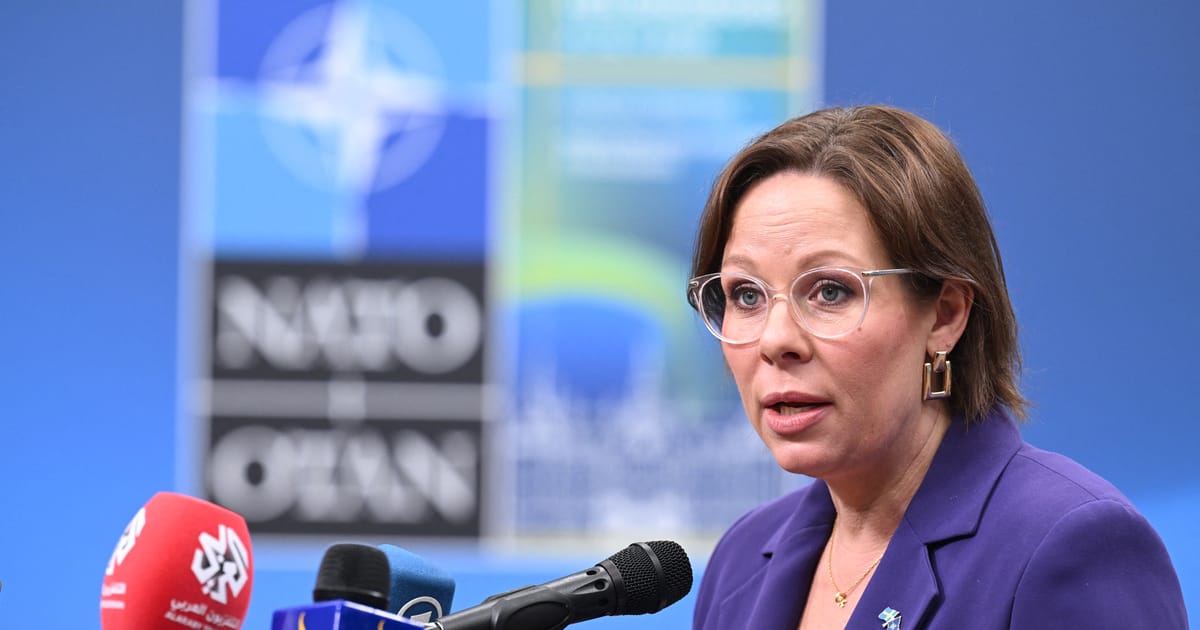
As the UK and France lead the mine-clearing initiative, NATO faces pressure to formalize its role in the region. Two anonymous NATO diplomats revealed that some allies are pushing for the alliance to take over or supplement the coalition, aiming to counter Trump’s criticisms of NATO as a “paper tiger.” “That will definitely be discussed during this meeting,” said Swedish Foreign Minister Ann Linde, referencing talks in Helsingborg. However, officials caution against setting precedents for military interventions in the Middle East. “NATO should always be careful to create new precedents,” Linde added, while stressing the need to safeguard “freedom of navigation.” The Dutch Foreign Minister, Tom Berendsen, echoed this sentiment, stressing the importance of coordination: “We need the expertise of NATO there as well.”

The debate reflects broader tensions within the alliance. Chancellor Friedrich Merz of Germany, critical of U.S. and Israeli actions in the Iran conflict, has called for European-led diplomacy. “The US is failing in its role as a partner and protector,” he said, arguing that Washington’s strategy has destabilized the region. Germany’s efforts to engage Gulf states—such as talks with UAE Foreign Minister Sheikh Abdullah Bin Zayed—highlight a shift toward multilateral solutions, even as the U.S. pushes for unilateral action.
Germany’s Diplomatic Push
Amid the military buildup, Germany has intensified its diplomatic outreach to Gulf states, aiming to bridge the gap between Iran and the U.S. Foreign Minister Johann Wadephul met with Turkish and Emirati officials, emphasizing the need for “dependable partners” in a region increasingly destabilized by the war. “You can’t lump all Gulf states together,” said Max Hofmann of DW, noting that while some Gulf nations seek closer ties with Europe, others remain wary of U.S. influence. Germany’s approach contrasts with the U.S. focus on military force, with Wadephul advocating for “a rules-based world order” to address the crisis.
However, Germany’s efforts face challenges. Iran’s blockade of the Strait of Hormuz has disrupted global trade, with over 6,000 ships blocked since February. The conflict has also strained Germany’s relations with the U.S., following Trump’s troop cuts in response to Chancellor Merz’s criticism of the war. “There had been no quick resolution, as had initially been expected by Trump and Netanyahu,” Merz said, expressing frustration with the lack of progress. Despite this, Germany remains committed to diplomacy, with Wadephul stating, “We are coordinating closely with the US side, but we also have our own European ideas on how the conflict can be resolved.”
What’s Next?
The outcome of the mine-clearing mission and broader negotiations will depend on the pace of a U.S.-Iran deal. If finalized, the operation could restore critical shipping lanes, easing global energy prices and reducing economic fallout. However, delays or a breakdown in talks risk further escalation, with Iran threatening to expand its mine deployment. For NATO, the crisis tests its relevance in a world where the U.S. increasingly prioritizes unilateral action. Meanwhile, Germany’s diplomatic efforts may offer a blueprint for European influence, but its success hinges on balancing U.S. demands with regional concerns.
As the RFA Lyme Bay waits for the green light, the world watches a pivotal moment in the struggle to balance military might with diplomatic resolve. “This is about finding dependable partners,” Wadephul said, encapsulating the fragile hope that cooperation—not conflict—will prevail.
<link href="https://apnews.
