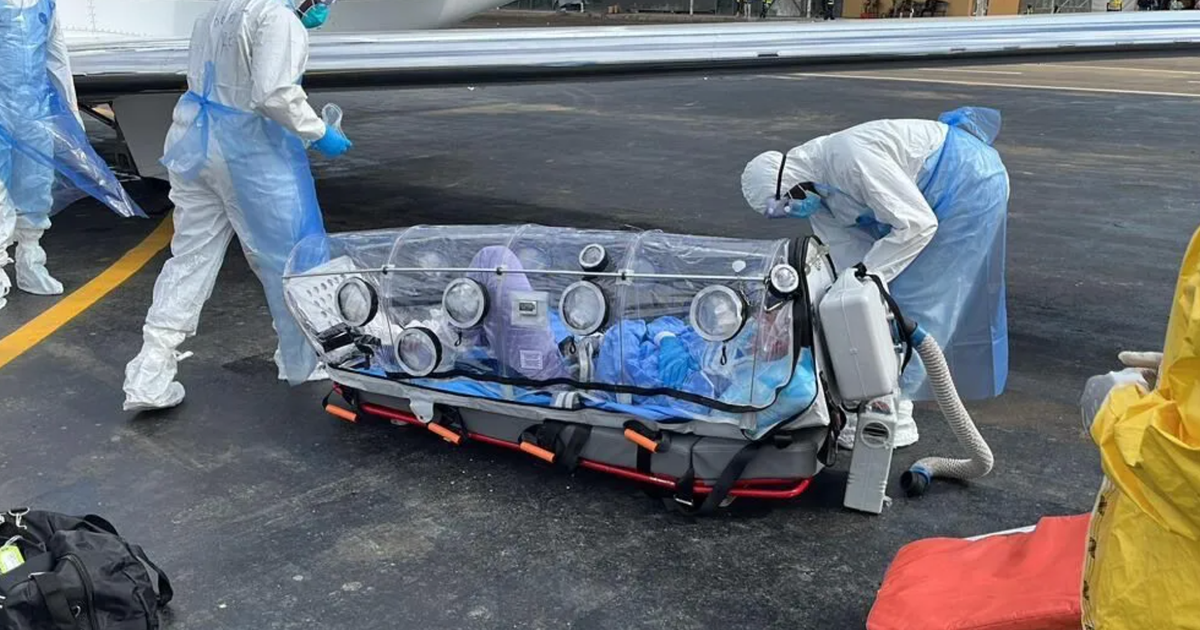
American citizens and permanent residents who have traveled to the Democratic Republic of Congo, Uganda, or South Sudan within the last 21 days are now required to enter the United States exclusively through Dulles International Airport. This federal directive aims to centralize public health resources for enhanced screening amid an ongoing Ebola outbreak.
Enhanced Screening and Federal Travel Restrictions
The Department of Homeland Security has mandated that all U.S.-bound travelers who have visited the Democratic Republic of Congo (DRC), Uganda, or South Sudan in the previous three weeks must route their arrival through Dulles International Airport. According to NBC4 Washington, this measure consolidates federal public health efforts at a single point of entry to manage the risk of virus importation. The Centers for Disease Control and Prevention maintains that there are currently no confirmed cases of the virus within the United States.


The urgency behind these protocols stems from the nature of the Bundibugyo ebolavirus, the specific strain driving the current outbreak. In a document signed by National Institutes of Health Director Jay Bhattacharya, federal officials emphasized that the global movement of people necessitates rigorous defensive measures. The directive highlights that the interconnected nature of modern air travel provides a viable path for the virus to reach domestic soil.
“The interconnected nature of global air travel therefore presents a credible pathway for Bundibugyo virus disease importation into the United States, underscoring the importance of aggressive surveillance, traveler monitoring, airport screening, healthcare preparedness, and rapid containment capabilities.
Following the federal screening process at the airport, the Virginia Department of Health will oversee additional monitoring for travelers residing in the state. Communications director Maria Reppas confirmed that these individuals will be tracked for 21 days following their last potential exposure risk.
Medical Evacuation of American Personnel
The strain on international aid efforts was underscored this week by the evacuation of Dr. Peter Stafford, an American physician who contracted the virus while serving at Nyankunde Hospital in Bunia, DRC. Dr. Stafford, who has worked with the medical missionary organization Serge since 2023, was transported to Charite University Hospital in Berlin, Germany, for specialized care. As reported by CBS News, the physician’s wife and four children were also evacuated and are currently under quarantine in a separate wing of the facility.

Dr. Scott Myhre, the Serge director for East and Central Africa, noted that Dr. Stafford had been able to consume small amounts of food, a positive sign as he battles symptoms including rash, diarrhea, and vomiting. While the patient remains in a high-security isolation unit, medical staff describe his condition as stable but fragile.
“Before I was evacuated I was feeling really concerned I wasn’t going to make it. And now I’m cautiously optimistic,” — Dr.
The hospital indicated that while Dr. Stafford is currently receiving supportive care, the unpredictable nature of the virus necessitates constant observation. His family members remain asymptomatic, though they continue to undergo monitoring to ensure they do not develop signs of infection.
Challenges in Responding to the Bundibugyo Strain
Public health experts are grappling with a lack of established countermeasures for the Bundibugyo strain. Unlike other, more common variants of the virus, there are currently no approved vaccines or specific treatments available for this outbreak. Dr. Celine Gounder, an infectious disease specialist who worked during the 2014-2016 epidemic, noted that the medical community is forced to rely on fundamental care practices due to the absence of advanced medical tools.
The World Health Organization has declared the outbreak a public health emergency of international concern. While official figures cite hundreds of suspected cases, health officials have warned that the actual scale of the transmission likely exceeds current reports. Dr. Vasee Moorthy, a special adviser in the office of the WHO chief scientist, estimated that any potential vaccine candidate would remain months away from availability.
The fatality rate for this specific strain is estimated between 30% and 50%. As aid workers continue to operate in affected regions, the reliance on basic supportive care—such as aggressive rehydration and symptom management—remains the primary clinical strategy. With no immediate pharmaceutical breakthrough on the horizon, the international focus remains on containment, surveillance, and the protection of healthcare workers operating in the field.
