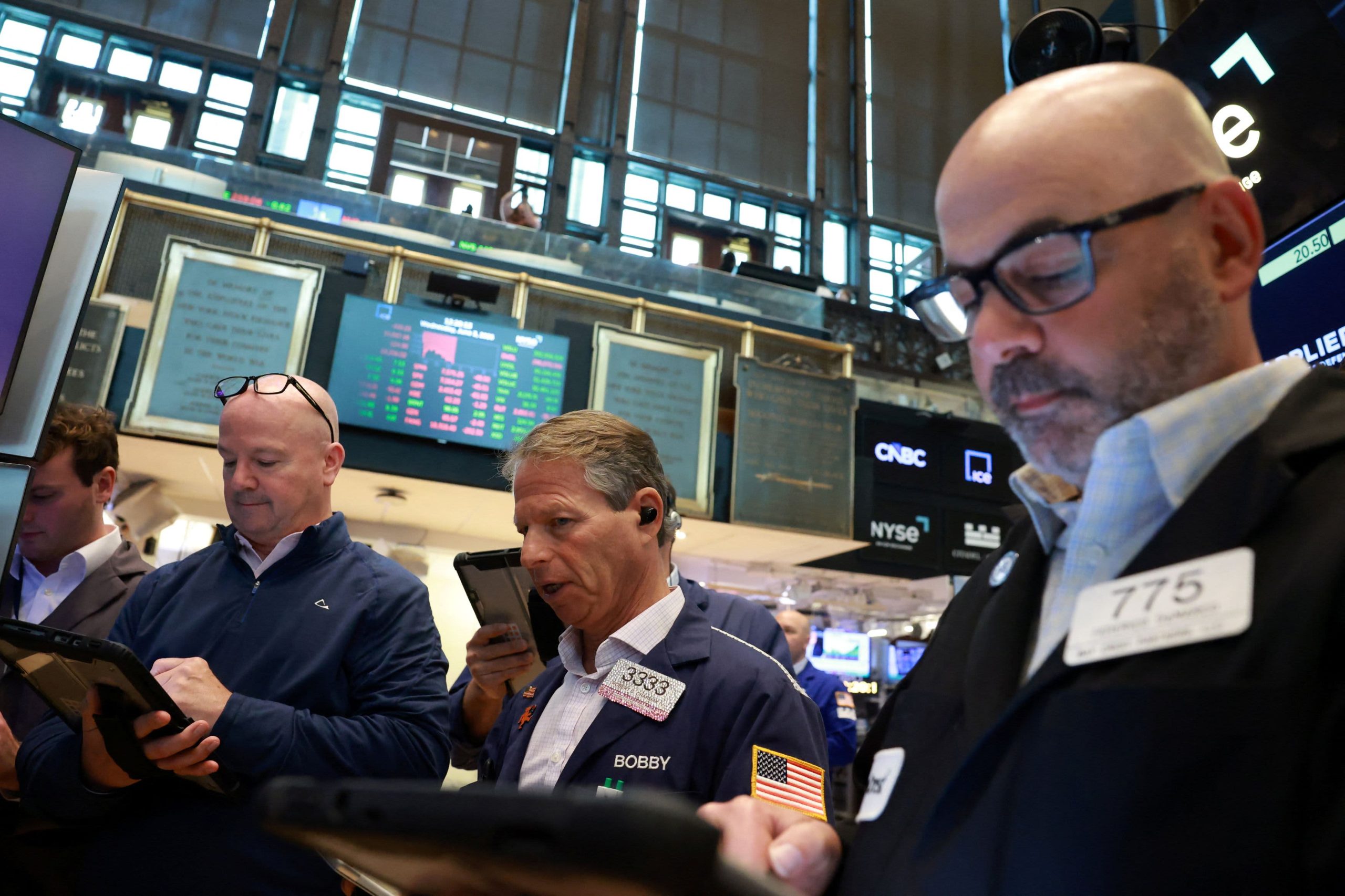
U.S. equities declined on Wednesday, June 10, 2026, as the Dow Jones Industrial Average fell 650 points following President Donald Trump’s threats of further military action against Iran. Technology stocks led the broader market slide, while oil prices climbed above $90 a barrel amid escalating tensions in the Middle East.
Market Response to Escalating Iran Tensions
The stock market’s downward trajectory on Wednesday was driven primarily by heightened geopolitical risk. After U.S. forces launched strikes in response to the downing of a U.S. Army Apache helicopter, President Trump signaled that diplomatic negotiations were moving too slowly. As reported by CNBC, the president warned that Tehran would “have to pay the price,” a statement that triggered a sell-off across major indices.

The Dow Jones Industrial Average dropped 1.3%, while the S&P 500 and Nasdaq Composite fell 0.8% and 1.1%, respectively. Investors reacted to the uncertainty by bidding up energy assets; West Texas Intermediate crude futures rose 2.8%, topping $90 a barrel. The volatility index, or CBOE Volatility Index, rose 0.78 points to 20.65, reaching its highest level since April 7, according to The Detroit News. Historically, spikes in the VIX—often called the “fear gauge”—reflect a surge in expected market turbulence over the coming 30 days, as traders hedge portfolios against sudden downside risk.
“The Iran war story is really consequential. Either investors are going to be proven right, that [there’s] nothing to worry about, Trump will take care of it, we’ll get a deal with Iran and the strait will open up, but if not, it feels like oil prices are going to have to go up a lot.” Jed Ellerbroek, portfolio manager at Argent Capital Management
Technology Sector Sell-off and Valuation Concerns
Beyond geopolitical instability, the tech sector faced intensified pressure as investors rotated out of high-growth AI stocks. Shares of Micron Technology, Advanced Micro Devices, and Broadcom continued a multi-day slide. This weakness follows a period of extreme volatility for chip stocks, which saw the iShares Semiconductor ETF decline 10% late last week before experiencing a brief, unsuccessful rebound on Monday.

For more on this story, see U.S. Stocks Hit Records as Oil Drops on Iran Ceasefire Hopes.
Analysts attribute the tech pullback to a combination of profit-taking after a rapid annual run-up and anticipation surrounding the upcoming SpaceX initial public offering. Some market participants suggest that retail investors are liquidating positions in tech winners to generate liquidity for the SpaceX listing, which is targeting a $75 billion raise. Additionally, Super Micro Computer saw its shares tumble 14.2% after announcing plans to raise $7 billion to fund infrastructure for AI server demand. In broader market terms, high-growth sectors like technology are historically sensitive to interest rate environments and geopolitical shocks, as capital often moves toward safer, defensive assets such as energy or government bonds when global instability manifests.
Inflation Data and Federal Reserve Expectations
Economic data released Wednesday provided a mixed signal for the Federal Reserve’s interest rate path. The Bureau of Labor Statistics reported that core consumer price index (CPI) readings for May rose 0.2% monthly, slightly below the 0.3% estimate. However, the headline annual inflation rate climbed above 4% for the first time in three years, and the 12-month CPI increase reached 4.2%, the highest level since April 2023. This data point is critical for the Federal Open Market Committee (FOMC), which maintains a dual mandate of achieving maximum employment and stable prices, typically defined by a 2% long-term inflation target.
Despite the uptick in inflation, market expectations for the Federal Reserve’s next policy move remain largely unchanged. Art Hogan, chief market strategist at B. Riley Wealth, noted the persistent nature of the data:

“While it is very much in-line with expectations, it’s still moving in the wrong direction. That hasn’t changed the narrative around what the Fed will do at its next meeting, but the overarching consensus is that the Fed will hold steady.” Art Hogan, B. Riley Wealth
Investors currently price in at least one 25-basis-point rate hike before the end of the year. As the market digests these competing pressures—geopolitical conflict, cooling tech valuations, and stubborn inflation—analysts remain cautious. The current environment creates a challenging landscape for institutional and retail investors alike, as traditional hedging strategies are often tested by the simultaneous volatility of commodity prices and equity valuations. As Jed Ellerbroek noted, “[In] this investing environment, it’s impossible to be comfortable.”
Find more reporting in our News section.
