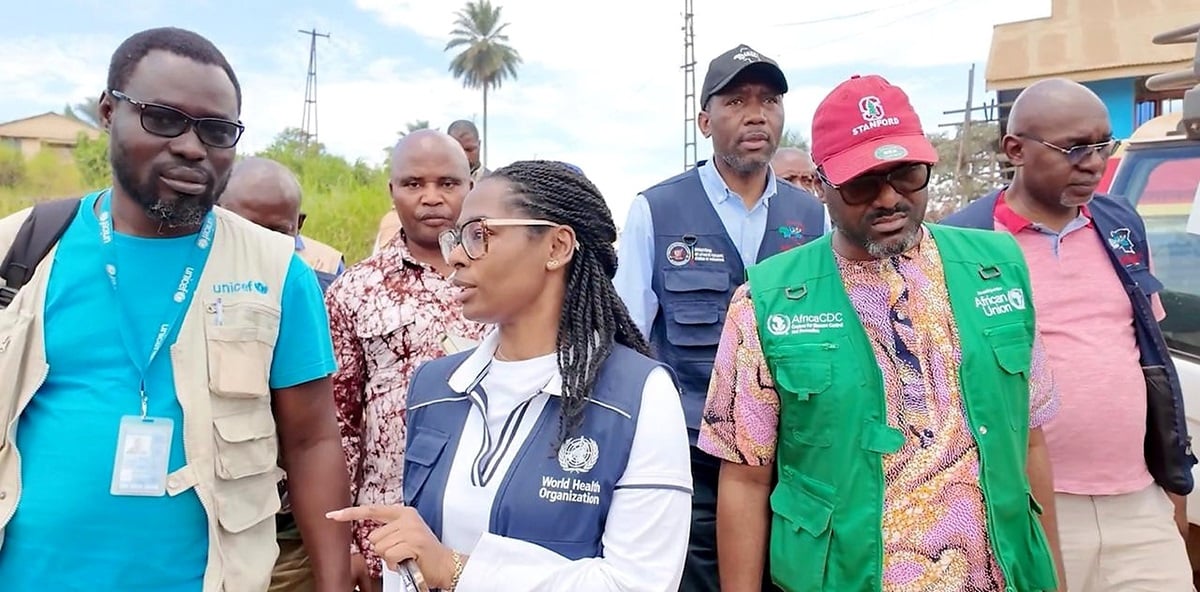
The Ebola outbreak in the Democratic Republic of Congo, fueled by the rare Bundibugyo strain, has claimed at least 63 lives among 397 confirmed cases as of June 5, 2026—but the real battle is being waged not just against the virus, but against the misinformation and resistance that threaten to undermine the response.
Misinformation as Deadly as the Virus
In Bunia, the capital of Ituri province where the outbreak is concentrated, skepticism has spread as fast as the virus itself. When Congolese authorities confirmed the outbreak on May 15, many dismissed it as a “Western conspiracy,” a sentiment that has fueled attacks on health workers and delayed critical interventions. The Africa Centres for Disease Control and Prevention (Africa CDC) reported the grim toll this week: 63 deaths among 397 confirmed cases—a fatality rate that underscores the urgency of the situation.
At the heart of the response is a daily radio program on Radio Télévision Mont Bleu, where journalist Verité Johnson has turned the airwaves into a lifeline. The 45-minute show, airing at 10 a.m., features health specialists answering questions and debunking myths. “So far, there’s still a layer of resistance within the population, and that’s where the media plays an important role,” Johnson said. The program’s jingles and call-in segments are a rare tool to reach communities where trust in authorities has eroded.
“Misinformation is almost as dangerous as the virus itself and spreads just as fast. Earning and keeping the trust of communities is at the heart of everything we do.”
— Dr.
The World Health Organization (WHO) and Africa CDC have framed the crisis as a battle not just of medicine, but of perception. On June 5, they launched a $518 million six-month plan to combat the outbreak, emphasizing that without community trust, contact tracing falters and transmission continues. The Bundibugyo strain, which lacks approved vaccines or treatments, adds another layer of fear—one that misinformation exploits.
A $518 Million Plan to Save Lives—and Trust
The joint response plan, announced by WHO Director-General Dr. Tedros Adhanom Ghebreyesus and Africa CDC Director-General Dr. Jean Kaseya, is the continent’s most ambitious yet. It’s not just about funding—it’s about coordination. The “One Response” approach unifies governments, partners, and communities under a single budget, team, and strategy. “The only way to beat this outbreak is through close partnership,” Tedros said, stressing that political commitment, sustained financing, and community engagement are equally critical.

For more on this story, see Red Cross Volunteers Die from Ebola in DRC Outbreak.
“Containing Ebola depends on political commitment, sustained financing, and the trust and engagement of communities. This plan places communities at the centre, because without their participation, contact tracing falters, safe care is delayed, and transmission continues.”
— Dr.
The plan’s focus on community engagement is a direct response to the resistance seen in past outbreaks. In Congo, which has battled Ebola 17 times since 1976, skepticism often stems from distrust of outsiders. The radio program in Bunia is a microcosm of this challenge: while it reaches some, others remain unreachable. The WHO’s emphasis on “earning trust” reflects a hard-won lesson—one that could mean the difference between containment and catastrophe.
Why This Outbreak Is Different—and Why It Matters
The Bundibugyo strain is the wild card in this crisis. Unlike the more familiar Sudan or Zaire strains, it has no approved vaccines or treatments, leaving health workers with limited tools. The absence of these interventions forces a return to basics: surveillance, isolation, and public health messaging. Yet even these fundamentals are under threat when communities reject them.
Dr. Kaseya’s warning—”Ebola moves fast. Africa must move faster”—captures the urgency. The six-month plan aims to stop the outbreak where it is, support affected countries, and prepare neighbors for potential spillover. But the clock is ticking. The WHO’s data shows that without immediate action, the virus could spread to Uganda and beyond, turning a localized crisis into a regional one.
Key Challenges Ahead
- Community Resistance: Skepticism and attacks on health workers delay critical interventions.
- Strain-Specific Gaps: No vaccines or treatments for Bundibugyo force reliance on outdated methods.
- Funding Shortfalls: The $518 million plan requires rapid mobilization to prevent further spread.
- Cross-Border Risks: Uganda and neighboring countries must prepare for potential spillover.
The plan’s success hinges on two fronts: speed and trust. Speed is critical because Ebola spreads rapidly, especially in densely populated areas. Trust is equally vital—without it, contact tracers can’t do their jobs, patients delay care, and misinformation spreads unchecked. The radio program in Bunia is a small but vital step toward rebuilding that trust, proving that in the fight against Ebola, communication is just as important as medicine.
This follows our earlier report, WHO ‘Deeply Worrisome’ Over Ebola Outbreak.
What Comes Next—and What’s Uncertain
The next 30 days will be decisive. The WHO and Africa CDC have outlined a clear path: strengthen surveillance, ramp up community engagement, and secure funding. But the real test lies in execution. In Congo, where past outbreaks have been met with both heroism and resistance, the question is whether this time will be different.
One thing is certain: the battle against Ebola is no longer just a medical one. It’s a battle for information, for trust, and for unity. The $518 million plan is a start, but without the cooperation of communities, it may not be enough. As Tedros Adhanom Ghebreyesus put it, “the only way to beat this outbreak is through close partnership.” The challenge now is to turn that partnership into action—before the virus outpaces the response.
“Ebola moves fast. Africa must move faster. This joint plan gives the continent a clear path to act with speed and unity: to save lives, support the affected countries and protect neighbouring communities.”
— Dr.
The stakes couldn’t be higher. With no cure in sight and misinformation running rampant, the fight against Ebola in Congo is far from over. But for the first time, the response is unified—and that may be the best hope yet.
