
Google’s near-monopoly on search is under pressure as AI chatbots like ChatGPT and Microsoft’s Bing chip away at its 90% market share, while a growing backlash against AI-driven search results pushes users toward privacy-focused alternatives like DuckDuckGo. But beneath the surface, a deeper battle is raging: the war for AI talent. As two of Google’s most influential researchers—DeepMind’s John Jumper and Gemini AI’s Noam Shazeer—jumped ship to rival labs in recent weeks, Google’s AI chief Demis Hassabis pushed back in an interview with Semafor, arguing that Google’s structural advantages—its unmatched data troves, custom hardware, and long-term AI investments—still give it the upper hand in the race for the best AI minds.
Why Google’s AI talent exodus isn’t what it seems
Google’s recent high-profile departures—Shazeer to OpenAI and Jumper to Anthropic—have sent shockwaves through the tech world, with analysts warning of a brain drain. But according to Hassabis, these moves are less about Google’s weakening position and more about the broader industry’s frenzied competition for top AI talent. “Don’t read the recent departures as a signal that Google is doing less with AI,” Jefferies analysts wrote in a report cited by CNBC. “It’s another data point in an industry-wide war for talent in which frontier labs are aggressively bidding.”

The stakes couldn’t be higher. Shazeer, a co-author of the 2017 paper “Attention is All You Need”—the foundational work behind nearly every modern large language model, including ChatGPT and Google’s own Gemini—was a linchpin of Google’s AI ambitions. Jumper, meanwhile, led the development of AlphaFold, the AI system that revolutionized protein folding and earned DeepMind a Nobel-equivalent reputation in computational biology. Their departures follow a pattern: top AI researchers are increasingly lured by startups promising equity stakes and the chance to shape the next wave of AI from the ground up.
Yet Google’s response underscores its confidence. The company has consolidated its AI research under Hassabis’s leadership since merging Google Brain and DeepMind in 2023, creating a unified powerhouse with access to the world’s largest AI training infrastructure. “For researchers looking to train the next generation of frontier models, access to Google’s vast fleets of custom Tensor Processing Units (TPUs) remains one of the most compelling recruiting tools in the industry,” Hassabis’s interview suggests. That advantage isn’t just theoretical: Google’s AI investments are massive, with nearly $200 billion allocated to long-term bets like Waymo and space-based AI, funded by the ad revenue that still dominates its business model.
The AI backlash reshaping search—and Google’s desperate response
While Google’s internal AI wars play out, its core search business is facing an existential challenge from two sides: AI chatbots and anti-AI purists. Traffic to Google Search has dipped slightly over the past month, while ChatGPT’s usage has ticked up, according to CNBC. But the bigger threat may be the growing movement away from AI entirely. DuckDuckGo, which has long positioned itself as a privacy-focused alternative, saw a 75% surge in installs after its May 2025 launch of a “no-AI” search mode. The company’s traffic has surged as users seek to opt out of AI-generated results.

“A lot of people use Google because Google is like the front page of the internet, but they want to go on these journeys and do the clicking and searching themselves and make their own decisions,” said Lily Ray, vice president of search engine optimization at Amsive, in comments to CNBC. “They’re rejecting the AI middleman.”
Google’s response has been twofold: double down on AI integration while trying to reassure users about privacy. At its May 2025 I/O conference, the company announced a major redesign of its search interface, moving the “AI Mode” button directly into the search box—a move that critics argue prioritizes AI-generated answers over traditional search results. Yet the shift has backfired for some users, who now face AI answers by default unless they actively opt out. Meanwhile, Google’s own Gemini AI chatbot trails ChatGPT in user adoption, with 662 million monthly active users compared to ChatGPT’s 1.1 billion, according to 매일경제.
The risk? Google’s ad-driven business model, which accounts for 75% of its revenue, could take a hit if users abandon search for AI chatbots—or worse, if AI search cannibalizes its own ad ecosystem. “The threat is both that Google loses its dominance and that, in trying to compete in AI, it cannibalizes search in favor of a new way of finding information that doesn’t have a proven digital ad model,” CNBC noted. The company’s stock dropped 5% in a single day after Jumper’s departure, reflecting investor jitters.
The talent war: Why Google’s losses might not be losses at all
Google’s ability to retain top talent hinges on more than just salaries. The company’s ecosystem—its data, hardware, and long-term vision—remains a magnet for researchers who want to push the boundaries of AI. Shazeer and Jumper’s departures, while high-profile, may not signal a broader exodus. “Google’s structural advantages, including its unparalleled ecosystem of data, integrated hardware, and sheer computing power, remain unmatched,” Hassabis’s interview implies.
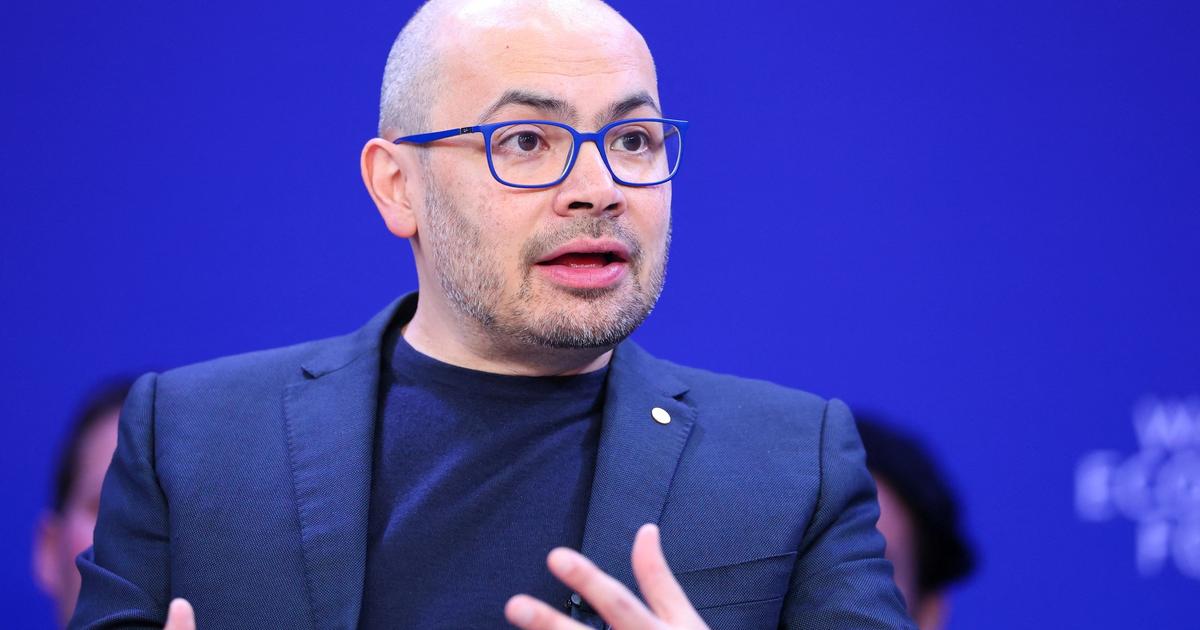
Consider the alternatives: OpenAI and Anthropic, while flashier, lack Google’s scale. OpenAI’s ChatGPT has surged in popularity, but its infrastructure is built on Microsoft’s Azure cloud—hardly a substitute for Google’s custom TPUs. Anthropic, meanwhile, is still a startup, however well-funded. Google, by contrast, can afford to lose a few star researchers without derailing its AI ambitions. Its $200 billion in AI investments—spread across Waymo, health tech, and next-gen AI models—ensures that even if individual labs lose key players, the broader ecosystem remains intact.
That said, the talent war is far from over. A Pew Research Center study from March found that half of Americans feel “more concerned than excited” about AI in their daily lives—a sentiment that could accelerate the shift away from Google’s AI-heavy search. If users continue to reject AI-driven answers, Google may face a choice: double down on AI and risk alienating its core search audience, or pivot back to traditional search and cede ground to Microsoft and DuckDuckGo.
What happens next: Three scenarios for Google’s AI future
Google’s path forward depends on three key variables: talent retention, user behavior, and regulatory pressure.
- Scenario 1: The AI integration gamble pays off. If Google’s redesign of the search interface—with AI Mode front and center—proves effective at retaining users while still driving ad revenue, the company could emerge stronger. But this hinges on convincing users that AI answers are superior, not just default. Early signs are mixed: while ChatGPT’s traffic is rising, so is DuckDuckGo’s, suggesting a growing segment of users actively avoids AI.
- Scenario 2: The backlash forces a pivot. If user frustration with AI search grows, Google may be forced to revert to a more traditional search experience—or risk losing its search dominance to Microsoft’s Bing, which has already surpassed 1 billion monthly users. This would be a strategic retreat, but one that could stabilize its core business.
- Scenario 3: The talent war escalates. If more top researchers jump ship, Google could accelerate its hiring of mid-level talent to fill gaps, potentially slowing innovation but maintaining its infrastructure lead. Alternatively, it may double down on internal promotions, as it did with Hassabis’s rise to AI chief.
The most immediate test will come at Google’s next earnings report, where analysts will scrutinize search traffic trends and ad revenue growth. If traffic continues to decline while ChatGPT and DuckDuckGo gain ground, investors may demand a clearer strategy. For now, Google’s bet is on AI—but the cracks in its dominance are widening.
One thing is clear: the AI era is reshaping search, and Google’s future hinges on whether it can balance innovation with user trust. The talent wars are just the beginning.
Find more reporting in our Technology section.
