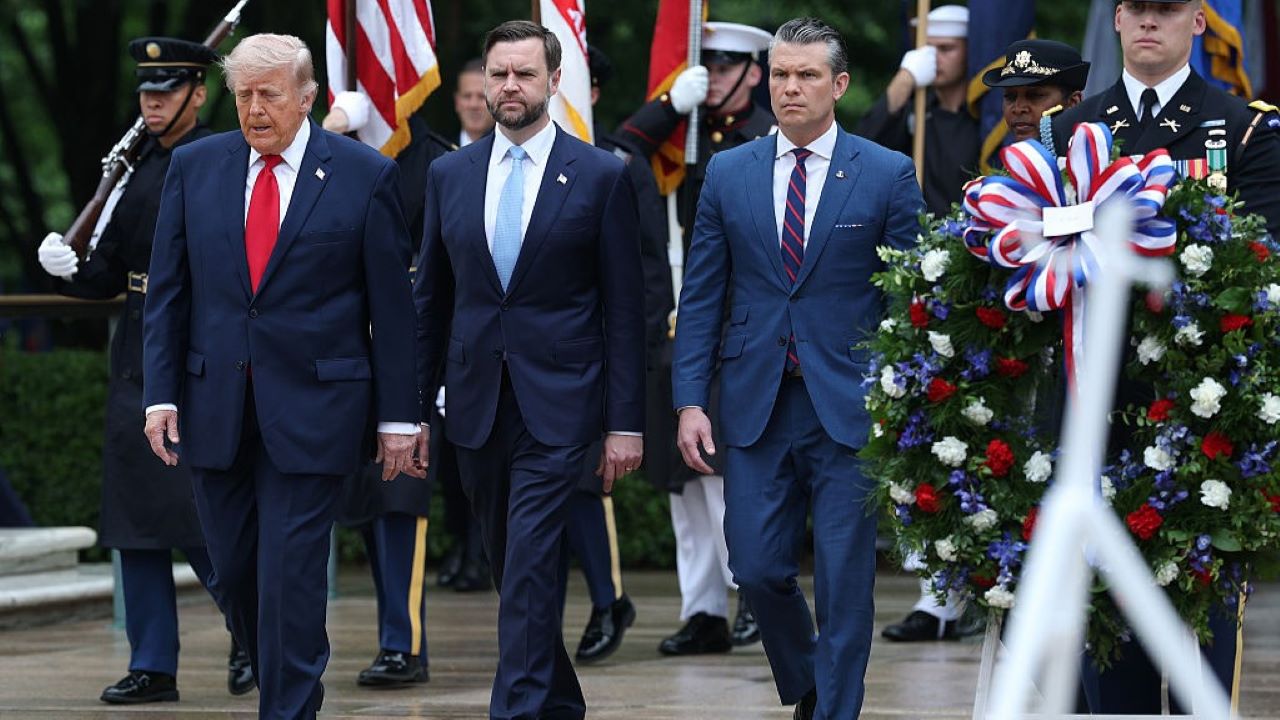
President Donald Trump claimed Monday to have averted an Israeli strike on Beirut and brokered a ceasefire between Israel and Hezbollah, even as Iran suspended U.S. negotiations over escalating violence in Lebanon, according to multiple reports. The conflicting narratives from Washington, Tel Aviv, and Tehran underscored the volatile diplomacy surrounding the 101-day war between Iran and Israel, with Trump’s assertions clashing against Iranian accusations of U.S. complicity in attacks on Lebanese territory.
Trump’s Diplomatic Claims and Contradictions
Trump asserted on Truth Social that he had convinced Israeli Prime Minister Benjamin Netanyahu to cancel a “major raid” on Beirut, stating, “He turned his troops around. Thank you, Bibi!” The claim came hours after Netanyahu’s office warned of “terror targets” in the Lebanese capital, and amid reports of Israeli military activity in southern Lebanon. Trump also claimed to have spoken with Hezbollah representatives, saying they agreed to halt attacks on Israel “and its soldiers,” while Israel would reciprocate. “Let’s see how long that lasts. Hopefully, it will be for eternity!” he added.
According to a White House readout obtained by Fox News, Trump’s intervention followed a direct call to Netanyahu at 10:47 AM EDT, where he urged restraint and cited “potential catastrophic consequences” for regional stability. The readout noted that Trump emphasized the need to avoid civilian casualties in Beirut, particularly in the southern suburbs where Hezbollah maintains significant infrastructure. A senior administration official, speaking on condition of anonymity, confirmed that Trump had also engaged with Lebanese Ambassador to the U.S. Abdallah Bou Habib, who relayed the ceasefire proposal to Hezbollah leadership.

However, Israeli officials did not confirm Trump’s account. The Israel Defense Forces (IDF) spokesperson, Lt. Col. Jonathan Conricus, reiterated plans for operations in southern Lebanon during a press briefing at 3:15 PM local time, stating, “Israel will continue to target terror infrastructure in Lebanon as necessary to defend our citizens.” Netanyahu’s office did not publicly acknowledge the president’s intervention, though a source close to the prime minister told The Jerusalem Post that “diplomatic channels remain open” and that “no final decisions have been made regarding Beirut.”
The Lebanese Embassy in Washington later issued a statement confirming that Hezbollah had accepted a U.S.-proposed ceasefire, under which Israeli strikes on Beirut’s southern suburbs would cease in exchange for Hezbollah halting attacks on Israel. “The ceasefire would then be expanded to encompass all Lebanese territory,” the embassy said in a statement signed by Ambassador Bou Habib, citing a “mutual cessation of attacks.” The embassy added that Trump had contacted Bou Habib directly at 11:30 AM EDT to discuss the proposal, which was subsequently relayed to Hezbollah Secretary-General Hassan Nasrallah.
Nasrallah has not publicly commented on the ceasefire, but a Hezbollah-affiliated news outlet, Al-Manar, reported that the group’s military council had “noted the U.S. proposal with interest” and would “assess its feasibility in the coming hours.” Meanwhile, Israeli airstrikes in southern Lebanon continued, including a targeted strike on a Hezbollah arms depot in the town of Marjayoun at approximately 4:20 PM local time, according to IDF statements.
Iran’s Escalation and Strategic Calculations
Iran’s Foreign Affairs Ministry accused the U.S. of bearing “direct responsibility” for Israeli attacks on Lebanon, calling the Zionist regime a “criminal entity” in a statement Monday. The statement, issued by ministry spokesman Nasser Kanaani, read: “The United States, as the main supporter of the Zionist regime’s aggression, must be held accountable for the bloodshed in Lebanon.”

The country’s negotiating team also suspended “talks and the exchange of texts through mediators,” according to state media, as tensions over Israel’s military operations in the region reached a boiling point. Iranian Parliament Speaker Mohammad Bagher Ghalibaf warned Lebanese leaders that continued Israeli strikes could trigger retaliation, saying in a speech to the Iranian Majlis, “If these crimes continue, we will not only suspend the negotiation process, but we will also stand against the Zionist regime.” Ghalibaf’s remarks were broadcast live on Iranian state television, where he was seen addressing lawmakers alongside Foreign Minister Hossein Amir-Abdollahian.
During the speech, Ghalibaf reportedly told Lebanese Parliament Speaker Nabih Berri that any agreement to end the war between Iran and the U.S. would require a halt to attacks on all fronts, particularly in Lebanon. “If an agreement is reached to end the war between Iran and the United States, it will include a halt to attacks on all fronts, especially in Lebanon,” Ghalibaf said, according to a transcript provided by the Iranian Parliament’s official news agency, IRNA. The move highlighted Iran’s growing frustration with what it perceives as U.S. inaction against Israeli operations, even as Trump framed himself as a mediator.
In a separate development, Iranian Revolutionary Guard Corps (IRGC) Commander-in-Chief Hossein Salami issued a statement warning that “any further aggression by Israel will be met with a decisive response from the axis of resistance.” Salami’s remarks came during a meeting with senior IRGC officials in Tehran, where he reportedly reviewed the group’s “preparedness for escalation” in Lebanon and Yemen. The IRGC has not provided further details on specific military plans, but a source familiar with the discussions told Tasnim News Agency that “options are being evaluated to deter Israeli actions.”
The suspension of Iran-U.S. talks, which had been ongoing for months, marked a significant shift. According to a diplomatic source in Vienna, where indirect negotiations had previously taken place, the U.S. team had proposed a framework for de-escalation that included a 72-hour pause in hostilities. However, Iranian negotiators reportedly rejected the proposal, citing “insufficient guarantees” that Israel would halt its campaign. The source, who requested anonymity, stated that the U.S. had also offered to facilitate a direct dialogue between Iran and Israel, but Tehran dismissed the idea as “unrealistic.”
The Fragile Ceasefire and Regional Implications
The proposed ceasefire between Israel and Hezbollah, if implemented, could ease violence in Lebanon’s border regions. However, its success hinges on both sides’ willingness to comply. Hezbollah, which has launched hundreds of rockets into Israel since October, has not publicly confirmed the agreement. A Hezbollah military source, speaking to Al-Jazeera, stated that the group was “monitoring the situation closely” and would “respond accordingly” if Israeli strikes continued. The source, who declined to be named, added that Hezbollah had “not received any formal written assurance” from Israel regarding the ceasefire.
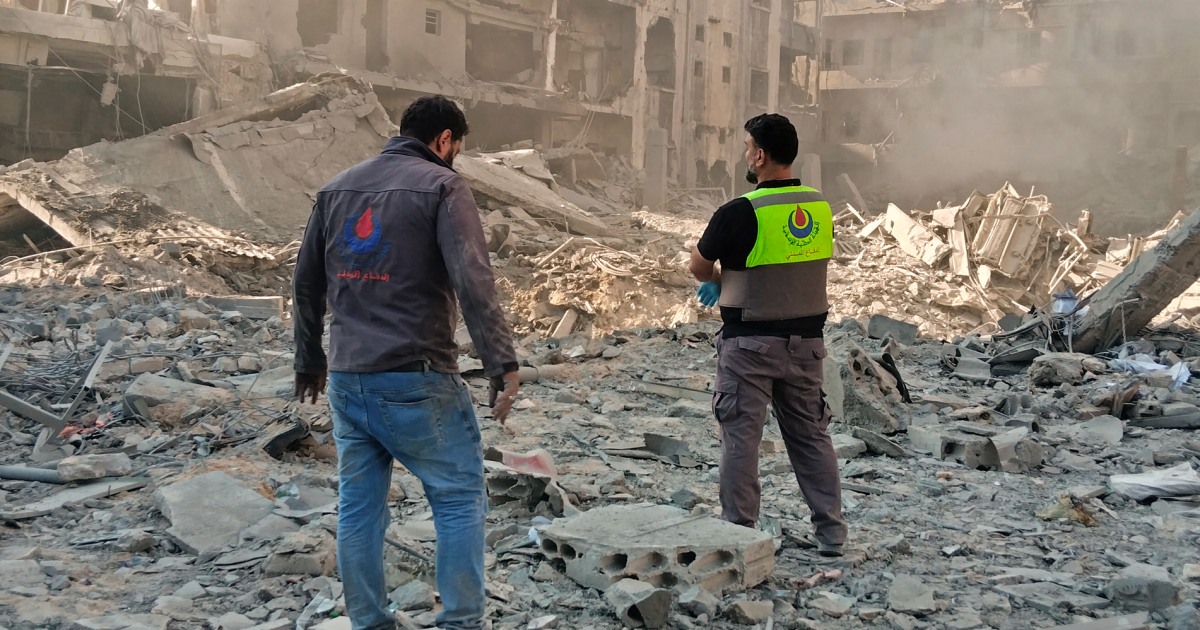
Meanwhile, Israeli forces continued to conduct airstrikes in southern Lebanon, targeting infrastructure and militant positions. The IDF reported striking a Hezbollah command center in the town of Bint Jbeil at approximately 6:45 PM local time, resulting in “significant damage” to the facility. Lebanese officials confirmed the strike, with a local mayor telling Reuters that “the area was heavily hit, and we are assessing casualties.” The Lebanese Red Cross has not yet provided a casualty count.
The Lebanese Embassy’s statement suggested that Trump’s role in brokering the deal was pivotal, noting, “Trump had contacted the Lebanese ambassador to the U.S.” The embassy added that Bou Habib had “reiterated Lebanon’s call for an immediate ceasefire” during his conversation with Trump. However, analysts cautioned that the ceasefire remains fragile. “This is a temporary pause, not a permanent solution,” said Dr. Lina Khatib, a Middle East expert at the Carnegie Endowment for International Peace, in an interview with The Washington Post. “Both sides have too much at stake to fully commit, and the U.S. is not a neutral party here.”
The U.S. has long been a key ally of Israel, while Iran views American involvement as a threat to its regional influence. Trump’s intervention, if credible, could reshape the dynamics, but it also risks alienating allies who see him as too close to Iranian interests. A senior Israeli official, speaking to Haaretz, expressed skepticism about Trump’s claims, stating, “We do not take our cues from social media posts. Our decisions are based on military and strategic assessments.” The official added that Israel would “continue to act independently” to protect its citizens.
In Beirut, residents reported increased military activity in the southern suburbs, with Hezbollah fighters reportedly reinforcing positions. A local resident told BBC News Arabic that “there is a heavy presence of troops and equipment, and people are being told to stay indoors.” The United Nations Interim Force in Lebanon (UNIFIL) confirmed that it had “noticed an increase in military movements” but had not been given access to the area due to “security restrictions.”
What Comes Next: A Test for Diplomacy
The coming days will test whether Trump’s diplomacy can hold. If Israel and Hezbollah adhere to the ceasefire, it could create space for broader negotiations. However, any violation—whether by Israeli strikes or Hezbollah rocket fire—could reignite the cycle of violence. For Iran, the suspension of U.S. talks signals a hardening stance, potentially accelerating military or proxy actions against Israel.
“This is a high-stakes gamble,” said former U.S. diplomat Robert Malley, president of the International Crisis Group, in a statement to The New York Times. “The region is on a knife’s edge, and a single misstep could spark a wider conflict.” Malley warned that Trump’s intervention, while well-intentioned, could be seen as “weakness” by both Israel and Iran, potentially emboldening further aggression.
In a separate assessment, the U.S. State Department issued a statement urging “all parties to exercise restraint” and avoid actions that could “further destabilize the region.” The statement, issued by Deputy Spokesperson Vedant Patel, read: “We remain committed to de-escalation and are in contact with all relevant parties to explore avenues for dialogue.” Patel did not directly address Trump’s claims but emphasized that “the U.S. will continue to support Israel’s right to self-defense.”
For now, the conflicting accounts from Trump, Israeli officials, and Iranian leaders reflect the chaos of a war that has already claimed thousands of lives. As of the latest reports, the death toll in Lebanon has risen to over 1,200 civilians, according to the Lebanese Ministry of Public Health, though the figure is widely considered an undercount due to restrictions on media access. In Israel, over 300 soldiers and 12,000 civilians have been displaced from northern communities near the Lebanese border.
As the clock ticks toward a potential breakthrough—or a new escalation—global powers are watching closely, aware that the balance of power in the Middle East could shift dramatically in the weeks ahead. The European Union’s foreign policy chief, Josep Borrell, issued a statement calling for an “immediate and unconditional ceasefire,” while Russia’s Foreign Ministry expressed support for Iran’s position, stating that “the U.S. must be held accountable for its role in escalating tensions.”
Trump’s claims, meanwhile, have drawn mixed reactions within his own administration. A White House official, speaking on background, described the president’s intervention as “part of a broader diplomatic effort” but acknowledged that “the details are still being worked out.” The official added that Trump had “not ruled out further direct engagement” with regional leaders in the coming days.
For Trump, whose political future hinges on his ability to position himself as a peacemaker, the situation presents both an opportunity and a risk. His assertion that he had “aved” the region from a potential catastrophe aligns with his narrative of strong leadership, but any failure to sustain the ceasefire could undermine his credibility. As he prepares to address the nation on Tuesday, the question remains: Can diplomacy outpace the momentum of war?
