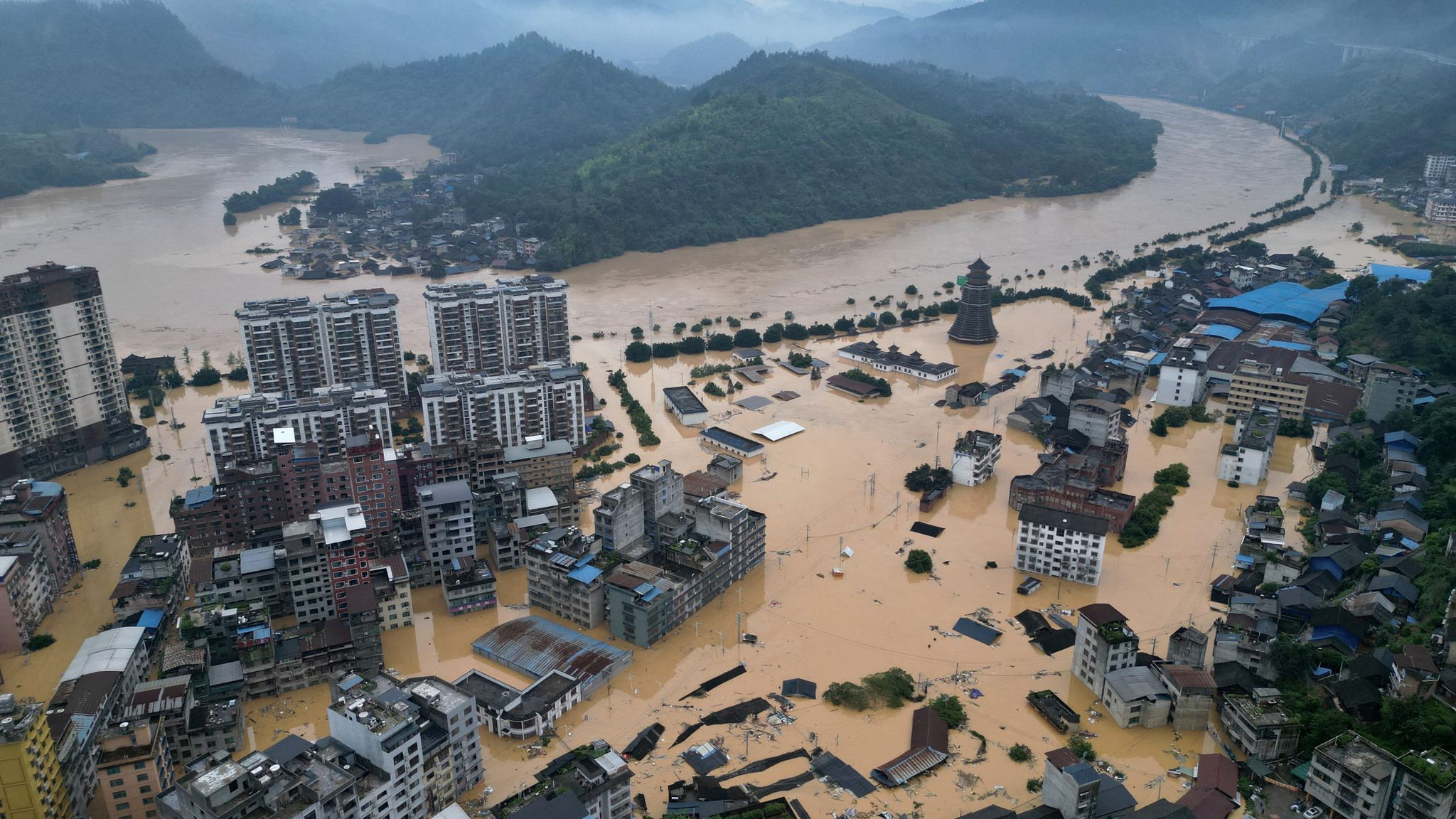
At least 22 people have died in southern and central China this week as relentless heavy rainfall triggers widespread flooding and landslides, forcing emergency responses across provinces including Guangdong and Guizhou. Authorities warn of escalating risks as saturated soil and overlapping rain belts heighten the threat of flash floods and urban waterlogging.
Deadly Floods Spread Across Southern China as Rainfall Intensifies
China’s 2026 flood season has arrived with devastating force, killing at least 22 people in southern and central regions since May 19. Heavy rainfall—weeks of continuous downpours—has overwhelmed drainage systems, triggered landslides, and swept away vehicles in provinces already on high alert. Eyewitness footage from Guizhou province on May 19 showed a car being carried away by floodwaters, underscoring the sudden and violent nature of the crisis.
Meteorological agencies have warned that saturated soil and overlapping rain belts are exacerbating the risk of flash floods, particularly in Guangdong and Guizhou. The Ministry of Water Resources had already signaled in April that 2026 would bring a complex flood season, with northern regions facing unusually strong floods while typhoons are expected to push further inland during the summer months. As of May 21, the situation remains fluid, with no immediate signs of relief in sight.
Technology and Emergency Response Under Strain
In response to the escalating crisis, China has accelerated the deployment of advanced flood-control technologies, integrating satellite data, weather radar, and artificial intelligence (AI) into its early-warning systems. The Ministry of Water Resources and the China Meteorological Administration have emphasized the use of these tools to improve the accuracy of flood forecasts and expand warning coverage to remote villages, construction sites, and households.
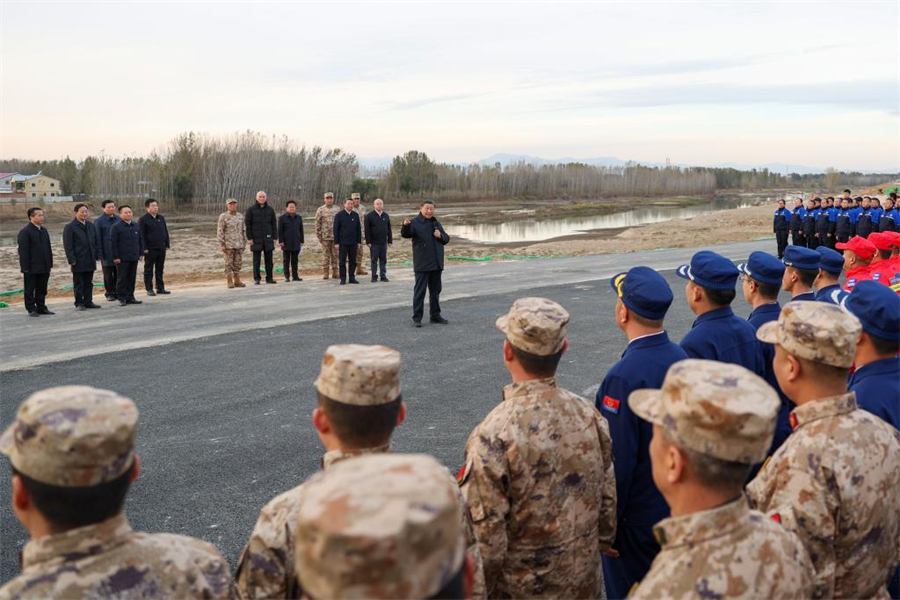
However, the sheer scale of the rainfall has tested even these systems. Local governments have been instructed to prioritize rapid dissemination of alerts, but the sheer volume of affected areas—spanning multiple provinces—has created logistical challenges. Officials acknowledge that while technology has enhanced preparedness, the intensity of this year’s rainfall has outpaced some response capabilities.
The Ministry of Emergency Management has directed local authorities to ensure that warnings reach every affected community, including rural areas and construction zones, where infrastructure may be less robust.
Ministry of Emergency Management, April 2026 directive
Regional Disparities and Long-Term Risks
The flooding has not been uniform across China. While southern provinces like Guangdong and Guizhou bear the brunt of the immediate crisis, the Ministry of Water Resources has also flagged concerns for northern regions, where unusually strong floods are expected. This dual threat—flooding in the south and potential drought in the north—highlights the complexities of China’s climate challenges in 2026.
Typhoons, which typically impact coastal areas, are now projected to move further inland, increasing the risk of secondary flooding in regions not traditionally prone to such events. The overlap of these factors has created a scenario where even areas with robust infrastructure are struggling to contain the damage.
Historically, China has faced severe flood seasons, but the combination of prolonged rainfall, technological limitations, and the expanding geographic scope of the crisis suggests that 2026 may present unique challenges. The government’s reliance on AI and satellite monitoring reflects a shift toward data-driven disaster management, though the effectiveness of these measures remains a subject of ongoing assessment.
Human Cost and Uncertain Outlook
The death toll of at least 22 marks a stark reminder of the human cost of natural disasters in China. While authorities have activated emergency responses, including evacuations and the deployment of rescue teams, the scale of the flooding means that many communities remain isolated. Reports indicate that landslides have cut off access to some villages, delaying relief efforts.
As of May 21, meteorological forecasts suggest that the heavy rainfall will persist, at least in the short term. The China Meteorological Administration has issued advisories warning of continued moderate to heavy rain and thunderstorms across southern China, with no immediate reduction in intensity expected. This prolongs the risk of further flooding, landslides, and disruptions to critical infrastructure.
The situation underscores the need for both immediate humanitarian response and long-term climate adaptation strategies. While China’s investment in flood-control technology represents a significant step forward, the current crisis demonstrates that even the most advanced systems can be overwhelmed by extreme weather events.
What Comes Next?
The next critical phase will depend on two factors: the trajectory of the rainfall and the effectiveness of the government’s response. If the current weather patterns persist, the death toll and displacement figures are likely to rise, placing additional strain on rescue operations and recovery efforts. Meanwhile, the Ministry of Water Resources and other agencies will continue to monitor the situation closely, adjusting their strategies as new data emerges.
For now, the focus remains on saving lives and mitigating damage. The use of technology in flood prediction and response will be scrutinized, not only for its role in this crisis but as a model for future climate resilience. However, the immediate priority is clear: containing the flooding before it claims more lives and leaves deeper scars on the affected regions.
One certainty is that China’s flood season is far from over. With typhoons expected to move inland and rainfall continuing to test the limits of infrastructure, the coming weeks will be critical in determining how well the country can balance technological innovation with the realities of extreme weather.
