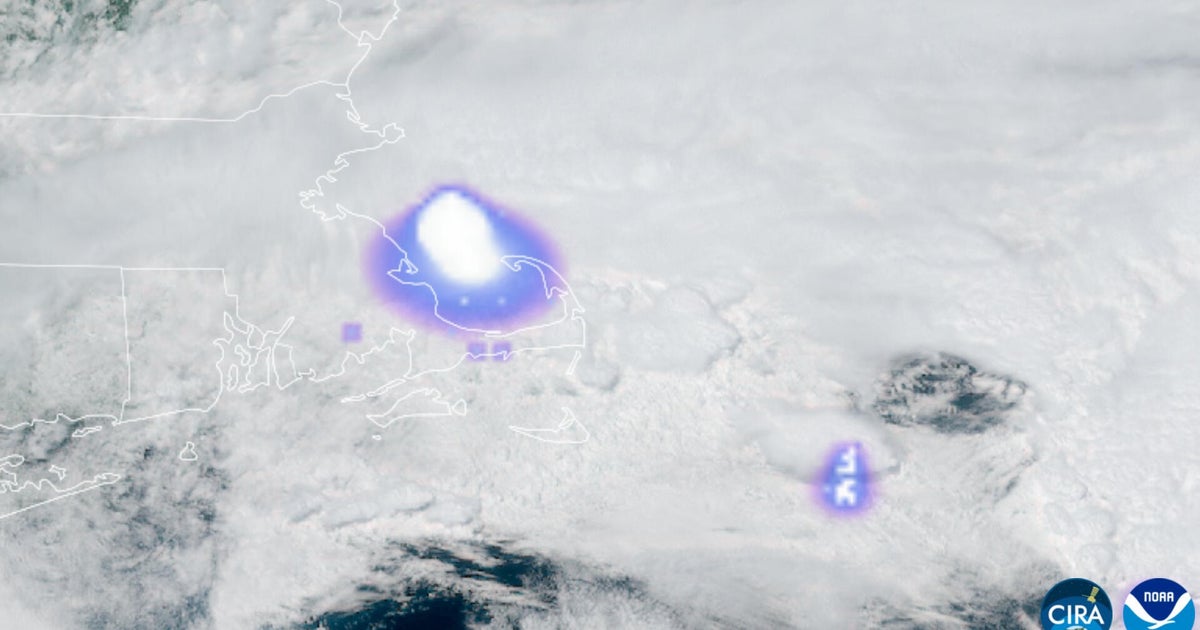
A meteor disintegrated over the Massachusetts coast on Saturday, May 30, 2026, triggering a sonic boom equivalent to 300 tons of TNT. The fireball, which fragmented at an altitude of 40 miles over the border of Massachusetts and New Hampshire, left debris in Cape Cod Bay, according to NASA’s recent analysis.
A Sonic Boom Across the Northeast
The atmospheric disturbance occurred at approximately 2:06 p.m. EDT, sending a shock wave that rattled homes and startled residents from the Boston area to parts of Rhode Island and New Hampshire. While meteors frequently enter the Earth’s atmosphere, the intensity of this event—and its proximity to populated land—made it a rare occurrence. Unlike earthquakes, which originate from discrete locations within the Earth’s crust, the sound resulted from a linear path of air compression as the object traveled at approximately 75,000 miles per hour.
NASA confirmed that the meteor was a natural object and not related to space debris or satellite re-entry. The agency’s data, supported by satellite lightning detection from the National Oceanic and Atmospheric Administration, tracked the meteor’s trajectory as it entered the atmosphere near the South Shore of Boston. The energy released during the object’s fragmentation was substantial, with NASA stating:
“The meteor appears to have fragmented at an altitude of 40 miles over northeast MA and southeast NH. The energy released at breakup is estimated to be equivalent to about 300 tons of TNT, which accounts for the loud noise,” NASA, via WBZ-TV.
cluster (priority): Boston Heraldcluster (priority): Yahoo
Residents reported a range of experiences, from visual sightings of a streak in the sky to the jarring sensation of a physical impact. For many, the initial reaction was one of confusion, with some fearing a car accident or falling debris. Thomas Carroll, who was driving when the meteor broke apart, recalled the moment the sound hit:
“I thought there’s no way some little tiny rock that made less than an inch of an impact made that loud of a noise,” added Carroll. “I thought maybe some car had crashed.”
The Science of Atmospheric Fragmentation
Meteor explodes off Massachusetts coast, causing sonic boom
The loud reports heard on the ground were the result of shock waves created by the object’s immense velocity. As the meteor tore through the atmosphere, it generated pressure waves similar to those produced by a supersonic jet. Shauna Edson, an astronomy educator for the Smithsonian National Space and Air Museum, explained that the noise was a combination of air displacement and the structural failure of the object itself.
According to Edson, the sound is produced because “what you hear is the air compression of it moving really fast, creating those pressure waves, and occasionally sometimes you’re also hearing the stone itself break apart from the forces that it’s going through.”
The event was captured by witnesses across the region, including on dash cameras. Bob Todt, who was driving in Fort Plain, New York, managed to record the fireball as it streaked across the horizon. As WJAR reported, Todt initially dismissed the footage as debris before checking his archives the following morning. The American Meteor Society collected 81 reports of the fireball from as far away as Ontario, Canada, and New Jersey, underscoring the scale of the atmospheric entry.
Locating Debris in Cape Cod Bay
cluster (priority): WJAR
While the fireball’s light show was visible for hundreds of miles, the physical remains of the meteor followed a specific path into the water. NASA confirmed that the bolide produced a meteorite fall directly into Cape Cod Bay. In a characteristically wry scientific update, the agency noted that the fall into the water is “technically called a ‘fishy squisher’ in uber-serious scientific terms.”
The site of the fall is located at a depth of roughly 100 feet. NASA suggested that because most meteorites are highly magnetic, they could theoretically be recovered using a magnet attached to a rope from a boat, though the depth presents a significant challenge for casual searchers.
For those curious about the potential value of such finds, the financial stakes for collectors are clear. Pricing for meteorites varies based on their composition and rarity:
Specimen Type
Price per Gram
Common Iron Meteorite
$1 to $10
Unique or Rare Specimens
Upwards of $50
Data Collection and Future Implications
The event provided a rare opportunity for NASA and other monitoring agencies to refine models regarding near-Earth object behavior. By analyzing radar signatures from multiple stations in Boston, New York, and Portland, scientists were able to triangulate the meteor’s path with precision.
While the incident caused no property damage or injuries, it served as a stark reminder of the dynamic environment of the upper atmosphere. NASA emphasized that the object posed no threat to infrastructure, and the event concluded without lasting disruption. For residents, the experience shifted from a moment of alarm to one of scientific curiosity, as reports of the “loud boom” were quickly verified by emergency services as a natural phenomenon rather than human-made activity. Moving forward, the data gathered from this event will be integrated into broader records of atmospheric entries, aiding in the early detection and cataloging of similar space objects.
Leo Andersson covers innovation, AI, and cybersecurity. A former engineer turned journalist from Stockholm, Leo has contributed to major tech outlets across Europe. His analytical style and deep understanding of technology trends define Globally Pulse’s forward-looking reporting.