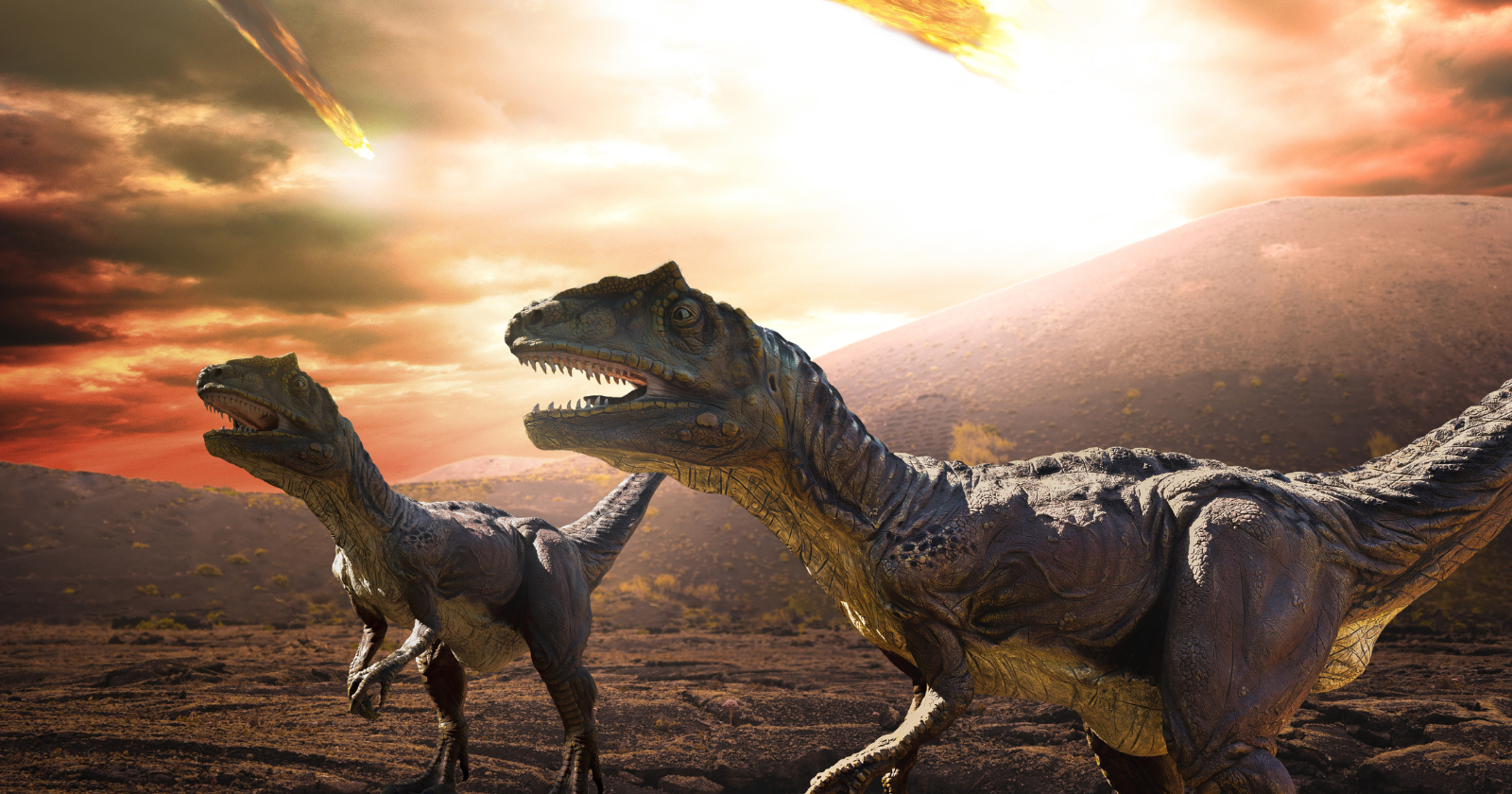
A rare fossil site in North Dakota has revealed the most detailed snapshot yet of the day an asteroid wiped out the dinosaurs 66 million years ago, preserving fish with microscopic glass beads from the impact lodged in their gills. The discovery at Tanis, in the Hell Creek Formation, offers direct evidence of the catastrophic event’s immediate aftermath, including a surge deposit and spherules that suggest the fish died within hours of the Chicxulub impact.
The Tanis Site: A Time Capsule of the Asteroid Impact
The Tanis site, first described in a 2019 study published in PNAS, is a 1.3-meter-thick “Event Deposit” that captures the moment the asteroid struck Earth. Unlike other fossil sites that show gradual changes over time, Tanis preserves a single, high-energy event: a mix of freshwater fish, burned wood, marine ammonites, and other debris buried together. What makes Tanis extraordinary is the presence of tiny glassy spherules—melted rock fragments from the impact—lodged in the gills of fish, suggesting they inhaled them while still alive before being buried by a seismic surge.
cluster (priority): rockchasing.com
The spherules themselves are not new; they’ve been found in other Cretaceous-Paleogene boundary layers worldwide. But their concentration in the gills of Tanis fish changes the game. According to the PNAS paper, these particles were trapped in the gill rakers—the bony structures fish use to filter water—meaning they were inhaled from the water column, not scattered post-mortem. This rules out the possibility of the spherules being reworked into the site by later geological processes, a criticism raised by Princeton geoscientist Gerta Keller.
How the Fish Died: The Surge That Buried Tanis
The Tanis deposit wasn’t formed by a tsunami—despite the presence of marine fossils like ammonites. A tsunami from the Chicxulub impact, roughly 3,000 kilometers away, would have taken hours to reach North Dakota. Instead, researchers argue the surge was triggered by seismic waves from the magnitude 10–11 earthquake that followed the impact, arriving within an hour. This seismic surge carried the fish upstream, burying them in a chaotic jumble of debris before the spherules could settle out of the water.
cluster (priority): nps.gov
The timing is critical. The fish were alive when the spherules fell, and the surge buried them before decomposition could scatter the particles. This is why the gills matter: they provide a timestamp. The fish didn’t die from the impact itself but from the immediate aftermath—a window into the first hours of the Cretaceous-Paleogene extinction event.
The Controversy: What Tanis Reveals—and What It Doesn’t
Tanis is not without controversy. While the fish and surge deposit are well-documented, some of the more dramatic claims—such as the presence of dinosaur remains—lack the same level of peer-reviewed support. The site has become a focal point for debates about the asteroid’s immediate effects, with some researchers questioning whether the spherules could have been transported by later processes. However, the gill evidence is a game-changer: it directly links the fish’s deaths to the impact’s fallout.
North Dakota Fossil Site Reveals When Asteroid Killed Dinosaurs
The broader implications are staggering. Tanis doesn’t just show what happened—it shows how it happened. The fish, the spherules, and the seismic surge all point to a chain of events that unfolded in real time. This is the closest we’ve come to witnessing the moment Earth’s ecosystems collapsed, not in slow geological time, but in the span of a single day.
Why This Discovery Matters: A New Window into Mass Extinction
The Tanis site forces a reckoning with how we understand mass extinctions. For decades, the Cretaceous-Paleogene boundary was seen as a gradual shift, with the asteroid’s role confirmed but the immediate aftermath obscured. Tanis changes that. It shows that the extinction wasn’t just about the impact itself but about the cascading effects that followed: the seismic surges, the debris raining from the sky, the sudden burial of ecosystems.
cluster (priority): britannica.com
This has ripple effects beyond paleontology. Understanding how life responds to sudden, catastrophic stress—whether from asteroids, climate shifts, or human activity—is critical. Tanis offers a natural experiment in resilience (or lack thereof) that could inform modern conservation efforts. If ecosystems can collapse in a matter of hours, what does that mean for today’s biodiversity crises?
What’s Next: Unanswered Questions and Future Research
Tanis isn’t the end of the story—it’s the beginning. Researchers are still debating the exact mechanics of the seismic surge, the role of wildfires in the region, and whether other sites might preserve similar evidence. The discovery also raises questions about the global distribution of impact debris: if spherules were inhaled by fish in North Dakota, how widespread were they?
For now, Tanis stands as a testament to the power of fossilized time capsules. It’s not just a snapshot of the past—it’s a warning. The same forces that buried those fish in North Dakota could, in theory, repeat themselves. And if they did, the question isn’t whether life would survive—but how quickly it would adapt.
The Tanis site, as described in the 2019 PNAS study, remains the most detailed record of the Chicxulub impact’s immediate aftermath. For readers eager to explore further, the full paper is available here. Meanwhile, debates about the site’s broader implications continue to unfold in the scientific community.
Leo Andersson covers innovation, AI, and cybersecurity. A former engineer turned journalist from Stockholm, Leo has contributed to major tech outlets across Europe. His analytical style and deep understanding of technology trends define Globally Pulse’s forward-looking reporting.