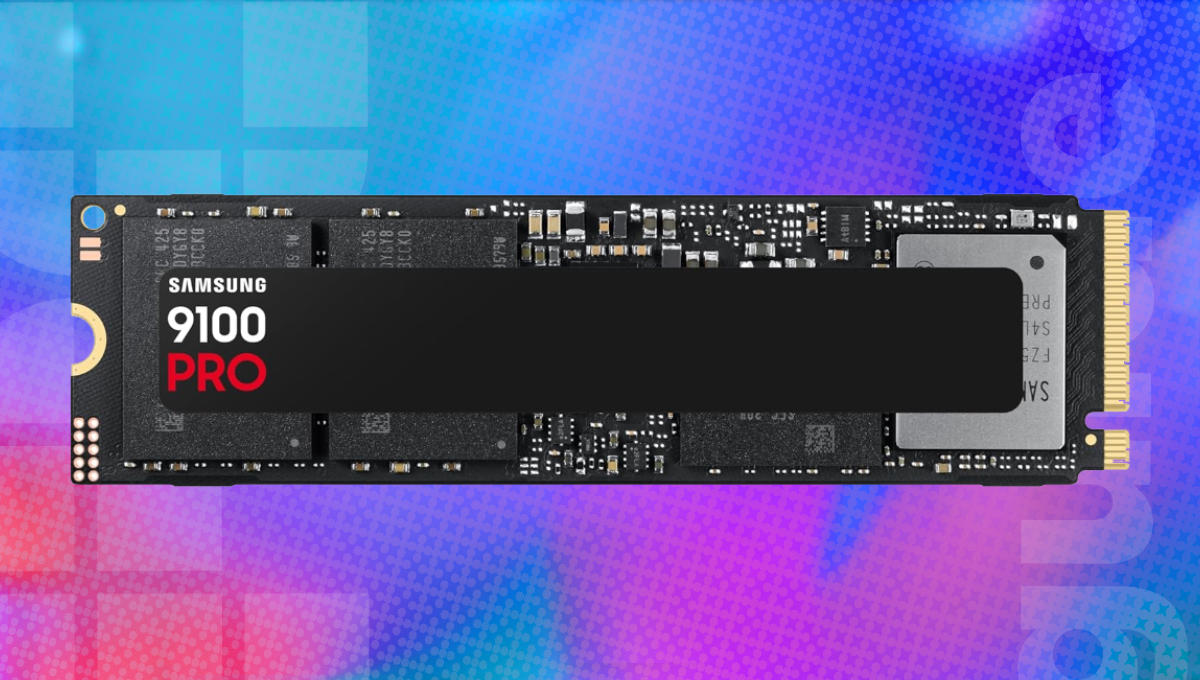
Amazon Prime Day 2026 begins June 23 and continues through June 26, though early discounts on high-performance solid-state drives are already active. Manufacturers have redirected memory production toward AI-focused hardware, causing a significant supply squeeze. Consumers can currently find 2TB NVMe drives at historical price lows despite broader market volatility.
The Strategic Shift Behind Current SSD Pricing
The current pricing environment for storage components is defined by a massive reallocation of manufacturing capacity. According to reporting from Tech Times, three dominant memory manufacturers—Samsung, SK Hynix, and Micron—control approximately 95 percent of global DRAM production. These firms have systematically shifted wafer capacity toward high-bandwidth memory (HBM) required for AI accelerators.
Because a single gigabyte of HBM consumes four times the wafer area of standard DRAM, this transition has created what industry analysts describe as a zero-sum trade against consumer-grade memory supply. As a result, DRAM prices have risen 300 to 600 percent from their 2024–2025 lows, a trend that experts expect to persist through 2030. For the average consumer, this means that while early Prime Day deals offer a temporary reprieve, the underlying supply chain pressures remain elevated.
This structural change in the semiconductor market stems from the explosive demand for generative AI models, which require massive amounts of rapid-access memory to process large datasets. In the semiconductor industry, silicon wafers are a finite resource. When a foundry commits capacity to the complex, multi-layered architecture of HBM, that capacity is unavailable for the NAND flash memory used in consumer SSDs or the standard DDR5 RAM found in personal computers. This creates a bottleneck that forces manufacturers to prioritize the higher-margin, enterprise-grade hardware sought by data centers and AI cloud service providers over the consumer retail market.
Samsung 990 Pro and 9100 Pro Price Fluctuations
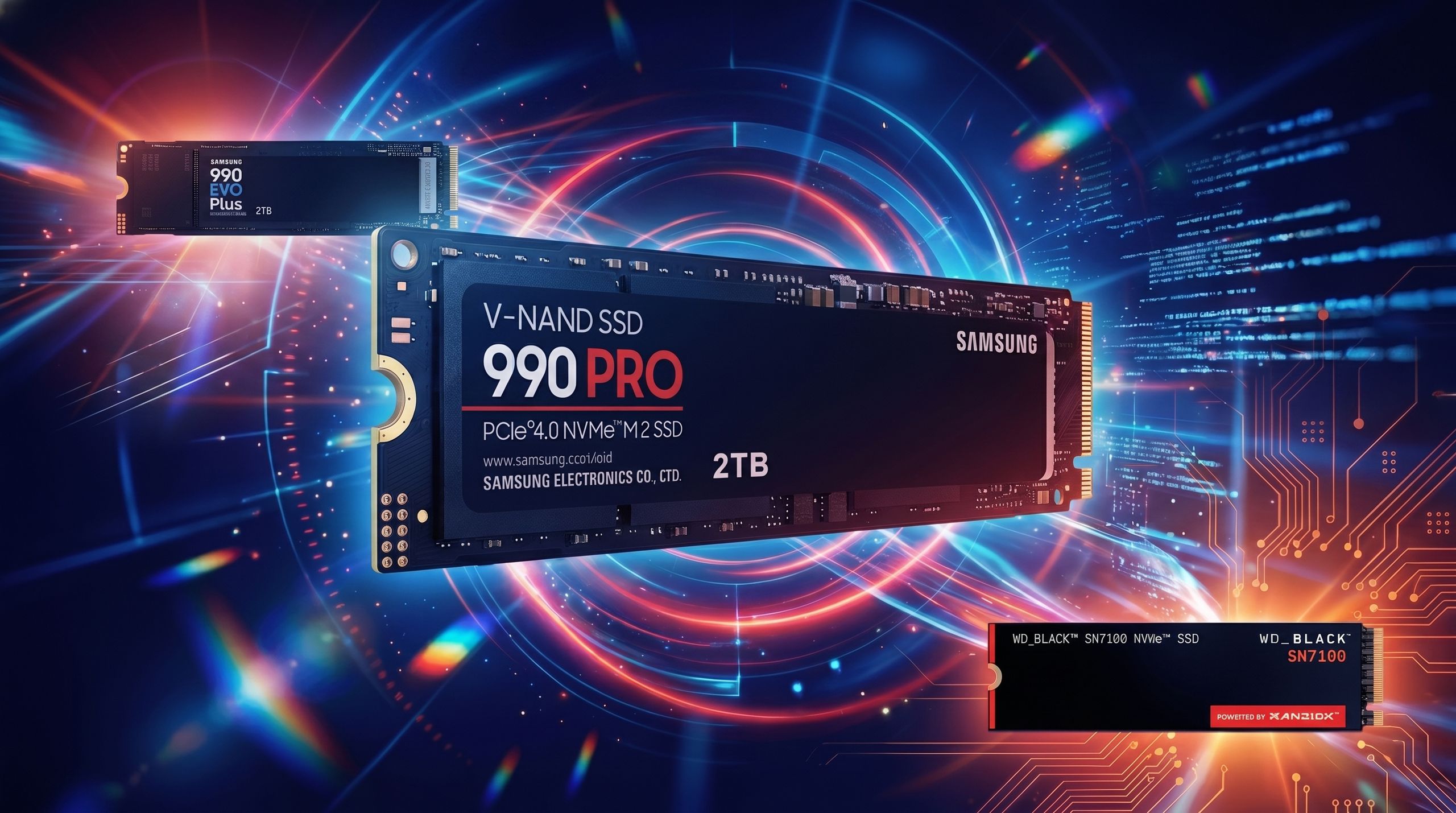
The Samsung 990 Pro 2TB NVMe SSD has become a focal point of this week’s sales, dropping to $369, which Kotaku reports is the lowest price the drive has ever reached on Amazon. This represents a 42 percent reduction from its all-time high of $639.

Contrasting this, the newer PCIe Gen 5 Samsung 9100 Pro 2TB is also seeing significant movement. PC Guide notes the Gen 5 drive is currently 38 percent off, bringing the price down to $419.82 from its usual $679.99. This discount saves buyers $260.17, effectively resetting the price to levels seen several months ago. While the 990 Pro remains the default recommendation for many gaming builds due to its proven performance and compatibility with PlayStation 5 consoles, the 9100 Pro targets users requiring higher sequential read speeds for heavy-duty AI and content creation workflows.
The distinction between these two drives is critical for potential buyers. The Samsung 990 Pro utilizes the PCIe Gen 4 interface, which is the standard for PlayStation 5 consoles and the vast majority of gaming PCs built over the last four years. In contrast, the Samsung 9100 Pro utilizes the PCIe Gen 5 interface. Gen 5 drives offer nearly double the sequential read and write speeds of their predecessors, but they require a motherboard that explicitly supports the Gen 5 M.2 standard. Furthermore, because of their extreme speed, Gen 5 drives generate significant thermal output, necessitating robust heatsink solutions. Buyers selecting the 9100 Pro must ensure their system chassis has adequate airflow to prevent thermal throttling during intensive operations.
For more on this story, see Prime Day 2026: Up to 54% Off PS5, Xbox, Switch & Gaming Laptops at Record Prices.
Shopping Strategies for High-Demand Hardware
With memory costs rising, experts suggest that current sales events may represent the most favorable buying window for the foreseeable future. CNET advises users not to wait for the official start of Prime Day if they find a target drive at a discount, as retailers like Walmart and Best Buy are already matching Amazon’s aggressive pricing to maintain competitiveness.
Beyond the headline Samsung deals, other options are available for those with different capacity requirements:

- WD Black SN7100 1TB: High-speed read/write performance suitable for general file storage.
- Kingston Fury Renegade G5 2TB: Targeted at gamers with load times reaching 14,800MBps.
- Samsung T7 Portable 2TB: A mobile storage solution with speeds up to 1,050 MBps.
- Seagate Xbox Storage Expansion Card 2TB: Priced at $220 after an on-page coupon, specifically designed for console integration.
TechRadar emphasizes that for users upgrading from mechanical hard drives, the transition to NVMe M.2 storage offers immediate, noticeable improvements in system boot times and application responsiveness. However, buyers should verify their hardware compatibility, specifically ensuring their motherboard or laptop contains a spare M.2 port before committing to a purchase. Compatibility checks also extend to the physical dimensions of the drive; some high-performance SSDs come with pre-installed heatsinks that may be too bulky for thin-and-light laptops, even if the motherboard interface is technically compatible.
Market Outlook and Future Availability
The broader industry outlook remains cautious. With hardware manufacturers signaling that the memory crisis is far from resolved, the current 42 percent price cuts are viewed as anomalies rather than a return to long-term market stability. Consumers who rely on high-capacity storage for professional creative work or large gaming libraries are encouraged to prioritize upgrades this week, as the window for such aggressive discounting is expected to close when the Prime Day event concludes on June 26.
The volatility in the storage market is compounded by the global nature of the supply chain. NAND flash production is highly concentrated in facilities located in East Asia. Any disruption in logistics, energy costs, or geopolitical stability can cause rapid fluctuations in street pricing. Because retailers often purchase inventory weeks in advance, the current deals reflect a specific snapshot of wholesale pricing that may not be sustainable as manufacturers continue to divert wafers toward the HBM sector. Market analysts note that once current inventories are cleared, future restocking cycles may be subject to the higher cost basis dictated by the current supply-demand imbalance, making the current Prime Day window one of the last opportunities to secure high-performance storage at 2025-level pricing.
Find more reporting in our Technology section.
