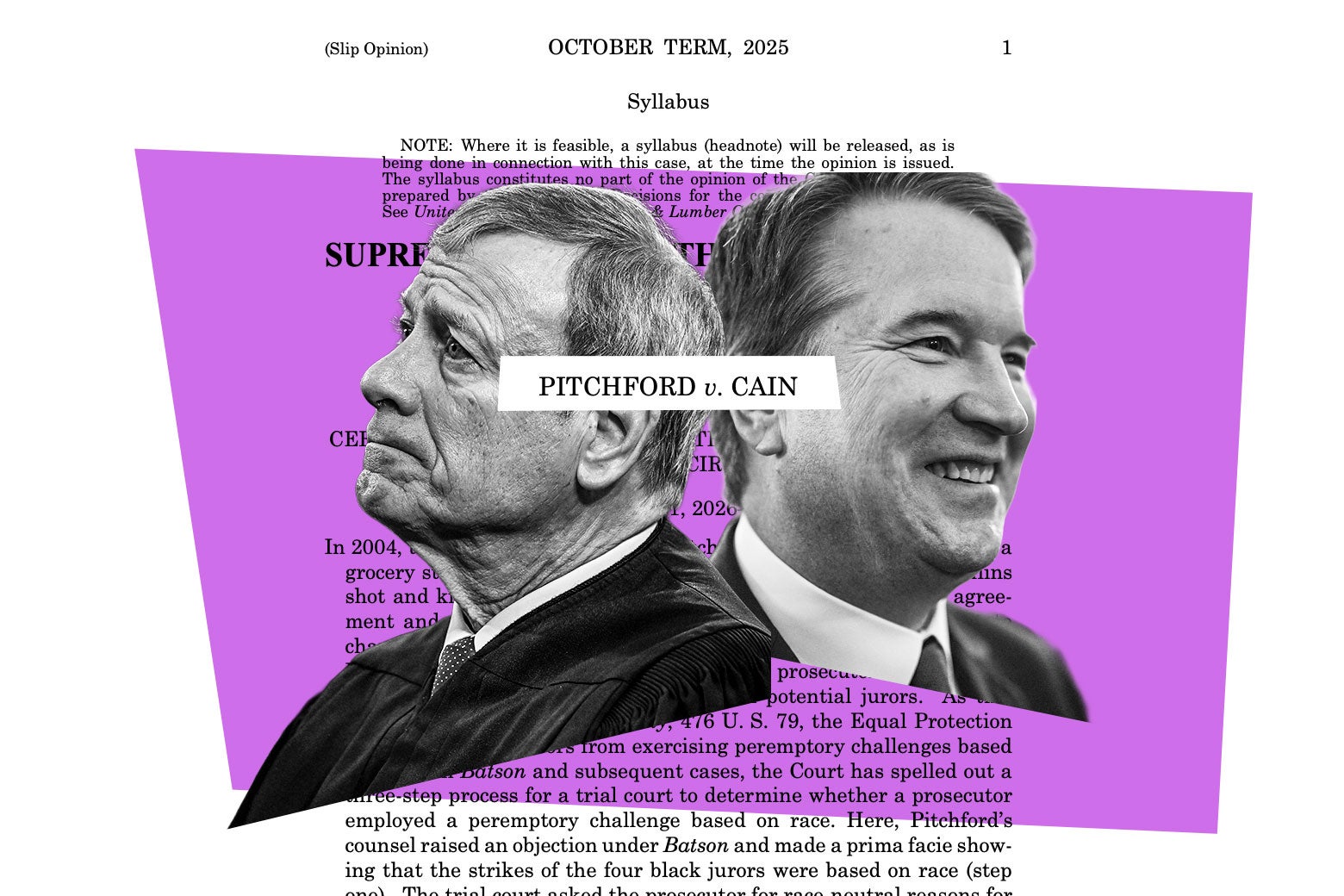
The Supreme Court ruled Thursday in a 5–4 decision that Mississippi prosecutors violated the Constitution by systematically excluding Black jurors from Terry Pitchford’s capital murder trial in 2004, sending the case back for a new sentencing hearing. Justice Brett Kavanaugh, writing for the majority, applied a stricter procedural standard for racial juror challenges that he first proposed in a 1989 law review article—an unusual alignment for a conservative justice on a liberal civil rights issue. The ruling, Pitchford v. Cain, marks the latest twist in a decades-old legal battle over how courts enforce Batson v. Kentucky (1986), the landmark case barring race-based jury strikes.
Kavanaugh’s 1989 Law Review Proposal as the Foundation for the Court’s Decision
Kavanaugh’s majority opinion in Pitchford didn’t break new legal ground—it was, as Vox noted, a "fairly easy case" under existing precedent. But the decision’s path reveals how a 37-year-old law review note by a then-unknown conservative could reshape racial justice in the courts. In 1989, as a Yale Law School student, Kavanaugh published "Defense Presence and Participation: A Procedural Minimum for Batson v. Kentucky Hearings," arguing that defense attorneys should have more opportunities to challenge prosecutors’ race-neutral explanations for striking Black jurors. The Supreme Court’s ruling Thursday adopted that very framework, requiring judges to allow defense counsel to rebut prosecutors’ justifications for peremptory strikes.
The irony? Kavanaugh, now a conservative icon, has long been a rare Republican voice pushing for stronger protections against racial bias in jury selection. While his colleagues like Justice Neil Gorsuch dissented in Pitchford, calling the ruling "a radical departure," Kavanaugh’s opinion reflects a consistency that predates his judicial confirmation. "Sometimes, even Supreme Court justices—arguably the most highly vetted political appointees in the entire federal government—contain multitudes," Vox observed.
Mississippi’s Pattern of Racial Exclusion in Jury Selection Exposed in Pitchford’s Trial
Terry Pitchford’s story begins in 2004, when he and another Black teenager, Eric Bullins, robbed a Mississippi grocery store. Bullins, 16 at the time, shot and killed the white store owner during the robbery. Pitchford, 18, was charged with capital murder despite not firing the fatal shot. Prosecutor Doug Evans used his peremptory strikes to remove four of five Black jurors from the pool, offering flimsy reasons like one juror’s tardiness. Pitchford’s defense attorney objected under Batson, but the trial judge, Joseph Loper, dismissed the challenge without allowing a full rebuttal.
Slate detailed how Evans’s actions mirrored a pattern of racial exclusion in Mississippi courts. The state’s history of racial disparities in jury selection—particularly in capital cases—has long made it a testing ground for Batson’s enforcement. Pitchford’s case hinged on whether Loper violated the three-step Batson framework: defense objection, prosecutor’s race-neutral explanation, and defense rebuttal. The Court ruled Loper failed to follow the third step, effectively rubber-stamping Evans’s strikes.
Broader Implications for Racial Bias in Jury Selection and Capital Punishment
The Pitchford decision isn’t just about one man’s death row sentence—it’s a corrective to a system where racial bias in jury selection persists. Studies show Black defendants are more likely to face all-white juries in Southern states, and prosecutors often exploit peremptory strikes to achieve that outcome. Kavanaugh’s opinion tightens the screws on judges who, like Loper, defer too quickly to prosecutors’ claims of neutrality.
But the ruling’s broader impact depends on how lower courts interpret it. Justice Gorsuch’s dissent warns that the Court’s new standard could "upend decades of settled law," potentially leading to more appeals and delays. Meanwhile, civil rights groups see it as a long-overdue check on prosecutorial overreach. "This is a victory for Terry Pitchford, but it’s also a victory for the principle that the Constitution applies equally to all," one advocate told Vox.
The stakes are higher in states like Mississippi, where capital punishment remains a tool of racial disparity. Pitchford’s case could force prosecutors to think twice before striking Black jurors—or risk having their convictions overturned on appeal.
The Supreme Court’s Ideological Split and Kavanaugh’s Unexpected Leadership on Racial Justice
The 5–4 split in Pitchford reveals the Court’s ideological fractures—and its occasional cross-partisan alliances. Chief Justice John Roberts joined the majority, a rare move given his past skepticism about racial bias claims. Roberts’s vote suggests even the Court’s most conservative members recognize the need to police jury selection.

Kavanaugh’s role is particularly striking. As Slate noted, he has a history of being "unusually clear-eyed" on racial justice issues, dating back to his law school days. His 1989 note wasn’t just prescient—it was prophetic. Today, as the Court’s youngest justice, he’s using his legal scholarship to push for reforms that align with liberal civil rights goals.
The dissent, penned by Gorsuch, argues that the ruling "ignores the text of Batson" and could lead to "endless litigation." But the majority’s approach—requiring judges to scrutinize prosecutors’ strike justifications more closely—could have real-world consequences. In states with high rates of racial disparity in jury selection, the decision might finally force prosecutors to justify their actions beyond vague claims of "instinct."
Pitchford’s case will now return to Mississippi for a new sentencing hearing. His legal team will argue that the original trial’s racial bias tainted the jury selection process, potentially invalidating his conviction. But the road ahead is uncertain. Mississippi’s prosecutor’s office has a history of aggressive capital punishment tactics, and Pitchford’s original sentence—life without parole—could be reinstated if the state appeals.
For the broader death penalty debate, Pitchford adds another layer to the Court’s evolving stance on racial justice. While the Court has never struck down capital punishment outright, rulings like this one suggest that even conservative justices may be willing to curb its most racially discriminatory practices.
The question now is whether this decision will be an anomaly—or the start of a pattern. If lower courts follow the Supreme Court’s lead, prosecutors across the South may face stricter scrutiny in their jury selection. But if Gorsuch’s dissent prevails in future cases, the ruling could be narrowed or reversed.
One thing is clear: Terry Pitchford’s fight has already changed the law. Whether it changes the system remains to be seen.
