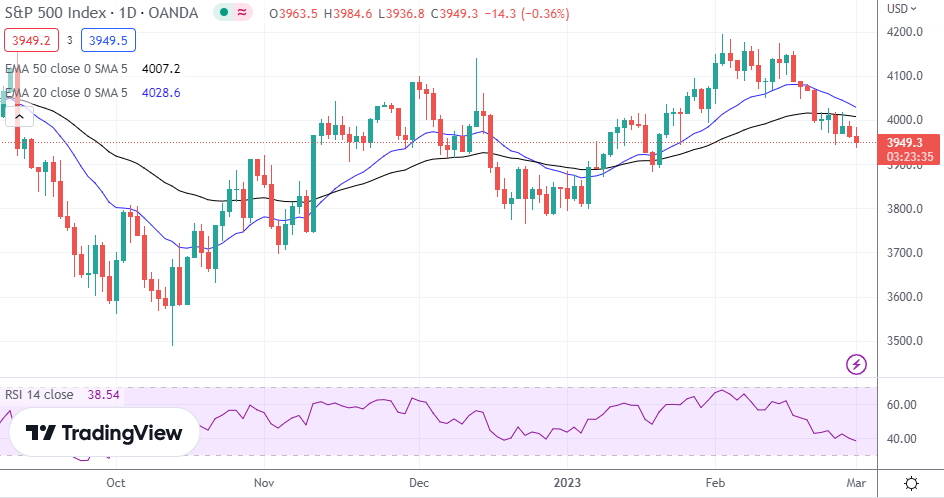
The S&P 500 posted its third consecutive losing session on Monday, May 19, 2026, as rising bond yields dragged down stocks, with the index closing down 0.07% at 7,403.05 amid broader market volatility tied to oil prices and geopolitical tensions.
Market Downdraft: Yields and Tech Lead Decline
The S&P 500’s slump marks a shift from last week’s record highs, when the index briefly flirted with new peaks before Friday’s selloff. The Nasdaq Composite, heavily weighted toward technology, fared worse, sliding 0.51% to 26,090.73—its second straight day of losses—while the Dow Jones Industrial Average bucked the trend with a modest 0.32% gain, closing at 49,686.12.
Bond yields, a key driver of the downturn, surged globally. The U.S. 30-year Treasury yield hit its highest level in nearly a year, mirroring spikes in U.K. and Japanese long-dated debt yields. Rising yields typically pressure stocks by increasing borrowing costs and reducing the appeal of riskier assets, a dynamic that hit tech stocks particularly hard. The Nasdaq-100, which had led the market to record highs, dropped 1.5% on Friday—the worst one-day performance since late March—and continued under pressure Monday.
Oil prices and geopolitical risks further dampened sentiment. Traders monitored escalating tensions between Iran and the U.S., which had already rattled markets earlier this month. The conflict’s potential to disrupt energy supplies or trigger broader regional instability adds to the uncertainty weighing on equities.
Tech and Memory Chips Under Pressure
Within the S&P 500, tech and memory chip stocks were the hardest hit. Seagate, a leader in data storage, fell nearly 7% after its CEO warned during a JPMorgan conference that new factory capacity would take too long to meet soaring demand. The comment sent ripples through the sector, dragging down peers like Micron Technology (down almost 6%), Western Digital (down 4.8%), and SanDisk (down 5.3%).
Artificial intelligence-related stocks also faced pressure, with Nvidia and Broadcom each losing about 1%. The selloff underscores investor concerns about whether the tech sector can sustain its recent rally amid higher borrowing costs and supply constraints in critical industries.
Market breadth remains weak. As of Monday, fewer than 50% of S&P 500 stocks traded above their 200-day moving averages—a sign of broad-based underperformance beyond the index’s largest names.
What’s Next: Yields, Oil, and the Middle East
The near-term outlook hinges on three factors: bond yields, oil prices, and geopolitical developments.
Bond Yields: If yields continue to climb, equities—especially growth stocks—could face further pressure. The Federal Reserve’s stance on interest rates will be critical. While no policy changes are expected at the next meeting, traders are parsing signals about future rate cuts or hikes. The U.S. 10-year Treasury yield, though little changed Monday, remains a focal point for its influence on mortgage rates and corporate borrowing.
Oil Prices: Crude oil futures have been volatile this month, influenced by both supply disruptions and speculative trading. A sustained rally in oil could boost energy stocks but also squeeze consumer spending and corporate margins, creating a mixed picture for the broader market.
Geopolitical Risks: The Iran-U.S. standoff remains the wild card. While direct conflict is not imminent, the risk of miscalculation or asymmetric responses—such as attacks on shipping lanes or cyber operations—could trigger sharp market reactions. Investors are watching for signs of de-escalation or further escalation, particularly as the Middle East remains a flashpoint for global energy markets.
For now, the S&P 500’s three-day losing streak reflects a market testing its recent highs rather than a full-blown reversal. However, the combination of higher yields, tech sector jitters, and geopolitical unease suggests volatility will persist in the near term.
Historical Context: A Market in Transition
The current pullback comes as the S&P 500 has navigated a choppy first half of 2026. After a strong finish to 2025, the index hit fresh records in early May, but Friday’s selloff erased all of its year-to-date gains in a single session—a rare occurrence that underscores the market’s sensitivity to macroeconomic shifts.
This week’s action mirrors broader trends seen in 2024 and early 2025, when rising yields and sector rotations disrupted long-held market narratives. At the time, investors pivoted from tech and AI to value-oriented sectors like financials and energy. Whether a similar rotation is underway remains unclear, but the current environment suggests a period of consolidation rather than a sustained downturn.
One key difference in 2026 is the role of artificial intelligence. While AI-driven stocks have led rallies in past cycles, their performance this year has been more volatile, reflecting both hype and underlying challenges in scaling infrastructure and talent. The selloff in memory chip stocks, for example, highlights the physical constraints of meeting AI’s hardware demands—a reminder that even the most disruptive technologies are bound by supply chains and capital markets.
What Investors Are Watching
- Earnings Season: With Q1 2026 earnings reports due in the coming weeks, companies will need to demonstrate resilience in a higher-rate environment. Tech giants, in particular, will face scrutiny over their ability to maintain margins amid rising costs.
- Fed Communication: While no rate changes are expected at the June meeting, Fed officials’ remarks on inflation and labor market conditions will shape expectations for future policy.
- Geopolitical Developments: Diplomatic channels between Iran and the U.S. remain open, but any breakdown in negotiations could send shockwaves through commodity markets and risk assets.
- Valuation Metrics: The S&P 500’s price-to-earnings ratio has expanded in recent months, raising questions about whether the market is priced for perfection. A pullback could provide an opportunity for value-oriented investors.
For now, the market’s message is clear: the easy gains of 2025 are over. The path forward will depend on whether yields stabilize, geopolitical risks ease, and corporate earnings hold up under pressure.
Bottom Line
The S&P 500’s third straight losing session is less about a fundamental shift and more about a market adjusting to higher yields, sector-specific headwinds, and geopolitical jitters. While the index remains near record highs, the lack of breadth and the tech sector’s struggles signal caution. Investors should brace for continued volatility as the market digests these crosscurrents.
One thing is certain: the era of low rates and easy gains is behind us. The question now is whether this correction will deepen—or whether it’s a necessary reset before the next leg up.
