
Israeli Finance Minister Bezalel Smotrich claimed the International Criminal Court (ICC) is seeking a secret arrest warrant against him, calling it a “declaration of war” on Tuesday, May 19, 2026. The ICC declined to comment, citing the confidential nature of its processes.
The Allegation and Context
Israeli Finance Minister Bezalel Smotrich, a prominent figure in the far-right, stated on Tuesday that the ICC prosecutor has requested a “secret” arrest warrant for him. He attributed the move to his policies on expanding Israeli settlements in the occupied West Bank, a region Israel refers to as Judea and Samaria. Smotrich described the alleged warrant as a “declaration of war” and accused the Palestinian Authority of inciting the ICC’s actions.
The ICC’s process for issuing arrest warrants is confidential, with applications typically sealed until judges decide whether to approve them. A spokesperson for the court noted that it cannot comment on specific cases, as outlined in sources from CNN and the BBC. This follows a pattern of the ICC investigating alleged crimes in the West Bank, including settlements, which Israel opposes as violations of its sovereignty.
Smotrich’s claims come amid heightened tensions over settlement expansion. In April 2026, Israel approved over 30 new settler outposts, a move criticized by international bodies. The minister framed this as a “revolution” to solidify Israeli control, citing the approval of more than 100 settlements during the current government’s tenure.
The ICC’s Role and Confidentiality
The ICC, based in The Hague, has not confirmed Smotrich’s allegations but reiterated that its proceedings are confidential. A statement from the court, cited in multiple sources, emphasized that applications for arrest warrants are “classified or under seal” and cannot be disclosed. This aligns with the court’s standard practice, which prioritizes procedural secrecy to avoid prejudicing ongoing investigations.
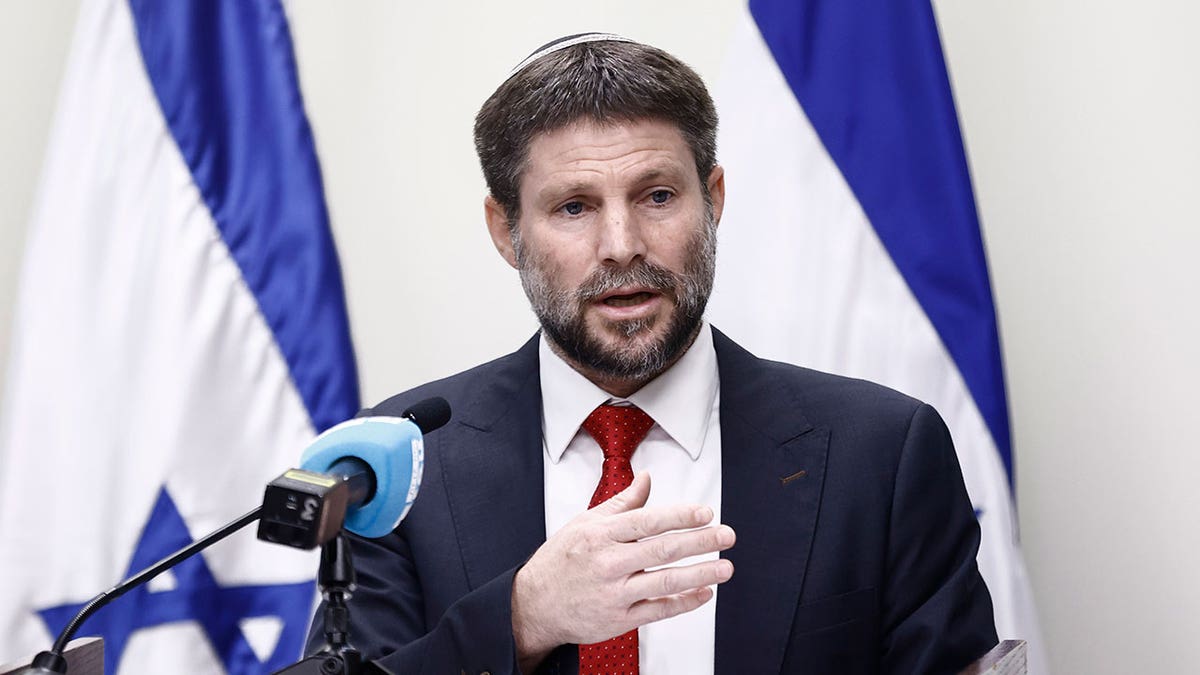
Smotrich’s assertion that the ICC is targeting him reflects broader Israeli grievances with the court’s jurisdiction. Israel, along with the United States, has long contested the ICC’s authority over its territory, arguing that the court oversteps its mandate. The minister’s remarks also highlight internal Israeli political dynamics, where far-right figures often frame international scrutiny as anti-Israel bias.
The ICC’s stance is further complicated by its 2024 investigation into alleged war crimes in Gaza, which Israel has dismissed as politically motivated. While the court has not yet issued warrants for Israeli officials, Smotrich’s claims suggest a potential escalation in tensions between Israel and international legal institutions.
Smotrich’s Response and Actions
In response to the alleged warrant, Smotrich ordered the demolition of Khan al-Ahmar, a Palestinian Bedouin village in the West Bank. The move, announced during a press conference, was framed as a retaliatory measure against the ICC. A Palestinian Authority official condemned the decision, calling it a “dangerous escalation” that violates international law.
Khan al-Ahmar’s eviction had been pending since 2018, when Israel’s Supreme Court upheld an order to relocate its residents. However, enforcement was delayed due to warnings from the UN and the ICC. Smotrich’s recent directive to proceed with the demolition underscores his administration’s defiance of international pressure, even as it risks further diplomatic fallout.
Smotrich also vowed to “fight back with a vengeance,” targeting the Palestinian Authority. His rhetoric aligns with broader Israeli right-wing narratives that view the ICC and Palestinian institutions as existential threats. The minister’s authority over West Bank policies, including settlement expansion and security, grants him significant leverage in these disputes.
Regional and International Reactions
The Palestinian Authority and human rights organizations have criticized Smotrich’s actions, emphasizing the humanitarian impact of settlement expansion and forced displacements. A PA official described the minister’s claims about the ICC as an attempt to deflect attention from Israel’s “systematic violations of international law.”

International reactions remain fragmented. The ICC’s silence on Smotrich’s specific allegations has drawn skepticism, with some observers questioning whether the court is quietly preparing charges. Meanwhile, the U.S. and other Western allies have historically opposed ICC investigations into Israeli actions, though recent shifts in global politics may alter this dynamic.
Analysts note that Smotrich’s public confrontation with the ICC could galvanize domestic support among hardline Israelis while further isolating Israel internationally. The situation also highlights the ICC’s limited enforcement power, as it relies on state cooperation to arrest suspects—a challenge Israel has consistently resisted.
What Comes Next
The next steps hinge on the ICC’s internal processes, which remain opaque. If a warrant is issued, Israel is likely to reject it, as it has done with previous ICC actions. Smotrich’s government may also accelerate settlement projects to entrench its presence in the West Bank, complicating future negotiations.
For the ICC, the case tests its ability to assert jurisdiction in a region where state cooperation is minimal. Meanwhile, Smotrich’s rhetoric risks deepening the cycle of confrontation, with potential consequences for regional stability. As of May 2026, no formal charges have been announced, but the political and legal standoff shows no signs of abating.
