
SpaceX launched 24 Starlink satellites from Vandenberg Space Force Base on June 25, 2026, marking the 25th flight of the Falcon 9 booster B1081 and reinforcing the company’s shift toward West Coast operations. The mission, designated Starlink 17-45, saw the booster land on the drone ship “Of Course I Still Love You” after a 8.5-minute ascent, with satellite deployment occurring 62 minutes into the flight. This launch underscores SpaceX’s accelerating pace of Starlink constellation expansion, with 40 missions planned from Vandenberg in the first half of 2026 compared to 37 from Cape Canaveral, according to Spaceflight Now.
Boosters and Reusability: A Record-Setting Flight
The Falcon 9 first stage B1081, which completed its 25th flight, exemplifies SpaceX’s progress in rocket reusability. This booster previously supported the NROL-179 mission in June 2026, with its rapid turnaround highlighting the company’s operational efficiency. Spaceflight Now noted that the pad at Space Launch Complex 4E saw a 56-hour turnaround between the NROL-179 launch and the Starlink 17-28 mission, a record that underscores SpaceX’s ability to maintain high launch frequency. The booster’s 25th flight also ties into broader trends: as of June 2026, SpaceX has launched 74 Falcon 9 rockets this year, with 59 dedicated to Starlink, per Space.
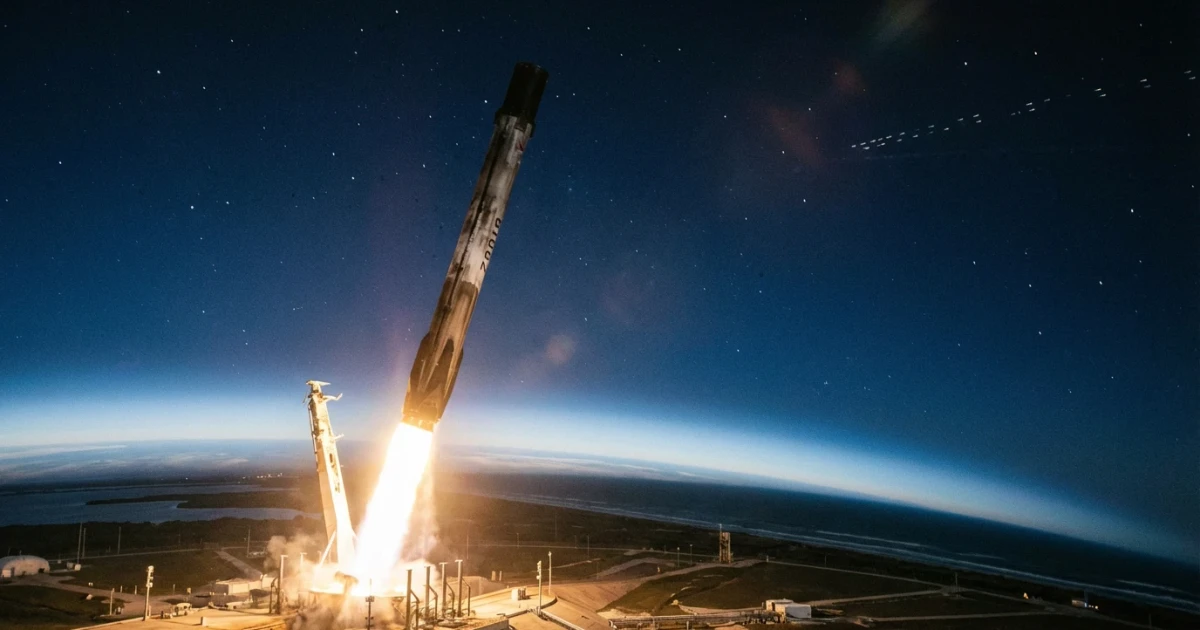
SpaceX’s focus on reusability is not just a cost-saving measure but a strategic imperative. The company has repurposed droneships like “Just Read the Instructions” to transport Starship components, signaling a broader realignment of resources. This shift, combined with the increased launch cadence at Vandenberg, reflects a deliberate move to decentralize operations and reduce reliance on Florida’s Cape Canaveral, where Starship construction is prioritized.
Launch Schedule and Strategic Shifts
SpaceX’s June 2026 launch schedule reveals a clear geographic imbalance. The company plans seven Starlink missions from Vandenberg this month, compared to six from Cape Canaveral. This trend is part of a longer-term strategy: by the first half of 2026, SpaceX anticipates 40 launches from Vandenberg versus 37 from Cape Canaveral. The West Coast has become the “workhorse” for Starlink, while Cape Canaveral’s Space Launch Complex 40 is reserved for Falcon 9 missions, and Launch Complex 39A is dedicated to Falcon Heavy, as reported by Spaceflight Now.

This strategic pivot is driven by multiple factors. Vandenberg’s location allows for south-southwesterly trajectories, which are optimal for deploying satellites into low Earth orbit (LEO). Additionally, the move reduces congestion at Cape Canaveral, where Starship’s development and testing require significant infrastructure. KSBY News highlighted that the June 25 launch “strengthens Starlink’s growing constellation,” emphasizing the network’s role in global broadband access. With nearly 10,700 active Starlink satellites as of June 2026, the company continues to expand its coverage, though challenges like orbital debris and regulatory hurdles remain.
Starlink’s Global Ambitions and Operational Challenges
SpaceX’s Starlink project is the largest satellite constellation ever assembled, with over 10,700 active units. The June 25 launch added 24 more V2 Mini satellites, enhancing the network’s capacity and reliability. The satellites were deployed into LEO, where they will provide high-speed internet to remote and underserved regions. However, the rapid expansion has raised concerns about space traffic management. As of June 2026, SpaceX has launched 59 Falcon 9 missions dedicated to Starlink, a figure that underscores the scale of its operation, according to Space.
Despite its achievements, Starlink faces operational challenges. The company has had to navigate regulatory scrutiny, particularly in Europe and Asia, where concerns about light pollution and spectrum allocation persist. Additionally, the sheer number of satellites increases the risk of collisions, prompting calls for stricter international guidelines. SpaceX has responded by implementing collision avoidance protocols and engaging with regulators, but the long-term sustainability of the constellation remains a topic of debate.
What Comes Next: Launch Cadence and Future Missions
SpaceX’s June 2026 launch schedule suggests a continued emphasis on rapid deployment. With seven Starlink missions planned from Vandenberg this month, the company is on track to meet its goal of launching 100 satellites monthly by 2026.
Find more reporting in our Technology section.

