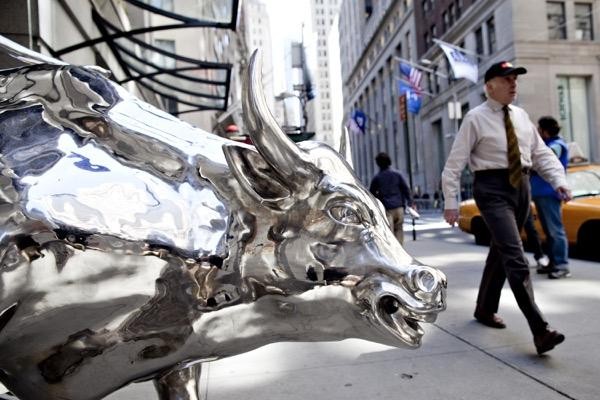
Stock futures hovered near flat on Sunday as Wall Street prepared for a new month following a record-breaking May. The S&P 500 and Dow Jones Industrial Average finished the week at all-time highs, bolstered by a 60-day ceasefire between the U.S. and Iran, easing concerns over the critical Strait of Hormuz.
Market Momentum and the Geopolitical Off-Ramp
cluster (priority): ig.com
The major U.S. averages enter June with significant momentum. Following a strong May, the tech-heavy Nasdaq Composite led monthly gains by rising more than 8%, while the S&P 500 added about 5% and the Dow Jones Industrial Average climbed nearly 3%, according to CNBC. This sustained rally has pushed the S&P 500 to a record high of $7,580, marking a 20% increase from its lowest point earlier this year.
The current optimism is tied closely to the de-escalation of tensions in the Middle East. President Donald Trump has indicated he will meet in the Situation Room “to make a final determination” regarding the 60-day memorandum of understanding that extended the ceasefire. The administration maintains a firm stance, with the President reiterating that Iran “must agree that they will never have a Nuclear Weapon.”
Market analysts view this diplomatic window as a critical driver for stability. Adam Crisafulli, founder of Vital Knowledge, noted that the current environment suggests a clear preference for de-escalation.
“Trump clearly doesn’t want to escalate and is looking for an off-ramp. Some type of a pact is very likely, and markets largely assume a sustained cessation of hostilities,” Adam Crisafulli, founder of Vital Knowledge, via CNBC.
However, Crisafulli cautioned that the market’s pricing of this peace could lead to volatility once the details are finalized. “An actual announcement will probably trigger a ‘sell the news’ reaction for the overall S&P 500,” he added.
Energy Prices and Treasury Yield Sensitivity
cluster (priority): TradingView
The prospect of the Strait of Hormuz remaining “immediately open” has had a direct impact on energy markets. West Texas Intermediate (WTI) crude futures rose 1.8% to $88.83 a barrel, while Brent crude climbed 1.5% to $92.52 as of Sunday. Despite these recent gains, the U.S. benchmark experienced its steepest monthly decline since April 2025, tumbling nearly 17% in May.
This volatility in energy costs has rippled through the bond market. According to TradingView, the retreat in oil prices has helped pull the 10-year U.S. Treasury yield down from its year-to-date high of 4.687% to 4.437%. Falling yields generally signal that investors are betting against further aggressive interest rate hikes from the Federal Reserve. As noted by BusinessLine, the recent tumble in oil prices below $100 per barrel has been a primary catalyst in dragging yields lower.
Institutional Forecasts and Earnings Strength
Stock futures edge higher as markets digest June jobs report
Despite the rapid climb to record highs, institutional analysts remain largely bullish on the S&P 500. Yardeni Research holds one of the most optimistic outlooks with a target of $8,250. Other major firms are clustered nearby: Oppenheimer projects $8,100, while Goldman Sachs, Citi, and Morgan Stanley see the index rising to $8,000, $7,900, and $8,000, respectively.
The fundamental support for these targets stems from strong corporate performance. Approximately 97% of companies in the S&P 500 have reported financial results, showing average earnings growth of 28.6%—the highest rate since the fourth quarter of 2021. Investor appetite for the index is further evidenced by inflows into Vanguard’s VOO ETF, which has added over $64 billion this year and is nearing the $1 trillion assets mark.
Technical indicators, however, suggest a period of caution. The Relative Strength Index (RSI) for the S&P 500 currently stands at 73, a level often associated with overbought conditions. While the index has successfully cleared resistance levels at $7,000 and $7,500, analysts suggest monitoring the $7,800 to $7,850 range, where a rally might find a ceiling.
Labor Market Data and the Week Ahead
cluster (priority): news.google.com
Looking into the first week of June, market participants are shifting their focus to macroeconomic data. Friday’s nonfarm payrolls report is widely expected to provide the next major catalyst for the Federal Reserve’s policy outlook.
While the broader trend remains upward, indices like the Nasdaq Composite are approaching crucial resistance levels. If the index fails to break through, a corrective slide could occur. As investors wait for the labor market data, the combination of geopolitical stability and corporate earnings strength continues to provide a floor for equity valuations, even as technical analysts warn of potential short-term pullbacks.