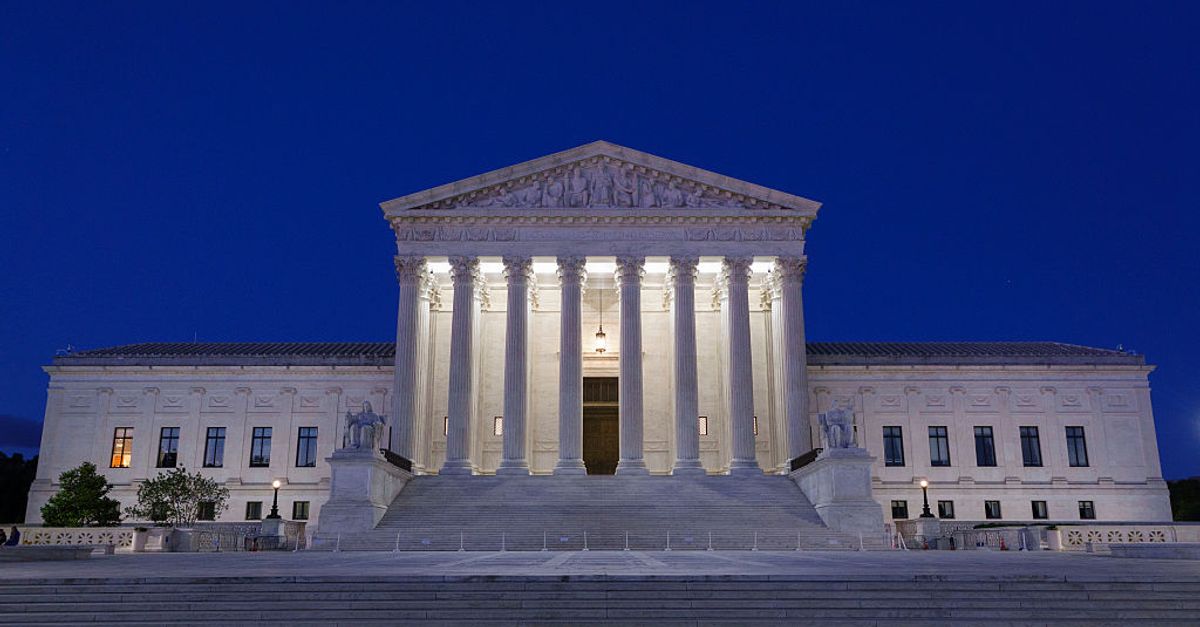
The Supreme Court on Tuesday night cleared Alabama to use a congressional map in the 2026 elections that lower courts had found racially discriminatory, overturning years of legal battles over voting rights in the state. The unsigned order, which came after 9 p.m. EDT, allows Alabama to proceed with a map that civil rights groups and federal judges had previously blocked for intentionally diluting Black voting power. Justice Sonia Sotomayor dissented sharply, warning the decision risks “a chaotic election” by disregarding both democratic values and the rule of law.
How the Supreme Court’s Ruling Rewrites Alabama’s Voting Landscape
The Supreme Court’s decision effectively guts the Voting Rights Act’s remaining protections against racial gerrymandering, even in cases where courts have found intentional discrimination. The ruling comes just weeks after the court’s landmark decision in Louisiana v. Callais, which made it nearly impossible for plaintiffs to challenge voting maps under Section 2 of the VRA unless they can prove explicit discriminatory intent—a standard Alabama’s map now appears to meet. Yet the court’s conservative majority has signaled that even that bar may be too high in practice. The Alabama case, Allen v. Milligan, has been before the Supreme Court three times since 2021, when the state first enacted a map that split Black voters across three districts, leaving them a minority in each. Lower courts repeatedly struck down these maps, finding they violated both the Voting Rights Act and the 14th Amendment. But the Supreme Court’s latest move—allowing Alabama to use the very map it had previously blocked—sends a clear message: states can now draw congressional districts that disadvantage minority voters with near-total impunity, so long as they avoid overtly racist language in their justifications.
The Timeline: How Alabama’s Map Became a Legal Battleground
The saga began in 2021, when Alabama enacted a new congressional map following the 2020 census. Black voters and civil rights groups immediately challenged it, arguing it violated Section 2 of the Voting Rights Act by splitting Black populations across districts. A federal court agreed in 2023, blocking the map and ordering Alabama to use a fairer alternative created by a court-appointed special master. The Supreme Court upheld this decision in 2024, but Alabama refused to comply, instead drawing a new map that voters and advocacy groups again challenged. In April 2026, the court’s Callais decision further complicated matters by raising the bar for proving racial discrimination in voting maps. The ruling required plaintiffs to show a “strong inference” of intentional discrimination—a near-impossible standard in practice. Alabama seized on this, arguing that its map was legally sound under the new standard, even as it openly celebrated the region’s white demographic composition.
What the Dissent Reveals About the Court’s Divide
“the District Court’s analysis departed from” the Supreme Court’s April 29 decision in Louisiana v. Callais, in which the court made it more difficult for plaintiffs to prevail on a claim that a map violates a key provision of the Voting Rights Act.
The Broader Implications: A Green Light for Racial Gerrymandering Nationwide
This ruling isn’t just about Alabama. It’s a green light for Republican-led states across the country to draw congressional maps that systematically weaken the voting power of Black, Latino, and other minority communities. The Supreme Court’s conservative majority has already made it nearly impossible to challenge voting restrictions under the Voting Rights Act, and now it’s doing the same for redistricting—a tool that has historically been used to lock minority voters out of political power. Democracy Docket, a voting rights advocacy group, called the decision “a free rein for states to discriminate,” noting that the court’s conservative justices have effectively gutted the VRA’s safeguards. “The new ruling suggests that, in practice, almost no federal protections remain for non-white voters, even in extreme cases,” the group stated. The Alabama case was seen as the first major test of the court’s new approach to policing racial discrimination in voting, and the result is a disaster for democracy.