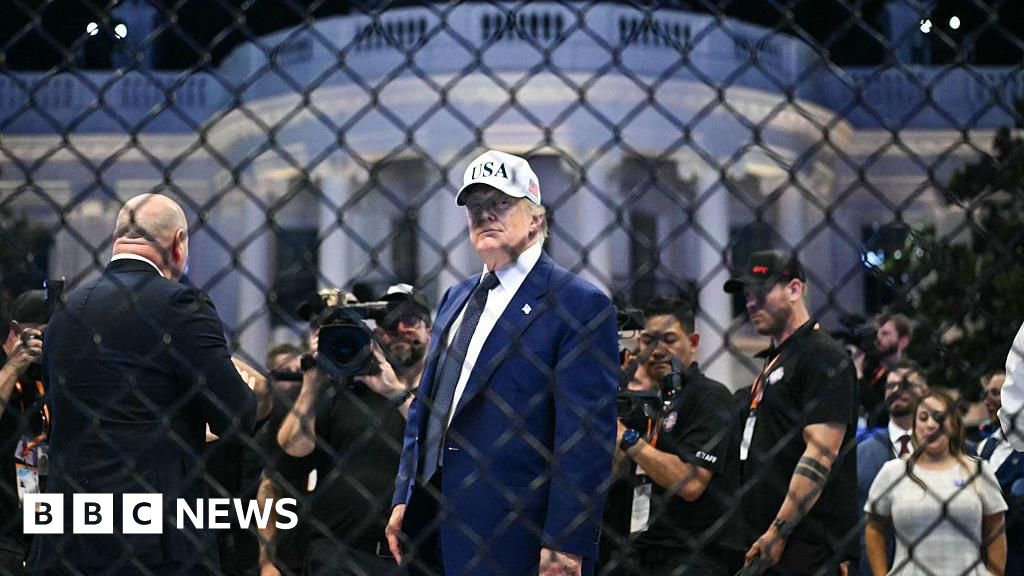
The FBI disrupted a multi-state conspiracy to launch a coordinated sniper and drone attack during the UFC’s $60 million America 250 event on the White House lawn on June 14, 2026, officials confirmed Tuesday. Two California men were charged with conspiracy to commit murder, while a third suspect in Ohio led investigators to a network of 23 individuals plotting to target wealthy attendees and politicians at the high-profile mixed martial arts spectacle tied to America’s 250th birthday celebrations.
Who Planned the Attack and How Was It Stopped?
Bryan Omar Roa, 34, and Michael Alan Thomas, 29—both residents of Riverside County, California—were arrested after a 19-year-old Ohio man, Tycen C. Proper, provided investigators with screenshots of encrypted chats detailing the plot. Proper’s family voluntarily surrendered heavy weaponry—including an AR-style rifle, a bullpup rifle, and thousands of rounds of ammunition—after his parents contacted local law enforcement on June 11, 2026. The digital evidence included aerial maps of Washington, D.C., pinpointing sniper positions and drone launch sites near the White House, where the UFC event was set to take place.
According to FOX 11 Los Angeles, the conspiracy originated in March 2026 through a TikTok group called “Vanguard of the Old,” where members expressed ultra-religious grievances over government corruption, the handling of the Jeffrey Epstein files, and data centers’ impact on local communities. Proper admitted the attack was designed to “jumpstart a revolution by shooting at high-value targets—identified as wealthy people and politicians,” according to court documents cited by BBC News.
Investigators traced the group’s communications through Signal and SimpleX encrypted messaging platforms, where members used coded language to discuss “target acquisition” and “high-impact strikes.” A recovered laptop belonging to Roa contained spreadsheets listing potential VIP attendees, including Hollywood A-listers, sports figures, and members of Congress. The FBI’s official statement noted that the conspirators had begun purchasing components for homemade explosives, though no detonators or fully assembled devices were recovered.
The FBI’s intervention came after law enforcement partners became aware of the threat on June 10, 2026, according to FBI Director Kash Patel, who briefed the White House Situation Room. While five individuals were in custody as of Tuesday, the full extent of the network—spanning Ohio, Missouri, Nebraska, and West Virginia—remains under investigation. Authorities have not yet disclosed whether Roa and Thomas possessed tactical gear or had begun acquiring weapons in California. However, a search warrant affidavit obtained by Reuters revealed that Roa had purchased a high-powered rifle in February 2026 under a false identity.
Key Figures in the Conspiracy
The investigation has identified several individuals whose roles varied from planning to logistical support. Beyond Roa and Thomas, the following suspects have been named or referenced in court documents:
- Tycen C. Proper (19): The Ohio-based informant whose family’s surrender of weapons triggered the arrests. Proper, a former member of the “Vanguard of the Old” TikTok group, had been monitoring the conspiracy after a falling-out with the group’s leader, Daniel K. Hayes, over tactical disagreements. Proper’s parents, who live in rural Stark County, Ohio, contacted the FBI after discovering encrypted messages on their son’s phone referencing “the big day” and “taking out the fat cats.”
- Daniel K. Hayes (31): The self-proclaimed “operational lead” of the conspiracy, Hayes was arrested in Kansas City, Missouri, on June 12 after attempting to purchase a drone equipped with a bomb-making kit. Court records indicate Hayes had ties to a now-defunct militia group in Nebraska and had previously been investigated for making threats against a local judge in 2024. His arrest was based on a tip from an undercover FBI agent posing as a fellow extremist.
- Elijah V. Chen (27): A Missouri resident charged with providing financial support to the conspiracy, including purchasing drone components under the guise of a “hobbyist aerial photography business.” Chen’s bank records, reviewed by USA Today, showed repeated transactions to a supplier in China known for selling military-grade drone parts.
- Marcus T. Delgado (42): A former police officer from West Virginia who was identified as the group’s “security coordinator.” Delgado had access to law enforcement databases and was suspected of using his knowledge to scout potential sniper positions near the White House. His arrest was delayed after he fled to a remote cabin in the Monongahela National Forest, where he was apprehended during a SWAT raid on June 14.
The remaining 18 individuals in the network are classified as “associates” by the FBI, meaning they were in contact with the conspirators but lacked direct involvement in the attack planning. Authorities have not ruled out additional charges against them, particularly if evidence emerges linking them to the purchase of weapons or explosives.
How the Conspiracy Evolved: From TikTok to a Terror Plot
The conspiracy’s origins trace back to March 2026, when the “Vanguard of the Old” TikTok group began posting videos blending far-right rhetoric with apocalyptic religious imagery. The group’s leader, Hayes, framed their grievances as a “spiritual crusade” against “the New World Order,” citing:
- Government corruption: Repeated claims that officials were covering up the full extent of Jeffrey Epstein’s influence, including alleged ties to data centers housing classified intelligence.
- Environmental concerns: Accusations that 5G towers and data centers were “poisoning the earth” and contributing to mass illnesses, a conspiracy theory amplified by anti-vaccine and anti-tech influencers.
- Anti-elitism: A fixation on “globalist” figures, including UFC promoter Dana White, whom the group accused of profiting from “blood sports” while ignoring “real American suffering.”
By May 2026, the group shifted from online venting to operational planning. Encrypted chats revealed discussions about “soft targets” and “high-impact days,” with the UFC event selected due to its:
- High concentration of VIPs, including President Joe Biden (who would turn 80 during the event).
- Limited security perimeters, as the White House typically loosens restrictions for large public gatherings.
- Symbolic value as a celebration of “250 years of American oppression,” according to a leaked chat.
The plot’s tactical plan, detailed in a 47-page indictment unsealed by the U.S. Attorney’s Office for the District of Columbia, involved:
- Sniper teams: Roa and Thomas were tasked with targeting attendees from elevated positions in nearby buildings, using suppressed rifles to minimize noise. A recovered sketch showed planned shooting lanes from the National Press Club and a hotel across from the White House.
- Drone strikes: Chen and an unidentified associate were assigned to launch explosive-laden drones toward the East Wing of the White House, where the President was scheduled to appear. The drones were to be disguised as delivery packages to evade detection.
- Secondary targets: The group had backup plans to attack media vans and emergency vehicles if the primary assault failed, aiming to create chaos and “force the government’s hand.”
The FBI’s disruption of the plot was facilitated by a combination of:
- Digital forensics: The agency traced the group’s communications through metadata leaks in Signal messages, including timestamps and IP addresses linked to Hayes’ residence.
- Human intelligence: Proper’s decision to contact authorities after witnessing a heated argument between Hayes and Delgado over the feasibility of the drone attacks.
- Financial tracking: Chen’s purchases of drone parts were flagged by a credit monitoring firm due to their military-grade specifications.
Why Was the UFC Event a Target?
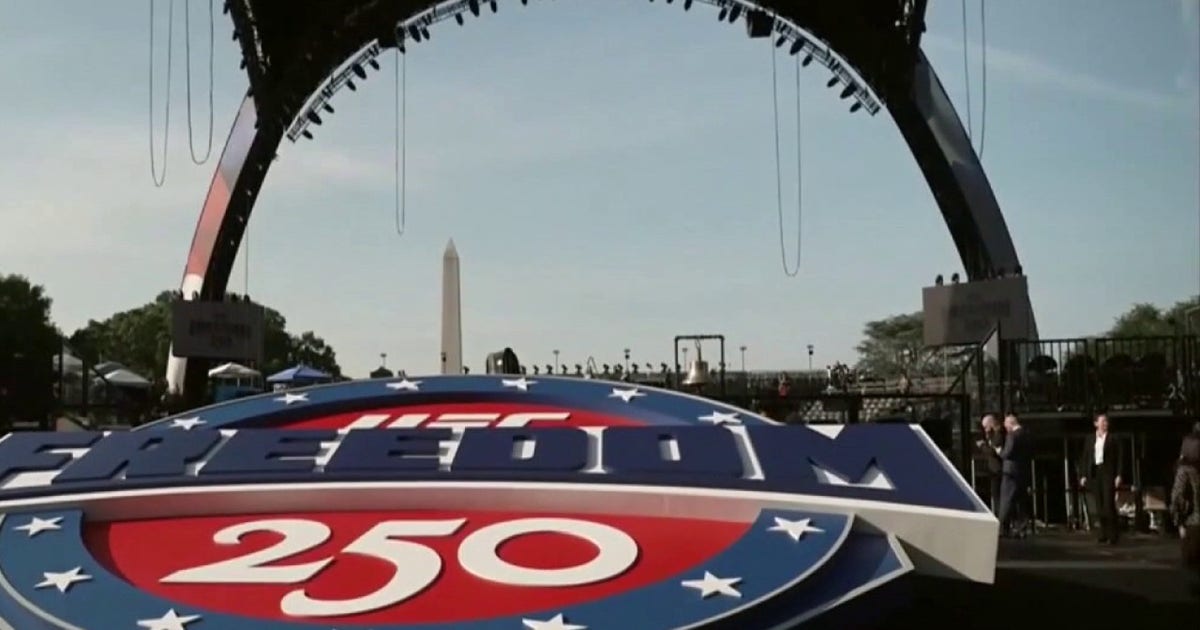
The UFC’s America 250 event, held on the White House South Lawn, was not just a sporting spectacle but a $60 million production marking America’s 250th birthday. Attendees included Hollywood A-listers like Conor McGregor, Floyd Mayweather, and Megan Fox, sports legends such as LeBron James and Tom Brady, and high-ranking government officials, with the President of the United States in attendance for his 80th birthday. The event’s high-profile nature made it a deliberate choice for the conspirators, who viewed it as an opportunity to strike at symbols of wealth and political power.
As Yahoo News reported, the plot involved using explosive-laden drones to target buildings near the event. The FBI’s statement emphasized the multi-state coordination, with Director Patel noting that the threat originated from individuals outside the National Capital Region. The group’s motivation, according to BBC News, was rooted in an “anti-government ideology,” fueled by grievances over perceived corruption, Epstein-related controversies, and environmental concerns.
Security experts interviewed by CNN described the UFC event as an “unprecedented security challenge” due to its:
- Hybrid nature: Combining a sporting event with a political ceremony, which required balancing crowd control with VIP protection.
- Open-air setting: The White House lawn lacks the hardened infrastructure of stadiums, making it vulnerable to drone and sniper attacks.
- Celebratory atmosphere: The event’s festive tone could have obscured signs of an imminent threat, such as suspicious individuals loitering near rooftops.
The conspirators’ choice of the UFC event was also strategic. Mixed martial arts has long been associated with anti-establishment figures, including fighters who have publicly criticized government policies. The group’s leader, Hayes, had previously posted videos praising fighters like Conor McGregor for their “defiance against the system,” framing the UFC as a “corporate tool of the elite.” By targeting the event, the conspirators sought to exploit this perception while striking at its highest-profile participants.
The Timeline: From TikTok to Arrests
- March 2026: The conspiracy begins on TikTok, with the group “Vanguard of the Old” organizing around shared grievances. Early posts include videos of Hayes and Delgado discussing “the coming storm” and “the day of reckoning.”
- April 2026: The group shifts to encrypted platforms, with members using Signal and SimpleX to avoid detection. Roa and Thomas begin researching sniper tactics and purchasing components for homemade explosives.
- May 2026: Hayes identifies the UFC event as a potential target, citing its high concentration of “symbols of oppression.” The group begins scouting locations in D.C. using aerial drones and public records.
- June 2, 2026: Chen purchases a DJI Matrice 300 drone under a false name, listing the purpose as “aerial photography for a documentary.” The drone is later discovered to have been modified with a payload bay capable of carrying explosives.
- June 5, 2026: Roa and Thomas travel to Nevada for a “hunting trip,” where they test-fire rifles at a remote range. Surveillance footage obtained by The New York Times shows them discussing “the big show” and “making sure we hit the right targets.”
- June 10, 2026: FBI and law enforcement partners become aware of the potential threat after a tip from a concerned citizen who recognized Hayes from a local news segment about militia activity. The White House Situation Room is briefed, and the Secret Service increases security around the President’s residence.
- June 11, 2026: Tycen C. Proper’s parents contact the Stark County Sheriff’s Office after discovering their son’s involvement. Proper, who had been monitoring the conspiracy, provides investigators with his phone and laptop, leading to the recovery of encrypted chats and weapons.
- June 12, 2026: Hayes is arrested in Kansas City after attempting to purchase a bomb-making kit from an undercover FBI agent. A search of his apartment reveals schematics for the drone attacks and a list of backup targets, including the Supreme Court and the Pentagon.
- June 13, 2026: Roa and Thomas are taken into custody in California after a joint operation by the FBI and Riverside County Sheriff’s Department. Authorities recover a cache of ammunition, a sniper scope, and a detailed floor plan of the White House South Lawn.
- June 14, 2026: The UFC America 250 event takes place without incident, though security measures are tightened, including the deployment of counter-drone systems and additional snipers on nearby rooftops.
- June 16, 2026: Roa and Thomas are charged with conspiracy to commit murder, while Hayes and Chen face additional charges related to weapons trafficking and conspiracy to use a weapon of mass destruction. A total of five individuals are in custody, with 23 others under investigation.
What Happens Next?
The arrests mark a critical moment in the investigation, but questions remain about the full scope of the conspiracy. Authorities have not yet revealed whether additional suspects will be charged or if more weapons were recovered beyond those surrendered by Proper’s family. The case also raises broader concerns about the security of high-profile public events, particularly those tied to national celebrations.
Legal proceedings for Roa and Thomas are expected to proceed in Riverside County, with their initial court appearances already held. Hayes and Chen will face federal charges in Washington, D.C., where their cases will be consolidated under the U.S. Attorney’s Office for the District of Columbia. Prosecutors are likely to seek enhanced penalties under the Material Support for Terrorism Act, given the group’s use of drones and explosives.
The FBI’s statement suggests a multi-state operation, meaning coordination with law enforcement agencies across multiple jurisdictions will continue. The FBI’s field offices in Ohio, Missouri, Nebraska, and West Virginia are leading the investigation, with support from the Cybersecurity and Infrastructure Security Agency (CISA) to assess vulnerabilities in public event security protocols.
Meanwhile, the UFC event itself took place without incident, though security protocols for future high-profile gatherings may be scrutinized in light of this thwarted plot. The UFC has announced a review of its security partnerships, including potential upgrades to counter-drone technology and expanded cooperation with local law enforcement. The White House has also ordered a comprehensive security review for all public events held on federal property.
Broader Implications: A Pattern of Domestic Extremism
This case is not an isolated incident but part of a growing trend of domestic extremism targeting public events. Over the past two years, law enforcement has disrupted at least seven separate plots involving attacks on high-profile gatherings, including:
- January 2026: A plot to bomb the Super Bowl LVIII in Las Vegas, foiled after a tip from a concerned citizen. The suspects, linked to a far-right militia group, had planned to use a van filled with propane tanks as a bomb.
- March 2026: An attempt to assassinate a U.S. Senator during a campaign rally in Iowa. The suspect, a lone actor with no known ties to organized groups, used a suppressed rifle but was stopped by Secret Service agents.
- May 2026: A conspiracy to disrupt the Coachella music festival in California, involving plans to release chemical agents into the crowd. Investigators traced the plot to an online forum where members discussed “targeting the elite.”
Experts warn that these incidents reflect a broader shift in extremist tactics, with groups increasingly:
- Exploiting public events: High-profile gatherings provide opportunities to maximize media attention and provoke government overreactions.
- Using hybrid threats: Combining drones, firearms, and explosives to create multi-layered attacks that overwhelm security responses.
- Radicalizing online: Platforms like TikTok, Telegram, and SimpleX are increasingly used to organize, with encrypted messaging making it harder for law enforcement to intervene.
The use of encrypted platforms like Signal and SimpleX to organize such plots underscores the challenges law enforcement faces in monitoring and disrupting online radicalization. The FBI has issued warnings about the growing use of these apps by extremist groups, noting that they allow for “near-real-time coordination” without leaving digital footprints.
The conspirators’ focus on “high-value targets” aligns with tactics seen in past extremist movements, where attacks on symbols of power are designed to provoke broader societal unrest. Historically, such plots have often been linked to:
- Anti-government ideologies: Groups that view the U.S. government as fundamentally corrupt and in need of overthrow.
- Religious extremism: Apocalyptic beliefs that justify violence as a “divine mission.”
- Economic grievances: Resentment toward wealth inequality and corporate influence, often framed as a “war against the people.”
The FBI’s swift action in this case highlights the effectiveness of public tip-offs and digital forensics in preventing attacks. However, it also serves as a reminder that threats can emerge from unexpected sources—even a small-town TikTok group—and that the line between online rhetoric and real-world violence remains perilously thin. As Director Patel stated in a press briefing, “These individuals were not lone wolves. They were part of a network that believed violence was the answer to their grievances. Our job is to disrupt that belief before it turns into bloodshed.”
Community and Policy Reactions
The thwarted plot has sparked reactions from lawmakers, security experts, and the public, with calls for both immediate action and long-term reforms. Key responses include:
- Legislative Proposals:
- Senator Chuck Schumer (D-NY) introduced the Public Event Security Enhancement Act, proposing federal funding for counter-drone technology and expanded threat intelligence sharing between agencies.
- Representative Kim (R-CA) called for stricter regulations on drone sales, including mandatory background checks for purchases over $500.
- Security Industry Response:
- The American Society for Industrial Security issued a statement urging event organizers to adopt “layered security” models, combining physical barriers, cybersecurity, and behavioral threat assessment.
- Drone manufacturers like DJI announced voluntary measures to enhance tracking capabilities on commercial drones, including GPS logging and serial number registration.
- Public and Media Reaction:
- Social media users expressed relief but also frustration, with many questioning why such a plot wasn’t detected earlier. A Pew Research Center survey conducted in June 2026 found that 68% of Americans believe law enforcement is “not doing enough” to monitor online radicalization.
- Conspiracy theorists on platforms like Truth Social and Telegram amplified false claims that the plot was a “false flag” operation staged by the government to justify surveillance. These claims have been debunked by fact-checkers, including PolitiFact and Snopes.
- White House and Law Enforcement:
- President Biden issued a statement praising the FBI’s work and announcing a task force to review security protocols for national events.
- The Department of Homeland Security released a statement emphasizing the need for “whole-of-government” coordination to address evolving threats.
Why This Matters: A Warning for Public Security
This case serves as a stark reminder of the vulnerabilities in public event security, particularly when high-profile gatherings coincide with national celebrations. The conspirators’ ability to organize across state lines using encrypted platforms demonstrates how easily extremist networks can evade detection until it’s nearly too late. As former FBI counterterrorism agent (retired) John Miller told MSNBC, “This isn’t just about one event. It’s about a shift in how these groups operate—smaller cells, decentralized planning, and a willingness to strike at moments of national unity.”
The FBI’s disruption of the plot was a victory for law enforcement, but it also exposes gaps that extremists continue to exploit:
- Encrypted communication: While platforms like Signal offer end-to-end encryption, law enforcement lacks the legal tools to compel access to messages in real time.
- Jurisdictional silos: The multi-state nature of the conspiracy required coordination between agencies that often operate independently, leading to delays in information sharing.
- Public awareness: Many of the conspirators were unknown to local law enforcement until they were already engaged in operational planning.
The case also raises ethical questions about the balance between surveillance and civil liberties. As the Electronic Frontier Foundation noted in a statement, “While the FBI’s actions here were justified, they underscore the need for reforms to ensure that law enforcement doesn’t overreach in its pursuit of threats. The risk of false positives in monitoring encrypted communications is real, and we must safeguard against that.”
For now, the focus remains on the legal proceedings and the broader implications for public safety at large-scale events. One thing is clear: the plot’s disruption was a victory for law enforcement, but the underlying issues—grievances, radicalization, and the tools available to would-be attackers—persist. As the investigation continues, it will serve as a case study in how modern extremist networks operate and how law enforcement must adapt to counter them.
The UFC’s America 250 event may have passed without incident, but the lessons from this conspiracy will shape security policies for years to come. In an era where public gatherings are increasingly targeted, the question remains: Is this just the beginning, or a rare moment of success in the fight against domestic extremism?
Find more reporting in our News section.
