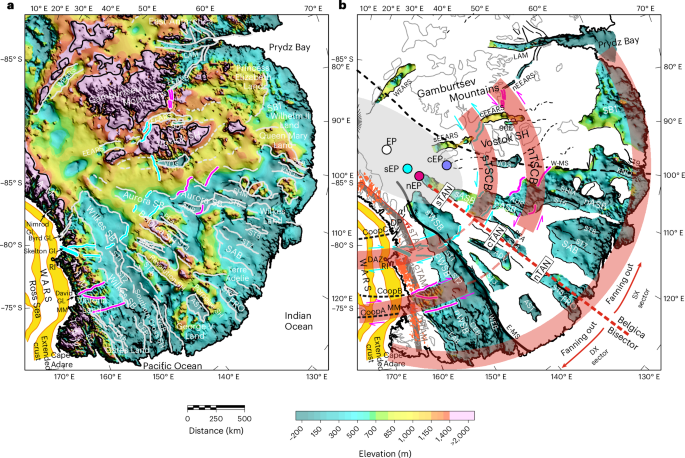
"Scientists have identified a colossal, fan-shaped geological structure buried two miles beneath the East Antarctic Ice Sheet, potentially reshaping understanding of the continent’s tectonic history and ice dynamics. The discovery, detailed in a study published in Nature Geoscience, reveals the East Antarctic Fan-Shaped Basin Province, a network of interconnected basins including Lake Vostok, formed through distributed rotational extension." According to the study, the structure’s formation is linked to the breakup of the ancient supercontinent Gondwana, with implications for predicting ice sheet behavior amid climate change.
Mapping the East Antarctic Fan-Shaped Basin Province
The East Antarctic Fan-Shaped Basin Province, comprising the Wilkes and Aurora subglacial basins and Lake Vostok, was mapped using gravitational, magnetic, and seismic data. Researchers describe it as a "remarkable" example of distributed rotational extension, a tectonic process where Earth’s crust stretches outward from a central point, creating triangular basins. "If our interpretation is correct, this may be one of the largest and clearest examples of distributed rotational extension yet recognized in continental crust," said Egidio Armadillo, lead author of the study published in Nature Geoscience.
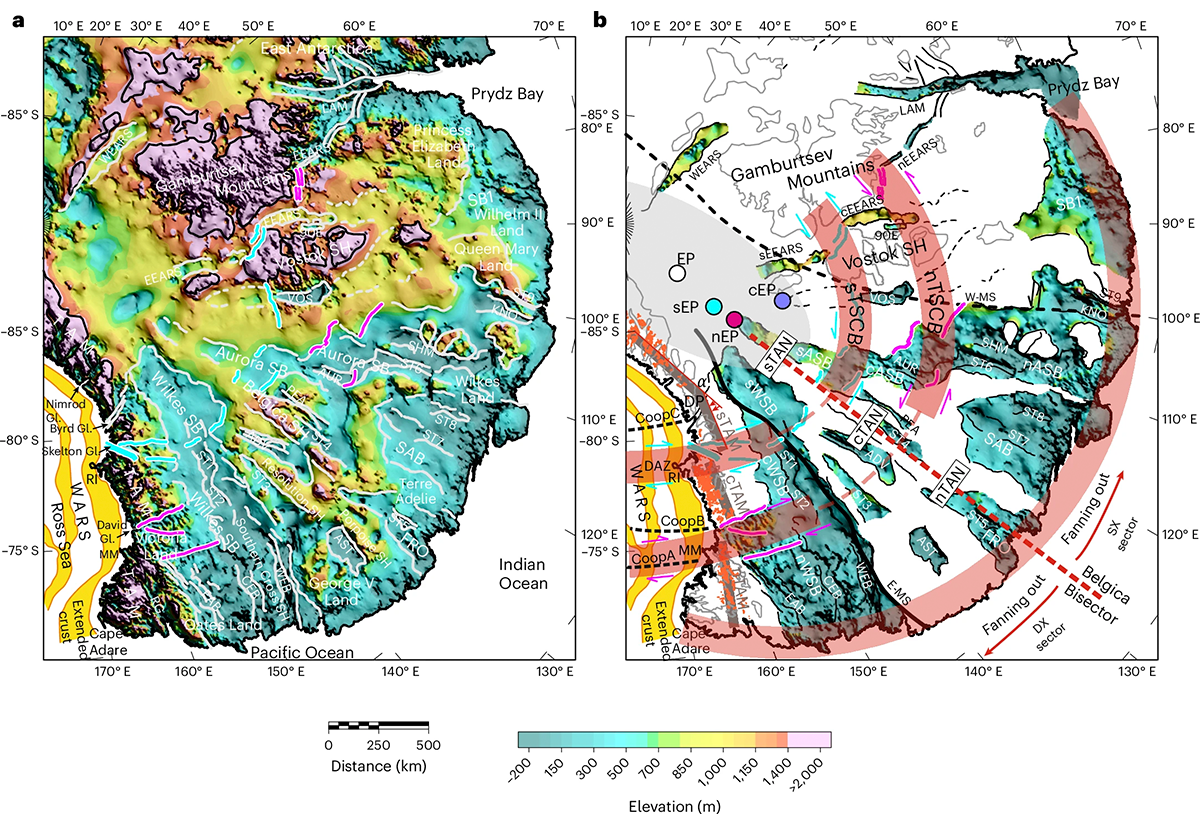
The structure’s discovery challenges the long-held view of East Antarctica as a stable, ancient craton. "East Antarctica is often regarded as an old, cold and relatively stable cratonic region," Armadillo noted, "but our model suggests the formation of the fan-shaped basin province strongly influences the surrounding landscape." This reconfiguration of tectonic assumptions could alter models of ice flow and sea-level rise projections.
The Structure’s Formation and Tectonic Significance
The East Antarctic Fan-Shaped Basin Province emerged from tectonic forces tied to Gondwana’s fragmentation. Researchers link its development to the separation of Antarctica and Australia, which occurred roughly 70 million years ago. "The structure may have developed in more than one phase," Armadillo explained, "but we think it is likely connected to the long tectonic evolution that preceded and accompanied the breakup of Gondwana." This process, involving distributed rotational extension, created a network of basins that now shape the ice sheet above.
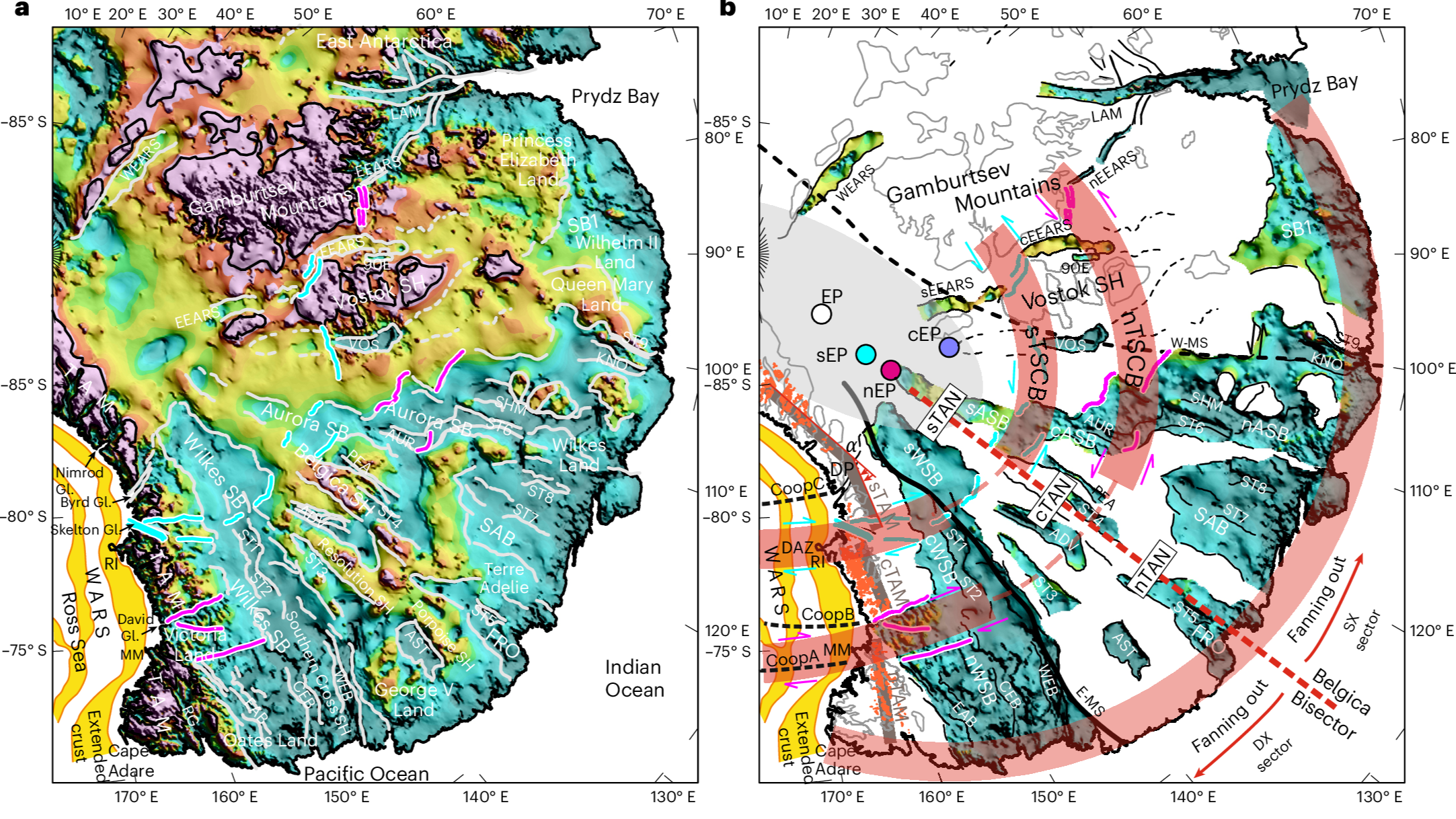
The study’s findings align with earlier research on subglacial lakes and tectonic activity. Lake Vostok, the world’s largest subglacial lake, sits within this system, its existence previously known but not fully integrated into a broader geological framework. "The Wilkes and Aurora basins, alongside Lake Vostok, had not been considered components of the same structure," a press release for the Nature paper noted. By combining datasets, researchers mapped how these features form a cohesive province, revealing a complex interplay between crustal deformation and ice dynamics.
Implications for Ice Flow and Climate Models
The structure’s influence on ice movement is critical for predicting Antarctica’s response to warming. "Because these basins underlie about half of the East Antarctic Ice Sheet, they are likely to heavily influence both ice-flow and landscape evolution," the study’s authors wrote. The fan-shaped configuration could affect how ice sheets deform, melt, and contribute to sea-level rise.
John Goodge, a geologist at the Planetary Science Institute, called the findings "provocative," highlighting their potential to explain mysterious subglacial water flows. "East Antarctica is typically considered stable," Goodge said, "but something else is going on at depth." This challenges assumptions about the continent’s geological inertia, suggesting dynamic processes beneath the ice.
The study’s authors emphasize that the structure’s role in ice-sheet stability remains unclear. "Our model is a hypothesis that can and should be tested further," Armadillo noted, stressing the need for better constraints on deformation timing. Improved understanding of these basins could refine climate models, which currently struggle to account for Antarctic ice sheet variability.
Scientific Reactions and Future Research
The discovery has sparked diverse reactions among scientists. While Nature published the study, Live Science highlighted Armadillo’s perspective on the structure’s scale, describing it as a "remarkable" example of rotational extension. "Rotational extension is known from other tectonic settings, but recognizing a feature of this scale, hidden beneath the East Antarctic Ice Sheet, is quite remarkable," Armadillo said.
Gizmodo’s coverage underscored the implications for global climate preparedness. "The network of hidden geological features determines where the glaciers overlaying it will flow," the article noted, linking the structure to broader concerns about ice sheet collapse. Researchers stress that refining these models is essential for coastal communities facing rising seas.
Future studies will focus on dating the structure’s formation and its interactions with ice sheets. "The precise mechanism that drove East Antarctica’s distributed rotational extension remains unknown," Armadillo acknowledged, calling for interdisciplinary collaboration. "This study opens a new research direction," he added, emphasizing the need for further exploration of Antarctica’s hidden tectonic history.
What Comes Next?
The discovery underscores the complexity of Antarctica’s geology, challenging long-standing narratives about its stability. As climate change accelerates ice loss, understanding these subglacial features becomes urgent. "Better knowledge of the geology guiding ice flow could improve forecasts of future sea-level rise," Yahoo News reported, highlighting the practical stakes.
While the study provides a foundation, many questions remain. How did the structure influence the separation of Gondwana’s fragments? What role does it play in current ice dynamics? Addressing these requires continued research, including advanced imaging techniques and fieldwork in one of Earth’s most extreme environments. For now, the East Antarctic Fan-Shaped Basin Province stands as a testament to the planet’s hidden geological complexity—and a reminder of how much remains to be uncovered beneath the ice.
Find more reporting in our Technology section.
