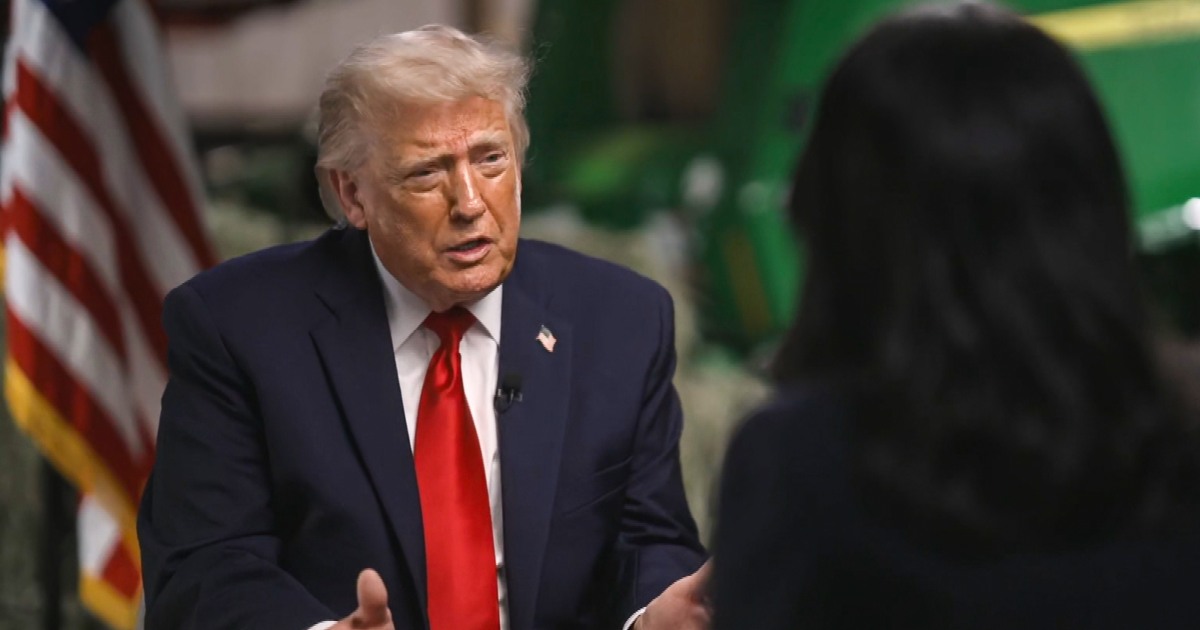
Donald Trump abruptly stormed out of a taped interview with NBC News’ Meet the Press on June 5, 2026, after being pressed on his controversial $1.776 billion “weaponization” fund and persistent, unproven claims of election fraud. The interview, conducted on a Wisconsin farm, also touched on the Iran war, Federal Reserve interest rate hikes, and Trump’s defiance of legal and political pushback over Jan. 6 rioters’ compensation. His exit underscored the widening divide between his rhetoric and institutional realities—from court rulings blocking the fund to bipartisan skepticism over his election conspiracy theories.
Why Trump Walked Out: The Fund, the Fraud Claims, and the Fed
Trump’s refusal to back down from his “weaponization” fund—meant to compensate those convicted in the January 6 Capitol riot—was the immediate trigger for his abrupt departure. When NBC’s Kristen Welker asked whether taxpayer money should go to rioters who assaulted police, Trump demurred but pivoted to defend the fund’s premise: “If it was up to me, I’d pay them the kind of money that they deserve,” he said. “People have been destroyed. Lives have been destroyed. Many suicides, think of it.”
The fund, established after Trump settled a $10 billion lawsuit against the IRS over leaked tax returns, has become a political flashpoint. According to CNBC, the settlement also shields Trump, his family, and related entities from future tax audits—a detail that has drawn little attention compared to the fund’s explosive potential. But the fund was blocked in court last month, and even some Republican lawmakers have distanced themselves from the idea, calling it a nonstarter. Trump’s insistence that he’d be “disappointed” if it failed to move forward revealed the fund’s symbolic importance: it’s less about actual compensation than a broader message that his administration sees the Jan. 6 prosecutions as politically motivated “lawfare.”

Trump’s election fraud claims—another key topic—were equally contentious. When pressed on California’s ongoing vote-counting process, he declared, “The election was rigged, it was a dirty election and it’s happening again right now in California.” His refusal to offer evidence mirrored his long-standing pattern, but this time, the stakes feel higher. With California’s primaries still being tallied days after the vote, Trump’s claims risk amplifying GOP-led efforts to undermine confidence in mail-in ballots—a tactic that has already led to legal challenges in multiple states. Welker’s attempt to pin him down on specifics was met with deflection: “All I have to do is look… and I listen to people and let’s see what happens.” The exchange laid bare the gap between Trump’s unshakable conviction and the lack of concrete proof.
“The election was rigged, it was a dirty election and it’s happening again right now in California.”
The Iran War and the Fed: Two Crises Trump Can’t Ignore
Trump’s interview wasn’t just about domestic politics. He also weighed in on two major international and economic flashpoints: the Iran war and Federal Reserve policy. On Iran, he suggested a potential deal could involve the U.S. retrieving and destroying Tehran’s highly enriched uranium—either through a negotiated agreement or, if diplomacy fails, by degrading Iran’s military capabilities enough to allow American forces to secure the material themselves. “If we make a deal that now we’re friendly, we’ll all go together,” he said. “It’ll be our equipment. We’ll take it out and destroy it, whether it’s on-site or whether we take it off-site.”

His comments on the Fed were equally blunt. Trump praised Chair Kevin Warsh as “fantastic” but criticized the prospect of interest rate hikes, calling them “unfair” given the strong May jobs report. “Nowadays when you have good reports, the market goes down because they think they’re going to raise interest rates,” he said. “There’s no reason to raise interest rates.” The tension between Trump’s economic optimism and the Fed’s caution reflects a broader dilemma: his administration’s push for growth clashes with Wall Street’s fear of overheating, especially as oil and gas prices remain volatile due to the Iran conflict.
A Fund Blocked in Court, a President Unbowed
The $1.776 billion fund’s legal fate is a microcosm of Trump’s broader approach to governance: aggressive rhetoric, selective legal compliance, and a willingness to defy institutions when they stand in his way. According to NBC News, the fund was established as part of Trump’s settlement with the IRS, but its purpose—compensating those he claims were victims of “lawfare”—has drawn immediate backlash. Acting Attorney General Todd Blanche has already signaled the fund is “permanently halted,” but Trump’s response was telling: he framed it as a political slight rather than a legal setback. “If they get it approved, that’s great; if they don’t get it approved, I’d be disappointed,” he said, treating the fund’s fate as a referendum on his administration’s legitimacy rather than a judicial or fiscal reality.
What makes the fund so controversial isn’t just the money—it’s the message. By tying compensation to claims of political persecution, Trump is essentially arguing that the Jan. 6 prosecutions were a witch hunt. But the legal and public backlash suggests this narrative is losing traction. Even some of his closest allies in Congress have distanced themselves, and the fund’s court blockage is a rare moment where Trump’s legal team may have overplayed its hand. The question now is whether this is a temporary setback or a sign that his base’s willingness to accept his defiance is waning.
What Happens Next: The Fund, the Fraud Claims, and the 2026 Midterms
The fund’s future hinges on three factors: legal appeals, congressional action, and Trump’s political calculus. If the fund is permanently blocked, it could become a rallying cry for his supporters—framed as another example of the “deep state” targeting his allies. But if it’s revived, the backlash could intensify, with critics arguing it legitimizes violence and rewards those who attacked law enforcement. Either way, the fund’s fate will be a litmus test for Trump’s ability to bend institutions to his will.

On election fraud, Trump’s claims are likely to dominate the 2026 midterms, particularly in swing states like California, where mail-in ballots remain a flashpoint. His refusal to provide evidence—combined with his history of making such claims—risks further eroding public trust in elections. The GOP’s strategy of pushing for stricter voting laws in response to these claims could backfire if it’s seen as an attempt to suppress turnout, especially among Democratic-leaning voters.
As for the Fed, Trump’s comments suggest he’s bracing for a potential showdown with Warsh over interest rates. If the economy continues to perform strongly, the Fed may have little choice but to raise rates to cool inflation—but Trump’s resistance could create a political standoff. The irony is that his own economic policies, from deregulation to trade deals, have contributed to the very conditions that might force the Fed’s hand.
The Bigger Picture: A President at War with Reality
Trump’s interview wasn’t just a news cycle blip—it was a snapshot of a presidency that operates on its own rules. His willingness to walk out when challenged, his refusal to engage with evidence, and his defiance of legal and political norms paint a picture of a leader who sees institutions as obstacles rather than partners. The $1.776 billion fund, the election fraud claims, and the Fed battles are all part of a broader pattern: Trump’s administration is increasingly at odds with the systems it’s supposed to uphold.
For his supporters, this defiance is a point of pride—a rejection of what they see as elite overreach. For critics, it’s a sign of a presidency that’s losing touch with reality. The coming months will test both narratives. If the fund is killed, Trump’s base may double down. If the Fed raises rates, his economic optimism could face a reckoning. And if his election fraud claims continue to fall apart, the GOP’s midterm strategy may unravel. One thing is clear: Trump isn’t backing down, and his refusal to engage with reality is reshaping the political landscape in ways that will be felt long after he leaves office.
The interview’s abrupt end was more than a tantrum—it was a statement. And in 2026, statements matter more than ever.
