
The U.S. military fired roughly half of its total Terminal High Altitude Area Defense (THAAD) interceptors—around 200—while defending Israel against Iranian ballistic missiles during Operation Epic Fury, according to Pentagon assessments and Defense Department officials cited by The Washington Post. The imbalance underscores how Washington bore the brunt of missile defense while Israel conserved its own stockpiles, raising concerns about U.S. readiness to sustain such commitments in future conflicts.
Why the U.S. Fired Twice as Many Interceptors as Israel
During the war with Iran, the U.S. deployed not only THAAD interceptors but also more than 100 Standard Missile-3 and Standard Missile-6 interceptors from naval vessels in the Mediterranean, according to The Jerusalem Post. In contrast, Israel used fewer than 100 Arrow 3 interceptors and about 90 David’s Sling interceptors—many of which targeted missiles from Iran-backed groups in Yemen and Lebanon rather than the more sophisticated Iranian ballistic projectiles. The numbers reveal a stark operational divide: the U.S. engaged twice as many Iranian missiles as Israel, firing 120 more interceptors in total.
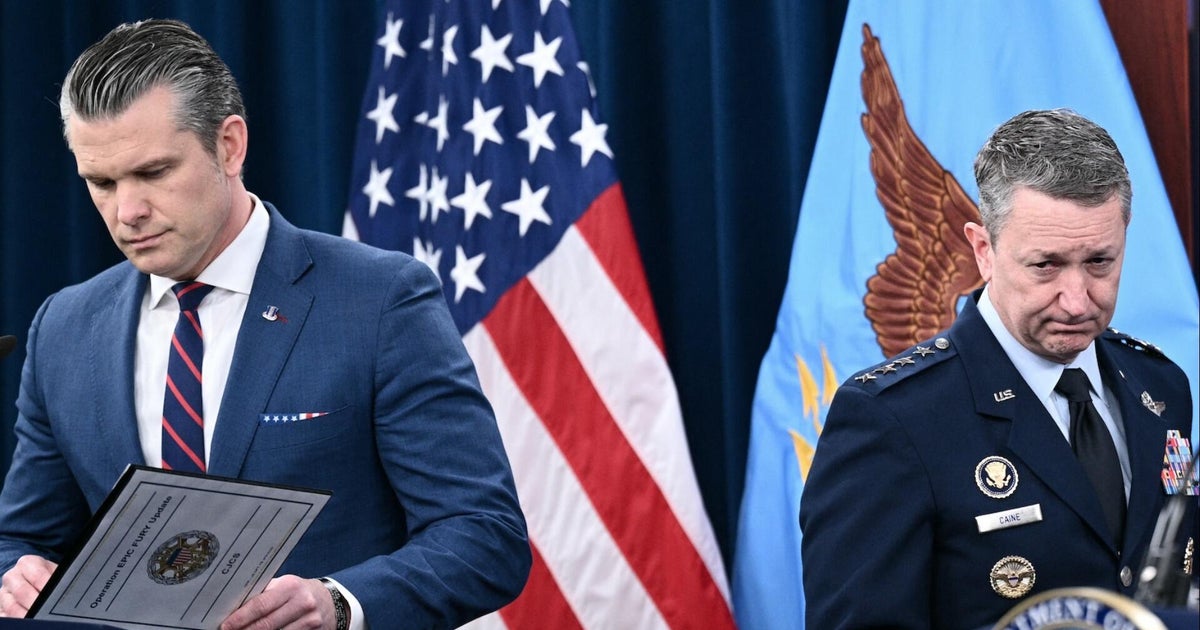
This disparity wasn’t just about volume—it was about capability. The U.S. interceptors, including THAAD and Standard Missile variants, were designed to handle high-speed, long-range threats, while Israel’s Arrow 3 system, though advanced, was deployed more selectively. “The numbers are striking,” said Kelly Grieco, a senior fellow at the Stimson Center, emphasizing that the U.S. absorbed the majority of the missile defense mission while Israel conserved its own magazines.
“The United States absorbed most of the missile defense mission while Israel conserved its own magazines. Even if the operational logic was sound, the United States is left with roughly 200 THAAD interceptors and a production line that can’t keep pace with demand.”
— Kelly Grieco, Stimson Center
The Stockpile Crisis: Why Allies Are Worried
The depletion of U.S. interceptors has sent shockwaves through allied nations, particularly Japan and South Korea, which rely on Washington’s missile defense capabilities to counter threats from North Korea and China. A March 2025 congressional study warned that the rate of THAAD interceptor use during Operation Epic Fury had further reduced the already limited stockpile, leaving the U.S. with insufficient production capacity to replenish supplies in the short term.
The imbalance in interceptor usage was compounded by logistical decisions. In June 2025, the U.S. deployed three of its eight Patriot batteries to the Middle East ahead of Operation Midnight Hammer—a strike on Iranian nuclear sites—only to return them to South Korea in October 2025. This shuffle highlighted the strain on U.S. resources, as allies in Asia now question whether Washington can maintain its commitments in multiple theaters simultaneously.
Sean Parnell, the Pentagon’s chief spokesman, framed the cooperation between the U.S. and Israel as “equitable,” noting that both countries employed fighter aircraft, counter-unmanned aerial system (UAS) defenses, and other advanced capabilities. However, the data tells a different story. “Both Israel and the United States carried the defensive burden equitably during Operation Epic Fury,” Parnell stated, but the figures show the U.S. shouldered far more of the load.
The Israeli Embassy in Washington added that “Operations Roaring Lion and Epic Fury were coordinated at the highest and closest levels,” yet the operational reality suggests a heavier reliance on U.S. assets. The question now is whether this imbalance will persist—or worse, worsen—if hostilities with Iran escalate again.
“The imbalance will likely be exacerbated if fighting restarts.”
— U.S. administration official, via ynetnews
What Comes Next: Production Gaps and Geopolitical Risks
The U.S. is now facing a critical production gap. A Pentagon report from March 2025 highlighted concerns that current manufacturing rates cannot keep up with demand, leaving the military with a shrinking stockpile of THAAD interceptors. This is particularly problematic given that the U.S. has already deployed a significant portion of its inventory to defend Israel, and allies in Asia are watching closely.
Japan and South Korea, both under pressure from China and North Korea, have grown increasingly dependent on U.S. missile defense systems. If the U.S. cannot replenish its stockpiles quickly, it risks undermining its deterrence posture in East Asia—a region where missile threats are escalating. “That bill risks coming due in theaters that have nothing to do with Iran,” Grieco warned, suggesting that the U.S. may soon face shortages in critical theaters beyond the Middle East.
The situation is further complicated by Israel’s decision to take some of its missile-defense batteries offline for maintenance, as reported by a U.S. administration official. If hostilities resume, the U.S. would likely bear an even larger share of the interceptor burden, straining an already depleted stockpile. The Pentagon’s assessment suggests that without a significant boost in production, the U.S. could struggle to meet its commitments in multiple conflicts simultaneously.
For now, the focus remains on whether the U.S. can ramp up production—or whether allies will need to find alternative solutions. The stakes are high: a prolonged conflict with Iran could drain U.S. interceptors to the point where other allies, from South Korea to NATO members in Europe, may find themselves without adequate protection.
The Broader Implications: Who Benefits and Who Loses?
The operational imbalance between the U.S. and Israel during Operation Epic Fury has exposed deeper strategic tensions. While the Pentagon and Israeli officials emphasize close coordination, the data reveals a reality where the U.S. is effectively subsidizing Israel’s missile defense—at a cost that could have long-term consequences for U.S. security commitments elsewhere.
For Israel, the short-term benefit is clear: its own interceptors were conserved for future use, and its multilayered air-defense system remained intact. However, the reliance on U.S. assets raises questions about Israel’s long-term self-sufficiency in missile defense. If the U.S. stockpile continues to dwindle, Israel may find itself in a position where it must either increase its own production or seek alternative defense partnerships.
For the U.S., the situation is more complex. The depletion of interceptors not only weakens its deterrence capabilities in the Middle East but also creates vulnerabilities in Asia, where allies like Japan and South Korea depend on American missile defense. The risk is that the U.S. could be drawn into a cycle of overcommitment, where it must prioritize one theater over another—a scenario that could destabilize global security.

Lockheed Martin, the manufacturer of the Patriot Advanced Capability 3 (PAC-3) and THAAD systems, faces pressure to accelerate production. However, scaling up manufacturing is a slow process, and the Pentagon’s warnings suggest that the U.S. may not be able to meet demand in the near term. This leaves open the question of whether the U.S. will need to rely on other allies—such as Israel—to share the burden in future conflicts.
The geopolitical fallout could be significant. If the U.S. is seen as unable to sustain its missile defense commitments, allies may begin exploring independent solutions—whether through increased domestic production, partnerships with other nations, or even arms races in regions like East Asia. Meanwhile, adversaries like Iran, North Korea, and China may take note of the U.S. stockpile depletion and adjust their own strategies accordingly.
Looking Ahead: What’s the Exit Strategy?
The immediate challenge for the U.S. is to address its interceptor shortage before it becomes a crisis. This will require a combination of accelerated production, strategic stockpiling, and potentially reallocating assets from other theaters. However, given the time-sensitive nature of missile defense, these solutions may not be enough to prevent shortages in the short term.
One possible solution is for the U.S. to negotiate with allies to share the burden more equitably. For example, Israel could be encouraged to deploy its own interceptors more aggressively in future conflicts, while the U.S. focuses on replenishing its stockpiles. Alternatively, the Pentagon could explore partnerships with other nations—such as Japan or South Korea—to co-produce or co-deploy missile defense systems.
Yet the bigger question remains: Can the U.S. maintain its global security commitments without overstretching its resources? The answer will depend on whether the Pentagon can balance its obligations in the Middle East with those in Asia—and whether it can do so without leaving allies vulnerable. For now, the writing is on the wall: the U.S. has paid a steep price to defend Israel, and the bill may not be fully settled for years to come.
What is certain is that the current trajectory risks setting a dangerous precedent—one where the U.S. is seen as the world’s missile defense banker, with allies free to draw down its stockpiles while production struggles to keep up. The question is whether Washington will act before it’s too late.
