
US Operation Leads to Maduro’s Removal
A significant US military operation resulted in the removal of Nicolás Maduro from power, with Venezuelan Defense Minister General Vladimir Padrino confirming that many members of Maduro’s security team were killed in the raid. Padrino emphasized that the armed forces have been activated across Venezuela to guarantee national sovereignty amidst the escalating tensions.
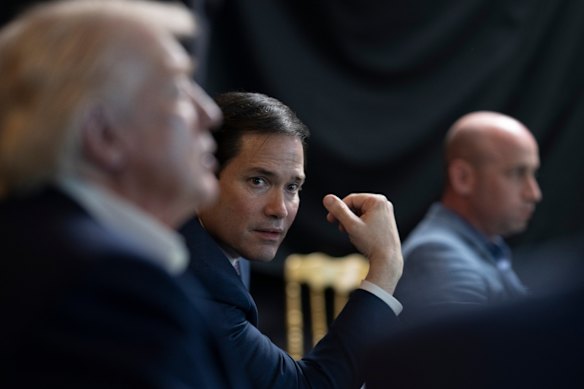
The operation sparked immediate concern regarding its implications. Marco Rubio, a prominent US senator, appeared on national television shortly after to address these fears, emphasizing the need for a calibrated approach to regime change in Venezuela to prevent a repeat of costly foreign interventions seen in Iraq and Afghanistan.
Divergent Perspectives on US Control
Rubio’s remarks contrasted sharply with claims made by former President Donald Trump, who reiterated that the US would “run” Venezuela temporarily, implying a direct administrative role overseen by Washington. Such statements raised alarms not only among Democrats but also within elements of the Republican Party that advocate for an “America First” approach, skeptical of further foreign interventions.
Rubio attempted to clarifiy the US stance, advocating for continued enforcement of an oil quarantine against sanctioned tankers as a means to apply pressure on Venezuela’s new leadership. He stated, “We continue with that quarantine, and we expect to see that there will be changes… not just in how the oil sector is run, but also in stopping drug trafficking.”
According to Rubio, the blockade remains a vital tool, designed to ensure that US national interests align with better outcomes for the Venezuelan people. This situation highlights the complexities of American interventions, where objectives often straddle geopolitical interests and humanitarian outcomes.
Mixed Reactions within the Political Sphere
Trump’s repeated assertions during a news conference that the US would govern Venezuela reignited fears about potential nation-building undertakings reminiscent of past invasions. Critics pointed out historical precedents in Iraq and Afghanistan as warnings against similar actions in Latin America. Rubio dismissed such concerns, arguing that the situation in Venezuela is fundamentally different due to its geographical and political context.
“This is the Western Hemisphere. Our mission here is very different,” Rubio stated, suggesting that critics misunderstood Trump’s objectives and that there is a need for a tailored foreign policy strategy.
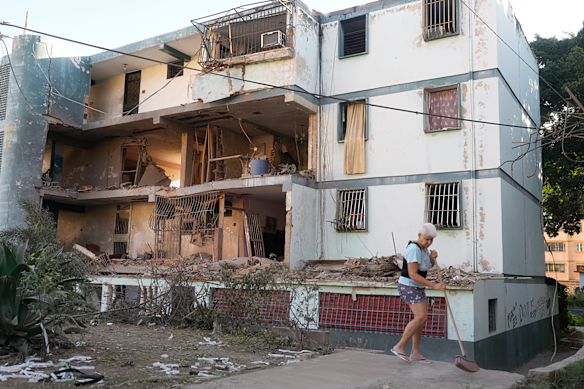
Maduro’s Extraction and Legal Challenges
Following the operation, Maduro was reportedly flown to New York, where he now faces multiple charges including that of narco-terrorism. His administration has been described by the US Justice Department as a “corrupt, illegitimate government.” Legal experts have raised questions surrounding the legality of the US’s extraterritorial actions in Venezuela, conducted without congressional approval.
Maduro’s subsequent arrival in New York and being “perp walked” by Drug Enforcement Administration officers starkly illustrates the depth of the US’s commitment to challenging his regime. The operation marked the most assertive American action toward regime change since the invasion of Iraq nearly two decades ago.
Venezuela’s Response and Regional Implications
In the immediate aftermath, Caracas experienced an unusual silence, with many businesses shuttered and residents remaining indoors, reflecting an atmosphere of uncertainty and fear. Civil society appeared stunned by the rapid unfolding of events. Local reports indicated that areas which would typically be bustling were eerily quiet, suggesting a populace still grappling with the implications of Maduro’s removal.
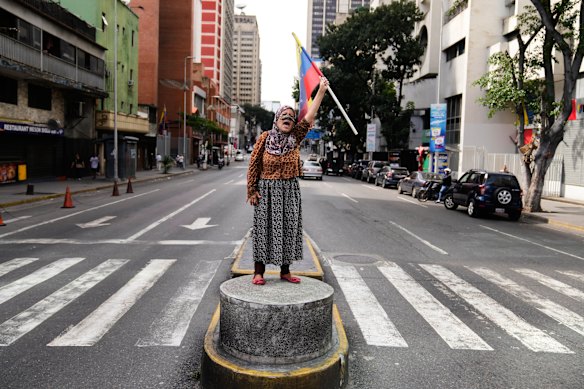
The situation prompts questions about the future of US-Venezuela relations and the broader geopolitical landscape in Latin America. The outcome of the operation could redefine diplomatic ties, manage narcotics trafficking, and shift the balance of power within the region. As the international community continues to react, the implications of this operation will be significant for regional stability and US diplomatic posture moving forward.
This operation comes within the larger context of US efforts against drug trafficking in the region. The potential for increased military presence or ongoing interventions could reshape Latin America’s political dynamics, raising concerns about sovereignty and international norms. According to Reuters, the ramifications of this operation will be scrutinized across both domestic and international platforms.
