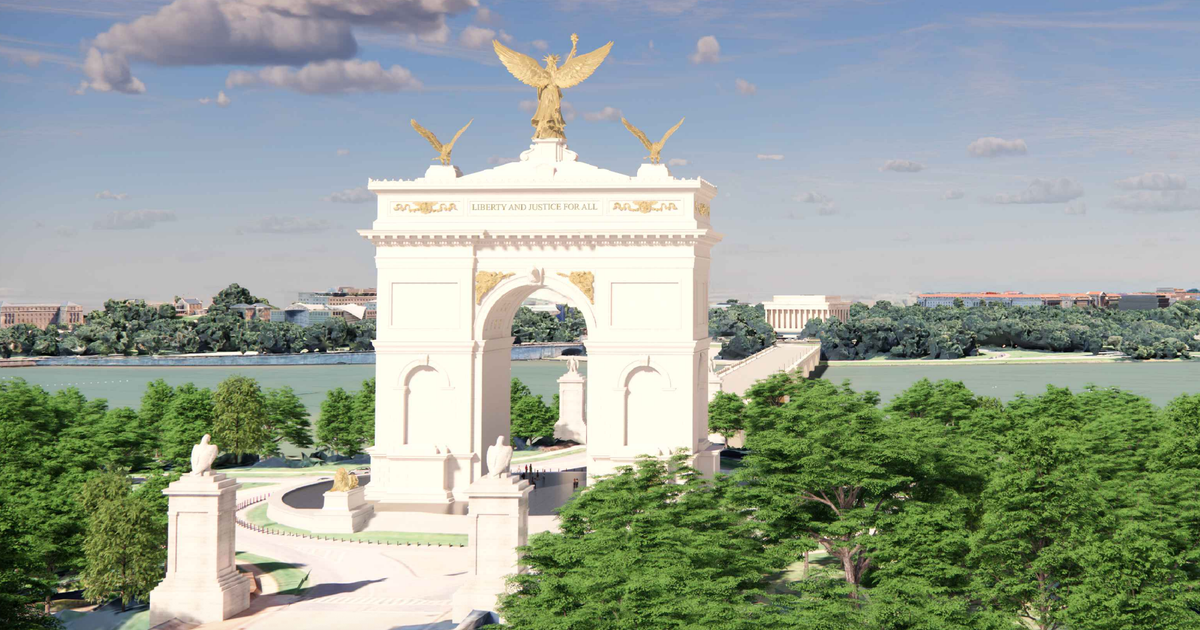
A federal lawsuit filed by Vietnam War veterans has thrown a legal challenge at President Trump’s proposed 250-foot “Independence Arch,” a monumental structure planned for Memorial Circle between Arlington National Cemetery and the Lincoln Memorial. The veterans argue the arch—dubbed by critics a “monument to a living president”—disrupts a historic sightline linking the Lincoln Memorial to the Lee House in Arlington, while the Trump administration insists the project aligns with a century-old plan and will “ennoble the United States.” Protests have erupted this week as the U.S. Commission for Fine Arts approved the design, setting the stage for a clash between veterans’ loyalty to fallen comrades and the administration’s push to revamp Washington’s skyline.
The Veterans’ Lawsuit: A Fight Over Loyalty and Legacy
The lawsuit, filed in February by Shaun Byrnes, Jon Gundersen, and two other Vietnam veterans, centers on what they call a “rushed and improper” process. Gundersen, an 81-year-old retired Army Special Forces officer, framed the opposition as an act of patriotism: “I think what we’re doing is being loyal to the country. And loyalty can be measured in different ways,” he told CBS News. Byrnes, a Navy veteran who served two tours in Vietnam, added that the arch would desecrate Arlington’s sacred grounds, where his fallen colleagues lie buried. “It’s more about the duty I feel towards my colleagues and friends who did not come home to stand up against this project, regardless of who’s in charge,” he said. “I think it’s just disrespectful to those that I served with who didn’t come back, and then, of course, to all those who are lying in Arlington National Cemetery.”

The Justice Department has already moved to dismiss the lawsuit, arguing the plaintiffs lack standing. Administration officials point to a 1926 plan for “two stately columns” on the site—a plan the veterans dismiss as irrelevant to the current, far grander arch. A federal judge denied a motion to halt construction last month, though no groundbreaking has yet begun. The arch’s design, approved by the U.S. Commission for Fine Arts despite public opposition, would tower over the Lincoln Memorial, a move critics say undermines the symbolic unity of the site.
Protests Erupt as the Arch Becomes a Symbol of Division
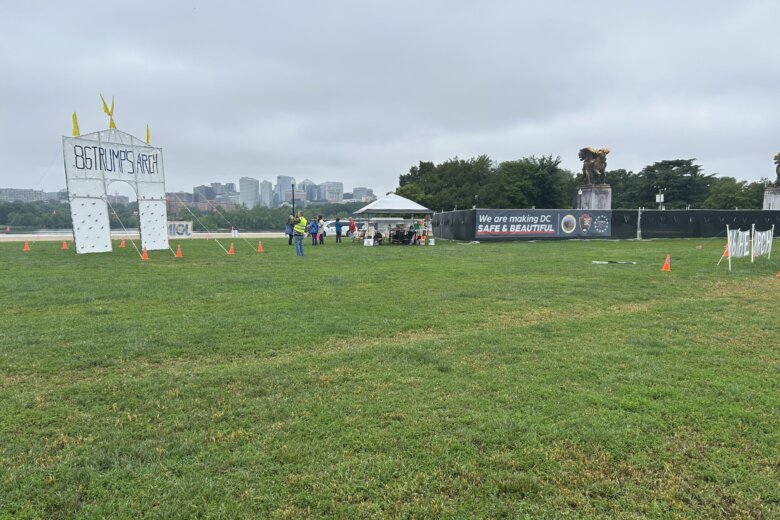
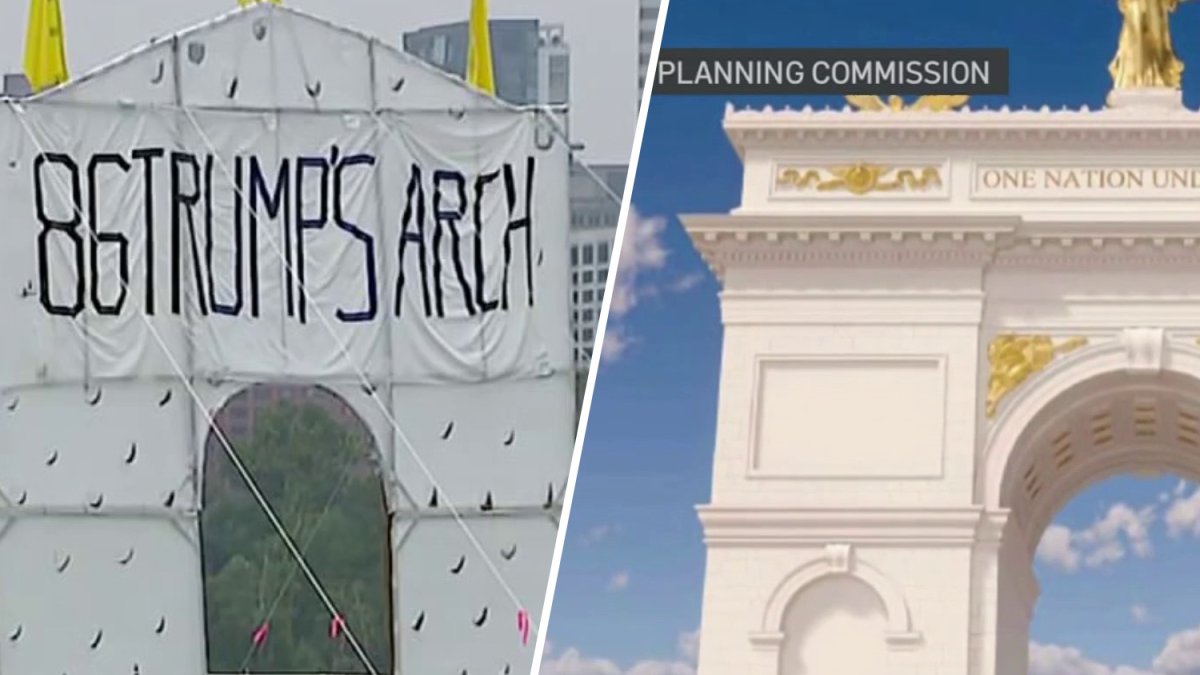
This week’s protests, organized by groups like Third Act DMV, have turned Memorial Circle into a battleground of signs and slogans. Demonstrators carried banners reading “86 Trump’s Arch” and “Arch Sanity”, while a Memorial Day-themed protest featured orange letters declaring, “They fought for democracy, will you?” Susan Douglas of Third Act Virginia told WTOP that the arch is “gaudy” and disrupts a “very important historical sightline” between the Lincoln Memorial and the Lee House—a connection established after the Civil War to symbolize national reconciliation.
For more on this story, see Federal Commission Approves Controversial 500-Foot American Unity Arch in D.C..
The protests coincide with a broader push by the Trump administration to reshape Washington’s architecture. Last summer, Trump signed an executive order, “Making Federal Architecture Beautiful Again”, directing agencies to prioritize “classical” designs. Fox News opined that the arch is part of a movement to “reclaim beauty as a civic value,” contrasting it with modernist buildings like the FBI’s brutalist headquarters. But critics argue the arch’s scale and timing—just months before the U.S. celebrates its 250th anniversary—smacks of vanity. As historian Heather Cox Richardson noted, the arch’s placement frames not the nation’s dead but Robert E. Lee’s former home, a choice that has sparked outrage among Civil War historians.
Historical Context: Why This Site Matters
The land where the arch is planned holds deep historical weight. In 1864, the U.S. government seized Lee’s Arlington estate and turned it into a national cemetery for Union soldiers killed in the Civil War. By the war’s end, over 16,000 bodies were buried there, and in 1868, the first Memorial Day ceremony was held on its grounds. The sightline between the Lincoln Memorial and the Lee House was deliberately preserved to honor both the Union’s victory and the reconciliation of a divided nation. The proposed arch, at 250 feet—more than double the height of the Lincoln Memorial—would block this view, a change Richardson calls a “deliberate erasure of history.”
Trump has dismissed concerns, telling reporters in the Oval Office last year that the arch would be “fantastic” and, when asked who it was for, replied simply: “Me.” The administration’s legal team has argued that Congress implicitly approved the project by not rejecting a 1926 plan for smaller columns—a claim the veterans’ lawsuit directly challenges. The National Capital Planning Commission is set to discuss the project next month, though no formal congressional vote has been held.
What’s Next: Legal Battles and Public Pressure
The next 30 days will be critical. The veterans’ lawsuit remains in limbo, with the Justice Department’s dismissal motion pending. Meanwhile, protests are scheduled through Tuesday, including a choreographed dance across the Memorial Bridge and light projections at night. The Federal Aviation Administration is also studying whether the arch could interfere with flights at nearby Reagan National Airport—a potential logistical nightmare for a structure this size.
Beyond the legal and logistical hurdles, the arch has become a flashpoint in a larger debate about public monuments and presidential legacies. While supporters like Sen. Jim Banks argue it will “uplift and beautify public spaces,” opponents see it as a vanity project that undermines democratic norms. As one protest sign put it: “Democracies do not build memorials to living presidents.”
The stakes are clear: For the veterans, this is about honor and history. For the administration, it’s about ambition and aesthetics. And for Washington, D.C., the outcome could reshape not just the skyline but the very meaning of its most sacred spaces.
