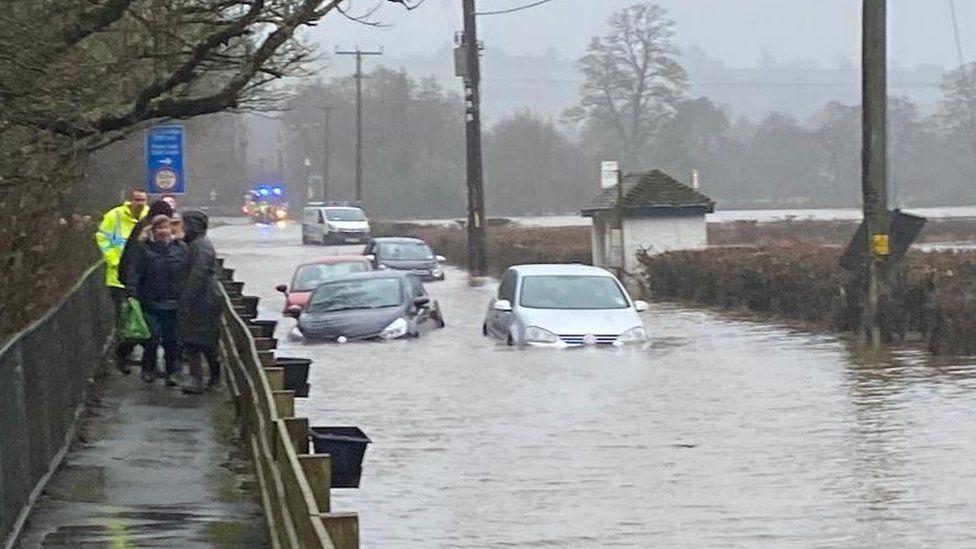
Wales’ Climate Change Committee warns that failing to prepare for extreme heat, drought, and flooding by mid-century would constitute “mass negligence,” with projected heat-related deaths rising from 1,400–3,000 annually to 3,000–10,000 by 2050 if no action is taken. The Welsh government has pledged to improve climate resilience but faces pressure to act faster.
A Climate Crisis in the Making: Wales’ Warning Over Heat and Flooding
Wales is on the brink of a climate adaptation crisis, according to the UK’s Climate Change Committee (CCC), which has labeled inaction as “mass negligence.” The warning comes as the country grapples with record-breaking temperatures, prolonged droughts, and increasingly severe flooding—trends that are projected to worsen dramatically by mid-century. The CCC’s report, released this week, highlights a stark reality: without urgent investment in cooling infrastructure, flood defenses, and coal tip stabilization, Wales risks catastrophic human and economic consequences.
The committee’s findings are not abstract. In 2025, Wales experienced its hottest summer on record, with temperatures soaring to 37.1°C in Flintshire—a threshold previously unthinkable for the region. The 10 hottest years in Wales’ recorded history have all occurred since the early 2000s, a trend that underscores the accelerating pace of climate change. By the middle of this century, heatwaves lasting at least a week are expected to become commonplace, pushing heat-related deaths in the UK from the current range of 1,400–3,000 annually to 3,000–10,000.
If global warming reaches 4°C by 2100—a trajectory the CCC warns is possible without drastic emissions cuts—annual heat-related deaths in the UK could surge to as many as 18,000. For Wales, the implications extend beyond mortality. The report warns that parts of the country may soon become suitable habitats for disease-carrying mosquitoes, a development that would compound public health risks.
—
The Negligence Factor: Why Wales’ Response Is Lagging
The CCC’s use of the term “mass negligence” is deliberate. It reflects a growing consensus among climate scientists, policymakers, and advocacy groups that Wales’ current preparedness efforts are insufficient to meet the scale of the threat. The Fire Brigades Union has already sounded the alarm, stating that more intense flooding and wildfires threaten to push emergency services “past breaking point.” Meanwhile, the Welsh government’s Future Generations Commissioner has echoed the CCC’s urgency, framing the issue as a moral failing rather than a technical challenge.

Yet the Welsh government has not been idle. In response to the CCC’s report, officials have reiterated their commitment to improving the nation’s preparedness for climate impacts.
- Enhanced cooling systems in hospitals and care homes to protect vulnerable populations during heatwaves.
- Expanded investment in flood protection infrastructure, including upgrades to existing defenses and new systems to mitigate risks from extreme rainfall.
- Stabilization of coal tips, which pose a dual hazard of structural collapse and environmental contamination during heavy rains.
However, critics argue that these measures are reactive rather than proactive. The CCC’s report suggests that Wales’ adaptation strategy lacks the ambition required to address the scale of the challenge. While the government has set targets for reducing greenhouse gas emissions, the focus on mitigation has not yet translated into commensurate action on adaptation—a gap that could have dire consequences in the coming decades.
Shea Buckland-Jones, a climate policy expert with the World Wildlife Fund (WWF), framed the issue bluntly:
“It would be mass negligence if we continue to ignore the need to stormproof while we have the chance.”
Shea Buckland-Jones, WWF
Buckland-Jones’ statement resonates with the CCC’s findings, which emphasize that the window for effective adaptation is narrowing. The report notes that prolonged dry weather in 2022 left reservoirs critically low, a scenario that could become the norm rather than the exception. Without immediate action, Wales risks repeating the mistakes of other regions that delayed climate resilience efforts until it was too late.
—
The Human Cost: Who Bears the Brunt?
The CCC’s projections are not just statistical abstractions. They represent real people—elderly residents in care homes without air conditioning, children in schools without cooling measures, and communities in flood-prone areas with inadequate warning systems. The report highlights that vulnerable populations, including the elderly, disabled, and low-income households, are disproportionately affected by extreme weather events.
In the UK as a whole, heat-related deaths are already rising. The current annual toll of 1,400–3,000 is expected to climb sharply, with the most severe impacts felt in urban areas where the “heat island” effect amplifies temperatures. For Wales, the risk is compounded by its geography: mountainous regions are prone to flash flooding, while coastal areas face threats from storm surges and rising sea levels.
The CCC’s warnings also extend to economic stability. Flooding alone costs the UK billions annually in infrastructure damage, lost productivity, and emergency response efforts. In Wales, the agricultural sector—already under pressure from erratic weather patterns—could face further disruptions, threatening food security and rural livelihoods.
Yet the most immediate concern is public health. The report cites evidence that prolonged exposure to high temperatures increases the risk of heatstroke, cardiovascular disease, and respiratory illnesses. For a country like Wales, where healthcare resources are already stretched, the added burden of climate-related illnesses could overwhelm local systems.
—
What Comes Next? The Path Forward for Wales
The CCC’s report is not a call to despair but a call to action. It outlines a series of recommendations aimed at accelerating Wales’ climate adaptation efforts.
- Mandatory cooling standards for public buildings, including hospitals, care homes, and schools, to ensure safe temperatures during heatwaves.
- Expanded flood resilience programs, including the retrofitting of critical infrastructure and the development of early warning systems.
- Stronger regulations on coal tip management to prevent catastrophic failures that could release toxic materials into waterways.
- Increased funding for research and innovation in climate adaptation, with a focus on local solutions tailored to Wales’ unique geography.
The Welsh government has acknowledged the urgency of these recommendations, but the question remains: Will the response be swift enough? The CCC’s report suggests that current timelines are too slow. With heatwaves and flooding becoming more frequent and intense, the cost of inaction will only rise.
For now, the debate centers on whether Wales will treat climate adaptation as a priority or continue to react to crises as they unfold. The stakes could not be higher. As the CCC warns, the difference between preparedness and negligence may soon be measured in lives lost.
One thing is clear: The clock is ticking. And for Wales, the consequences of delay are no longer theoretical—they are already here.
