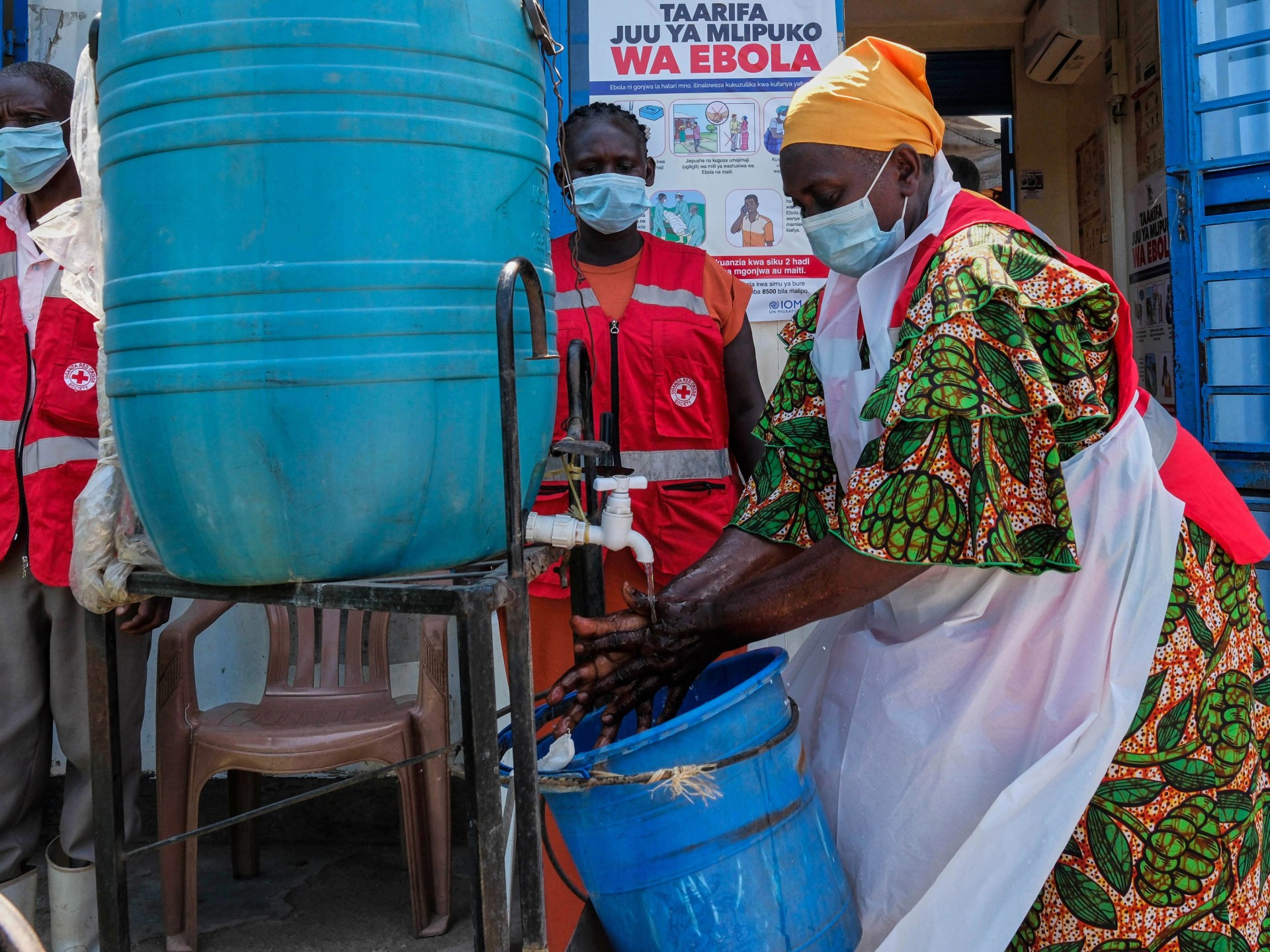
The World Health Organization and the Africa Centres for Disease Control and Prevention launched a $518 million emergency response plan this week to combat a rare Bundibugyo Ebola outbreak. As of June 8, 2026, the Democratic Republic of Congo has reported at least 452 cases and 82 deaths, with transmission also confirmed in neighboring Uganda.
The $518 Million Emergency Response Strategy
The coordinated initiative, announced Friday, aims to stabilize the region through November. By pooling resources, the World Health Organization and the African Union’s health agency intend to address critical gaps in clinical care, surveillance, and community engagement.
WHO Director-General Tedros Adhanom Ghebreyesus emphasized that the plan is designed to be operational rather than theoretical. “The objective is straightforward: we need to stop the outbreak where it is, support countries that are responding today, and ensure that neighbouring countries are ready to detect and act quickly if cases appear,” Tedros said, via AP News.
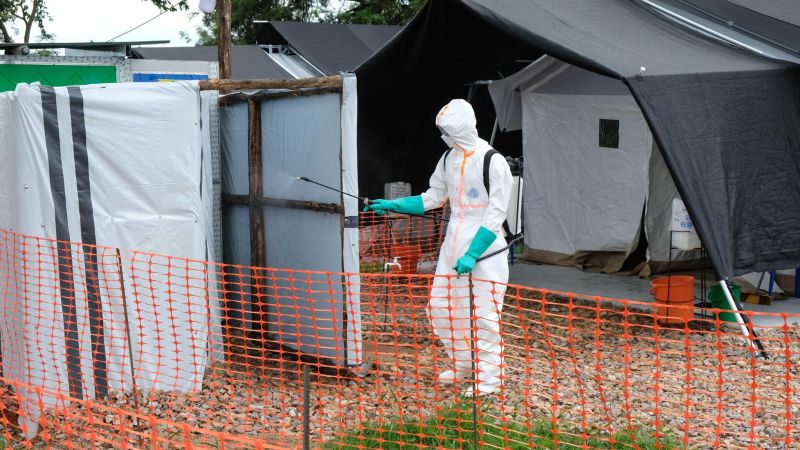
The financial allocation, according to budget breakdowns released by the Africa CDC, prioritizes the deployment of 1,200 additional rapid response team members to the Kivu and Ituri provinces. Dr. Jean Kaseya, Director-General of the Africa CDC, noted that this funding will specifically bolster cross-border screening at 42 designated transit points. Regulatory documents indicate that 30% of the budget is earmarked for the procurement of personal protective equipment (PPE) and the construction of 15 new Ebola Treatment Units (ETUs), which are designed to provide specialized supportive care, including intravenous fluid resuscitation and electrolyte management, which are the current gold standards for reducing the high mortality rate associated with the Bundibugyo virus.
This funding arrives as health officials struggle to manage the rare Bundibugyo strain. While previous outbreaks occurred in 2007 and 2012, experts from the United States’ Centers for Disease Control and Prevention warn that the current crisis could rival the scale of the 2014–2016 West Africa epidemic if containment measures fail. Unlike the Zaire ebolavirus, which has established vaccine protocols, the Bundibugyo strain presents unique diagnostic challenges, as its symptoms often overlap with malaria and typhoid, complicating early surveillance efforts in rural clinical settings.
Transmission Trends and Community Resistance
The DRC’s Ministry of Health reported a sharp spike of 71 confirmed cases within a single 24-hour period this week, underscoring what officials describe as “rapid and continuous community transmission.” In Uganda, the situation remains fluid, with 19 confirmed cases and two deaths reported as of Friday. The epidemiological curve, as tracked by the DRC’s Institut National de Recherche Biomédicale (INRB), indicates that the reproduction number (R0) in urban sectors of Bunia has risen above 1.5, a metric that indicates accelerating spread without aggressive intervention.
Public health efforts are frequently hindered by deep-seated skepticism. In Bunia, the capital of the eastern Ituri province, many residents initially dismissed reports of the virus as a “Western conspiracy.” Journalists like Vérité Johnson at the Radio Télévision Mont Bleu station have launched daily radio programs to debunk rumors and provide health updates, a necessary intervention in a region where misinformation spreads as quickly as the pathogen.
“Misinformation is almost as dangerous as the virus itself and spreads just as fast. Earning and keeping the trust of communities is at the heart of everything we do,” Tedros Adhanom Ghebreyesus, WHO Director-General, via AP News.
The INRB has published findings suggesting that the mistrust is exacerbated by the lack of local involvement in the initial contact-tracing phase. To counter this, the WHO has shifted strategy to include “community-led surveillance,” where village elders and local health practitioners are trained to identify the characteristic hemorrhagic symptoms of the Bundibugyo strain—specifically severe abdominal pain and jaundice—before formal health authorities arrive. Data from the first week of this community-led pilot program showed a 14% increase in reported suspected cases, which officials view as an improvement in detection rather than an increase in transmission.
Controversy Over the Kenya Quarantine Facility
While health agencies focus on the DRC and Uganda, tensions have flared in Kenya over a U.S.-led plan to establish a 50-bed Ebola isolation facility at the Laikipia Air Base. The project, intended to quarantine U.S. citizens who contract the virus while working in the region, has faced significant public backlash. The U.S. Department of State and the Department of Defense have clarified that the facility is intended for personnel under U.S. jurisdiction, citing internal safety protocols that require specialized isolation infrastructure not currently available in civilian Kenyan hospitals.

Protests in Nanyuki turned violent earlier this week, resulting in at least two deaths. Kenya’s High Court has temporarily blocked the facility’s construction, citing public health concerns, even as President William Ruto continues to defend the project as a vital component of the country’s health partnership with the United States. Legal experts monitoring the court case, such as those at the International Commission of Jurists (Kenya section), argue that the dispute centers on the lack of transparency regarding the facility’s waste management plans and the potential risk of pathogen escape into the surrounding Laikipia ecosystem. The Kenyan government has yet to release the formal environmental and biosafety impact study requested by the court.
Looking Ahead: The Vaccine Gap
A major challenge for the $518 million response is the current lack of a clinically approved vaccine for the Bundibugyo strain. Researchers are currently working to fast-track three potential vaccines for clinical trials. The Sabin Vaccine Institute and the International AIDS Vaccine Initiative (IAVI) have announced they are initiating Phase 1/2 trials, which will involve a total of 450 volunteers to assess safety and immunogenicity. These trials, pending final approval from local ethics committees, will focus on determining the optimal dosage to trigger a neutralizing antibody response against the Bundibugyo glycoprotein.
Until these become available, the primary defense remains traditional infection prevention and rapid detection. The WHO has issued updated clinical guidance emphasizing the “ring vaccination” strategy, though this remains theoretical until the efficacy of the candidate vaccines is established. Epidemiologists at the London School of Hygiene & Tropical Medicine have cautioned that, without a vaccine, the mortality rate for the Bundibugyo strain may remain between 30% and 50% in areas with limited access to advanced critical care.
The coming weeks will determine whether the enhanced coordination between the WHO and Africa CDC can effectively break the chains of transmission. As the virus continues to circulate, the success of the $518 million plan will likely depend on the ability of health workers to earn the trust of the very populations they are trying to protect. Readers should understand that current containment efforts remain in a state of rapid evolution; specific travel advisories are subject to change based on daily case-mapping. Consult your local healthcare provider or your national foreign affairs department for official, up-to-date guidance on travel and health precautions in affected areas.
