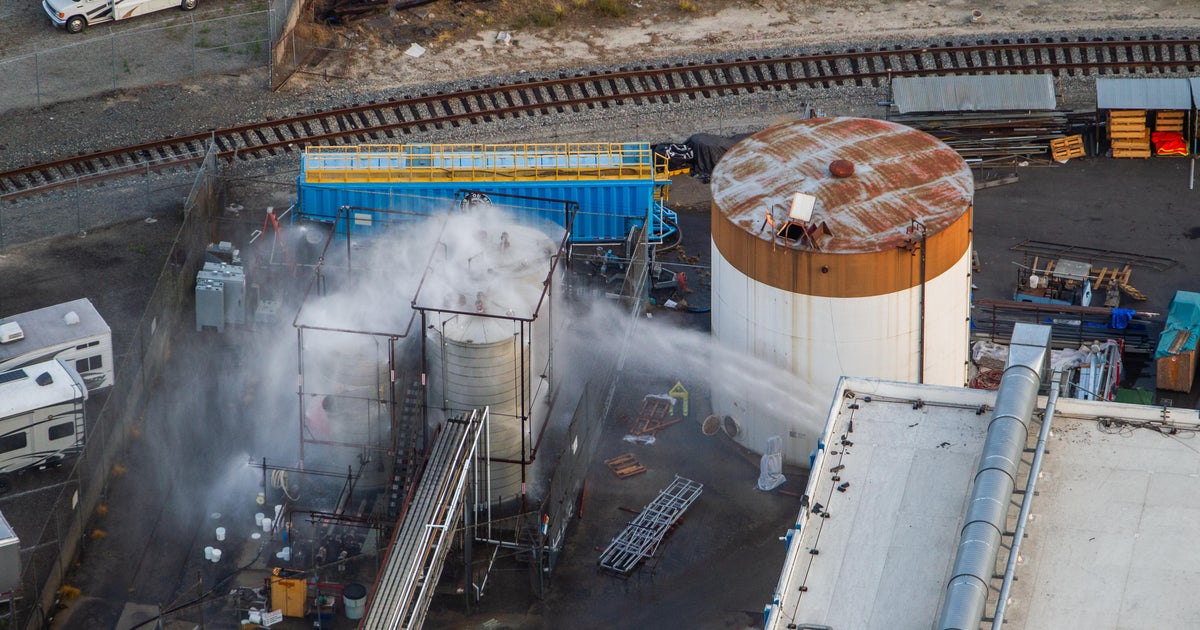
Garden Grove’s chemical crisis enters a fragile new phase as a cracked tank offers hope—but 50,000 displaced residents and officials warn the threat isn’t over. On Monday, May 25, 2026, emergency crews confirmed a potential crack in the overheated methyl methacrylate tank at GKN Aerospace, a discovery that could alter containment efforts after four days of evacuations. While Gov. Gavin Newsom secured a federal emergency declaration and crews sprayed water to cool the tank, experts cautioned that a slow leak—though preferable to an explosion—still poses severe environmental and health risks. The stakes? A 2009 UK disaster involving the same chemical offers a grim precedent: no deaths, but windows shattered 600 feet away. Now, California’s response hinges on whether the crack stabilizes—or worsens.
Why the tank’s crack might be both good news and a ticking time bomb
Sunday’s revelation—a “potential crack” in the tank—was met with cautious optimism by officials, but the relief is tempered by the sheer unpredictability of methyl methacrylate. The chemical, used in plastics and resins, reacts exothermically when overheated, creating pressure that can turn a tank into a bomb. As Orange County Fire Authority Interim Chief TJ McGovern stated in a post on X, “With this new information, it could change our trajectory and our strategy to this event.” Yet the crack’s very existence raises new questions: Is it large enough to relieve pressure safely? Or will it worsen the leak, spreading toxic fumes across evacuated neighborhoods?
The tank, holding 7,000 gallons of the volatile liquid, has already bulged dangerously, according to Orange County Fire Authority Incident Commander Craig Covey. On Saturday, the temperature inside hit 100 degrees—the limit of the monitoring equipment—a spike that had officials fearing an imminent explosion. State Sen. Tom Umberg, who represents Garden Grove, framed the crack as a potential silver lining: “That may avoid the two concerns that we all had,” he told reporters. “One was an explosion, the other was a leak of liquid material vaporizing into a toxic fume.” But the trade-off is stark: A controlled leak could still expose first responders and residents to long-term health hazards, including skin irritation and respiratory damage.
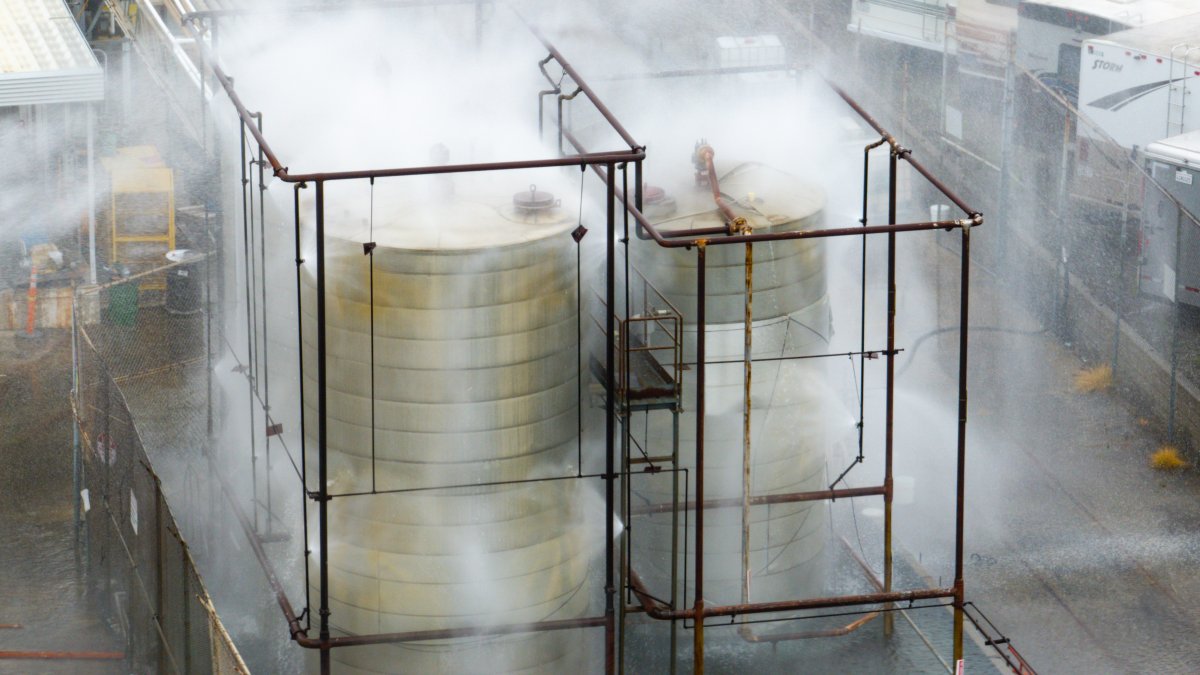
“In a weird world that’s the best case scenario believe it or not. Because once it comes out it is no longer an explosive hazard.”
— Craig Covey, Orange County Fire Authority Incident Commander, via CBS News
Orange County Fire Authority officials emphasized that the crack’s discovery came after a reconnaissance mission on Saturday night, during which they observed the tank’s external conditions. The mission was conducted under extreme caution, with firefighters using thermal imaging to assess the tank’s integrity without direct contact. Covey noted that the tank’s structural integrity remains a concern, as the chemical’s exothermic reaction could continue even with a breach, potentially causing secondary hazards.
GKN Aerospace has provided limited details about the incident, stating only that they are “working around the clock to mitigate the risk.” However, internal communications obtained by local authorities suggest that the company’s initial response was delayed by coordination challenges between on-site personnel and regional emergency management teams. A spokesperson for GKN Aerospace declined to comment on the specifics of the overheating cause but confirmed that the facility’s safety protocols were followed until the critical temperature threshold was exceeded.
Evacuations, federal aid, and the race against time
As of Monday, 50,000 people remain displaced, with shelters at capacity and schools closed indefinitely in the blast zone. The evacuation area, mapped by authorities, includes a “severe damage” radius near the plant and a wider toxic dispersal zone. Evacuation orders were expanded on Sunday after wind patterns shifted, increasing the potential for toxic plume dispersion. Authorities have set up 17 temporary shelters across Orange County, with additional resources being deployed from neighboring counties, including Los Angeles and Riverside.
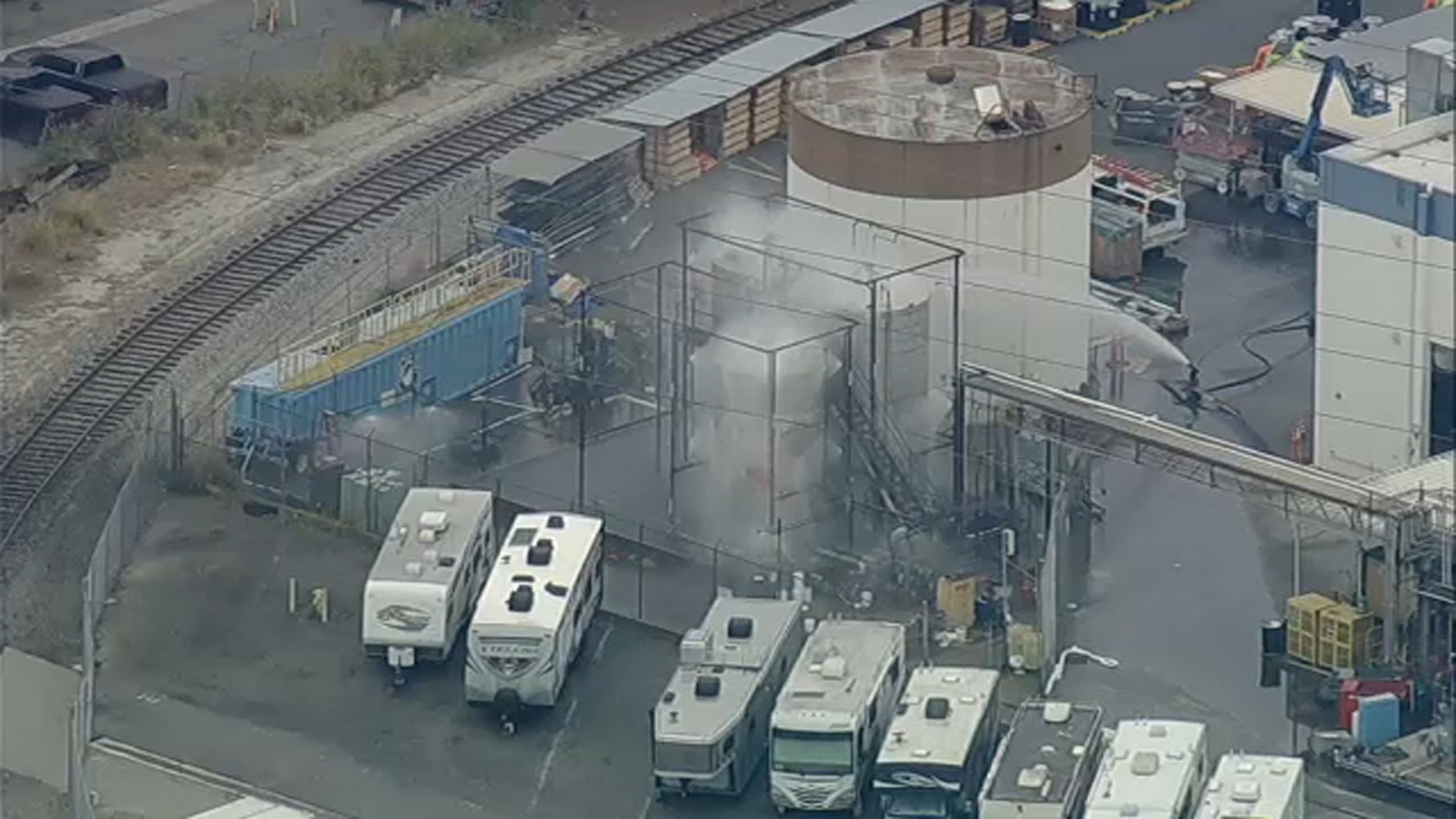
Gov. Gavin Newsom’s request for a federal emergency declaration—signed by Sens. Alex Padilla, Adam Schiff, and Rep. Derek Tran—aims to unlock FEMA resources before disaster strikes. “California doesn’t wait for disaster to unfold,” Newsom said in a statement. “We act early to protect lives and communities.” The request was submitted to the White House on Sunday evening, but as of Monday afternoon, no response had been received. The bipartisan letter to President Trump, which included signatures from local officials and industry experts, emphasized the urgency: “The severity of this disaster requires additional coordination and federal support.”
For more on this story, see Garden Grove Chemical Leak Response Shifts.
Meanwhile, local authorities have faced criticism for delays in notifying residents about the evolving risks. Garden Grove Mayor Pro Tem Maria Rodriguez held a press conference on Sunday, acknowledging the challenges: “We’re doing everything we can with the information we have, but the public deserves transparency. If the crack worsens, we will update the evacuation zones immediately.” Rodriguez also confirmed that the city has activated its emergency operations center and is coordinating with the California National Guard for additional support.
GKN Aerospace, the plant’s owner, has confirmed it’s “working around the clock to mitigate the risk,” though the cause of the overheating remains unclear. The facility’s proximity to residential areas—just miles from Anaheim and Santa Ana—amplifies the urgency. A recon mission by firefighters Saturday night revealed the tank’s condition, but experts warn the situation could deteriorate rapidly. The Orange County Health Care Agency has issued a public advisory warning residents to avoid contact with any contaminated materials and to seek medical attention if they experience symptoms such as dizziness, nausea, or difficulty breathing.
First responders, including personnel from the California Department of Toxic Substances Control, have been deployed to the site to assess potential environmental contamination. Preliminary tests indicate trace amounts of methyl methacrylate in soil samples near the perimeter, though officials stress that the levels are not yet at hazardous concentrations. However, the long-term impact on groundwater and local ecosystems remains a significant concern.
Lessons from 2009: How a UK disaster foreshadowed Garden Grove’s crisis
The parallels to a 2009 explosion in the UK are chilling. At a resin plant in October of that year, a similar tank rupture sent shockwaves through the industry. No one died, but the blast shattered windows 600 feet away—a radius that could engulf Garden Grove’s evacuation zone. The UK incident underscores a critical truth: Methyl methacrylate doesn’t just explode; it reacts violently when confined. “Once it comes out, it’s no longer an explosive hazard,” Covey noted. But the chemical’s toxicity lingers, raising questions about cleanup efforts and long-term exposure for first responders.
In the UK case, the Health and Safety Executive (HSE) later reported that the incident was caused by a combination of mechanical failure and inadequate monitoring systems. The investigation highlighted the need for real-time temperature and pressure sensors in high-risk chemical storage facilities. California officials have since emphasized that the Garden Grove tank was equipped with such monitoring, though the exact failure point remains under investigation.
This follows our earlier report, Orange County chemical tank at risk of explosion after 7,000-gallon leak threat.
Dr. Lisa Hernandez, a toxicology expert with the California Environmental Protection Agency, warned that even a controlled release of methyl methacrylate poses risks. “The chemical can polymerize rapidly when exposed to air, creating additional heat and pressure,” she said. “This could lead to secondary reactions that complicate containment efforts.” Hernandez also noted that prolonged exposure to low levels of the chemical can cause neurological symptoms, including headaches and memory loss, which could affect residents and cleanup crews for months.
What’s next: Three critical unknowns keeping officials up at night
- The crack’s stability: Is the breach widening, or is it holding? Crews are validating the finding, but real-time monitoring is limited by the tank’s hazardous conditions. The Orange County Fire Authority has deployed drones equipped with gas sensors to monitor the area around the tank, though their use is restricted by wind conditions and potential interference from the chemical’s vapor.
- Federal response: Will President Trump approve the emergency declaration? Delays could leave California scrambling for resources if the situation escalates. The White House has not yet responded to requests for comment, but local officials have begun preparing contingency plans in case federal aid is denied.
- Environmental fallout: Even if the tank doesn’t explode, a prolonged leak could contaminate soil and water, requiring months of mitigation. The California Department of Water Resources has already dispatched teams to monitor local aquifers, though initial tests have not detected significant contamination.
The next 72 hours will be decisive. If the crack holds, crews may attempt to drain the tank safely—a process that could take days. However, experts warn that draining the tank could exacerbate the leak if not done carefully. “We’re exploring all options, but none are without risk,” Covey said. “Our priority is to prevent a catastrophic failure while minimizing exposure to the chemical.”
If the leak accelerates, officials may face an impossible choice: risk an explosion by sealing the tank or allow toxic fumes to spread. One thing is certain: Garden Grove’s residents are trapped in limbo, waiting for a resolution that may never feel like a victory.
A crisis with no easy answers
This isn’t just about chemistry—it’s about trust. Residents evacuated from their homes, businesses shuttered, and first responders operating under extreme pressure all depend on one fragile hope: that the crack doesn’t become a catastrophe. As Covey’s grim assessment reminds us, “best case scenarios” in disasters are rarely ideal. For Garden Grove, the question isn’t whether the tank will fail—but how badly, and how soon.
Local faith leaders, including Pastor James Lee of the Garden Grove Community Church, have urged patience and resilience. “We’re asking our community to stay strong,” Lee said in a Sunday service broadcast. “This is a test of our unity, and we will support each other through this.” The church has opened its doors as a shelter and is providing counseling services for displaced families.
For live updates, including evacuation zones and shelter locations, visit the Orange County Fire Authority’s official page.
