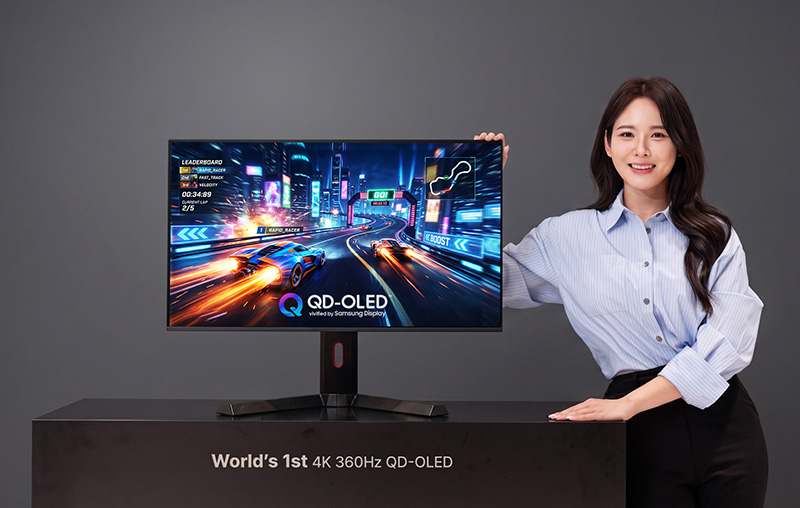
Samsung Display has unveiled the world’s first 4K 360Hz QD-OLED monitor panel, marking a significant leap in display technology ahead of Computex 2026. The 31.5-inch panel combines ultra-high resolution with a 360Hz refresh rate, supported by dual-mode functionality reaching 680Hz, and certified with VESA DisplayHDR 600 True Black. The company plans to begin full-scale mass production in the second half of 2026 [Source 2].
Technical Breakthroughs Redefine Gaming and Professional Displays
The 31.5-inch QD-OLED panel, part of Samsung Display’s Penta Tandem technology, achieves a 3840 x 2160 resolution paired with a 360Hz refresh rate—a feat previously constrained by technical limitations. Samsung engineers overcame challenges in pixel data processing through optimized circuitry and driving systems, enabling the panel to handle both high resolution and fast refresh rates without compromise [Source 1]. This advancement addresses growing demand for monitors that support photorealistic gaming and 4K video content, where previous solutions required trade-offs between resolution and refresh rate.

Key specifications include a 1500-nits peak brightness and RGB stripe sub-pixel layout, enhancing text readability and color accuracy. The panel’s VESA DisplayHDR 600 True Black certification ensures black levels meet stringent industry standards, a first for OLED monitors [Source 1]. Brad Jung, Vice President at Samsung Display, described the product as “a near-perfect monitor that delivers everything consumers expect from a premium monitor,” emphasizing its balance of resolution, brightness, and responsiveness [Source 2].

The integration of Penta Tandem technology is central to these performance gains. By utilizing a multi-layered structure for the OLED stack, the panel achieves higher brightness levels while maintaining the deep contrast ratios characteristic of the QD-OLED format. According to internal testing data released by Samsung Display, the 1500-nits peak brightness is achieved while maintaining the pixel density required for 4K clarity, ensuring that professional creators and gamers alike can utilize the screen for color-critical work and high-speed motion tasks without the dimming effects often associated with high-refresh-rate OLED panels [Source 2].
Dual-Mode Innovation Expands Use Cases
The panel’s dual-mode functionality allows users to toggle between 4K 360Hz and 1080p 680Hz settings, catering to diverse applications. At 1080p, the refresh rate jumps to 680Hz, ideal for competitive gaming where split-second responsiveness is critical. This flexibility addresses a gap in the market, as previous high-refresh-rate monitors often operated at lower resolutions, limiting their utility for content creation and multimedia tasks [Source 1]. MSI has already announced a monitor using the panel, the 322URDX36, which adds a third mode: 1440p 520Hz. This “triple-mode” approach provides users with even more options to balance spatial and temporal resolution for specific games or workflows [Source 3].
The implementation of these modes is managed through the monitor’s scaler and panel firmware, allowing the display to dynamically adjust its refresh rate and resolution output based on the user’s selected profile. This capability is designed to bridge the requirements of different gaming genres, allowing for 4K resolution during immersive, visually demanding titles and high-frequency 680Hz output for competitive esports games where motion clarity is the primary objective [Source 2]. The inclusion of the 1440p 520Hz mode by MSI further expands the utility of the hardware, offering a middle ground for users who find 1080p insufficient for modern desktop environments but require more speed than 4K can currently offer at high refresh rates [Source 3].
Industry Reactions and Future Implications
Industry observers highlight the panel’s potential to disrupt both gaming and professional markets. The ability to maintain 4K resolution at 360Hz without downscaling represents a “fundamental shift” in display capabilities, according to Digital Foundry. The dual-mode feature also positions Samsung Display as a leader in adaptive display technology, with the company engaging in discussions with over 10 global brands for supply [Source 2]. However, questions remain about pricing and availability, as MSI’s 322URDX36 model has yet to announce retail details [Source 3].
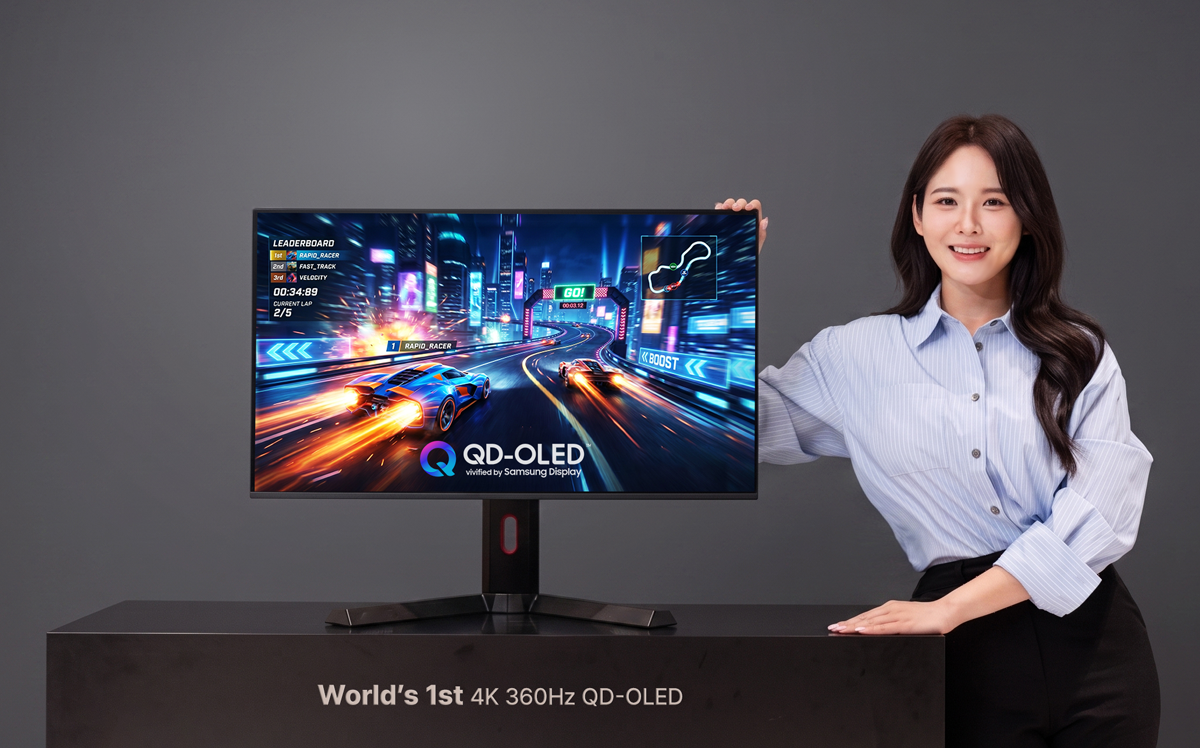
Analysts note that Samsung’s focus on QD-OLED technology could accelerate adoption of the format, which combines the color accuracy of OLED with the brightness of quantum dots. The company’s claim that the panel “exceeds market expectations” aligns with its broader strategy to lead in premium display innovation [Source 1]. As Computex 2026 approaches, the panel’s real-world performance and consumer reception will determine its long-term impact. The upcoming event in June will serve as the first major public demonstration of the technology, where Samsung Display intends to showcase the 31.5-inch panel in a live environment to demonstrate its latency and color reproduction capabilities to industry partners and media representatives [Source 2].
“With Dual Mode, the panel can operate up to 680Hz, allowing users to enjoy smooth, sharp visuals even in FPS gaming environments where split-second response time is critical,” a Samsung Display representative explained [Source 2]. This strategic focus on high-frequency performance, coupled with the resolution density of 4K, suggests a shift in the premium monitor segment away from single-purpose displays toward versatile hardware capable of adapting to the specific needs of the end-user.
