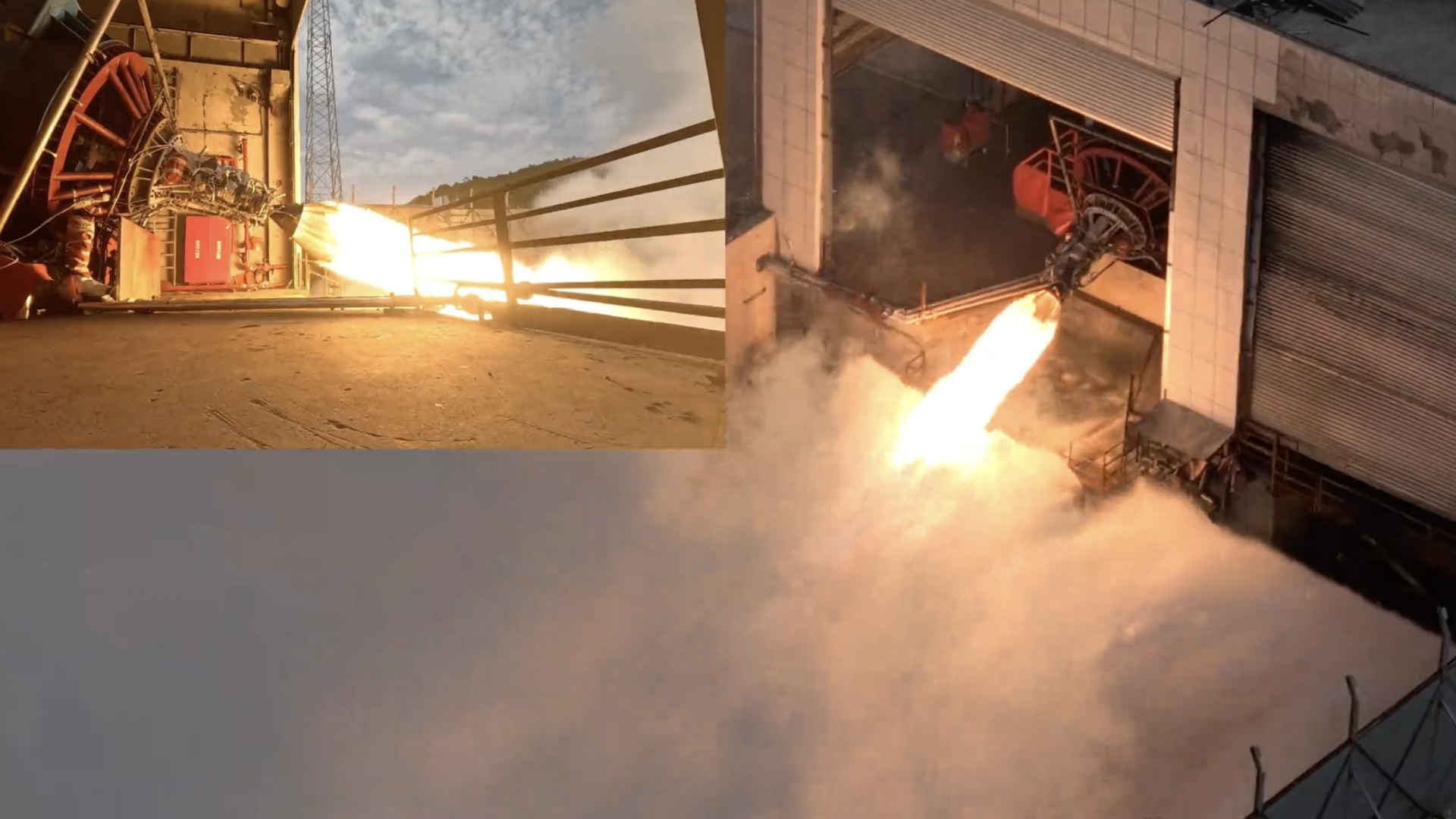
Xi’an-based startup Mega Engine Technology has completed a successful test campaign for its “Chi” kerosene-liquid oxygen engine, accumulating 1,000 seconds of run time at rated conditions. The milestone, disclosed on May 25, 2026, marks a significant entry for a private firm into the specialized field of high-pressure oxygen-rich staged-combustion propulsion.
A New Contender in High-Pressure Staged Combustion
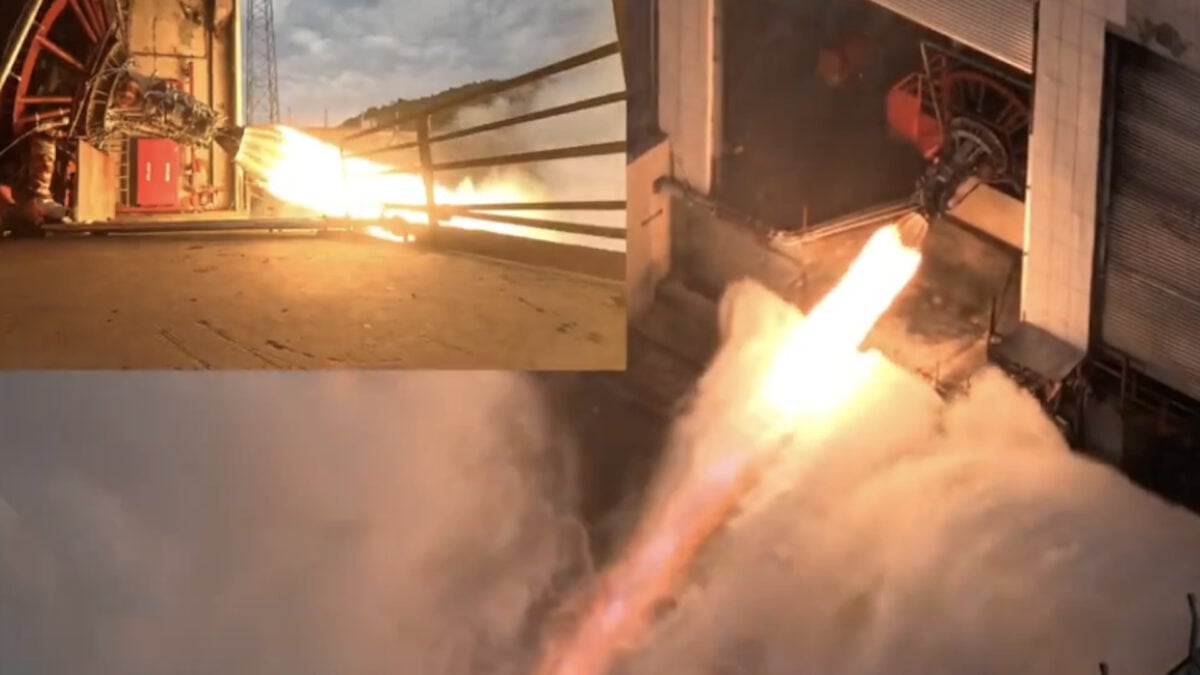
The emergence of Mega Engine Technology represents a shift in the Chinese commercial space sector. Until recently, the complex engineering required for oxygen-rich staged-combustion cycles—a technology that pushes metal to its limits by burning oxygen-rich gas through turbines—was almost exclusively the domain of state-run institutions like the Academy of Aerospace Liquid Propulsion Technology. By mastering this cycle, Mega Engine is moving beyond the simpler, open-cycle engines that have defined the first wave of Chinese private launch vehicles.
The “Chi” engine, which translates to “blazing,” has demonstrated reliability across a total of 2,000 seconds of program-wide testing. According to reports from SpaceDaily, the engine is designed for high-performance medium-lift launchers, offering throttleable thrust between 35 and 75 tons at sea level, and up to 87 tons in vacuum. This level of control is essential for the modern goal of reusable first-stage rockets, where precise throttling is required for landing maneuvers.
The Chi engine utilizes a proprietary high-speed turbopump assembly capable of operating at 28,000 RPM, a figure confirmed by company technical disclosures during the May 25 briefing. The engine’s combustion chamber pressure is rated at 18 MPa, placing it in the upper echelon of modern kerosene-based engines globally. This pressure is facilitated by a multi-stage centrifugal pump system that avoids the cavitation issues often found in earlier iterations of liquid-oxygen turbopump designs.
Engineering the Deep Water Zone of Liquid Propulsion
In the world of rocket science, oxygen-rich staged combustion is frequently referred to as the “deep water zone” of liquid propulsion. It is a technical hurdle that requires sophisticated metallurgy to prevent the high-pressure, oxygen-rich gas from literally setting the engine’s internal components on fire. While historical Soviet programs like the RD-253 successfully utilized this technology as early as 1965, it remains a rare capability for commercial startups.
The SpaceNews analysis notes that Mega Engine’s rapid progress—the company began operations only in early 2024—suggests its founding team likely possesses deep, pre-existing experience from within the state propulsion sector. The company’s co-founder, Zhang Chenxing, who holds a PhD from MIT, has positioned the firm to compete directly with existing suppliers. By utilizing a closed-cycle design, the Chi engine achieves a specific impulse of 302 seconds at sea level and 350 seconds at altitude, providing a measurable efficiency advantage over the open-cycle YF-102 engines currently flying on commercial rockets like the Tianlong-2.
To mitigate the risk of “burn-through”—where oxygen-rich gases erode turbine blades—Mega Engine utilizes a specialized nickel-based superalloy coating developed in collaboration with the Northwestern Polytechnical University in Xi’an. Dr. Zhang Chenxing confirmed in the May 2026 technical disclosure that the coating was subjected to 500 hours of arc-jet testing before being integrated into the Chi engine’s turbine housing. This metallurgical advancement allows the engine to maintain consistent performance across multiple ignition cycles, a requirement for the company’s stated goal of 10-flight reusability per engine unit.
Operational Milestones and Future Expansion
Beyond the successful test data, Mega Engine has emphasized the engine’s durability. Following the 1,000-second campaign, post-test inspections revealed the hardware remained intact, a critical verification for any company aiming for flight-ready reusability. As Interesting Engineering points out, the firm is already looking toward larger scales.
The company’s roadmap includes the development of a 200-ton-class engine dubbed “Yan,” intended for heavy-lift vehicles. This dual-track approach—targeting both medium-lift upper stages with the Chi and heavy-lift boosters with the Yan—suggests a strategy aimed at capturing a broad swath of the domestic launch market.
The Yan engine is currently in the preliminary design review (PDR) phase as of Q2 2026. According to internal project documents shared with industry analysts, the Yan is expected to leverage the same staged-combustion architecture as the Chi, effectively scaling the turbopump output by 230% while maintaining the same material composition for the combustion chamber liners. Analysts at the China Aerospace Science and Industry Corporation (CASIC) have noted that this modular design philosophy could significantly reduce manufacturing costs, as the company can utilize shared tooling for the smaller Chi components and the larger Yan assemblies.
| Metric | Performance Specification |
|---|---|
| Sea-Level Thrust | 35–75 Tons |
| Vacuum Thrust | 87 Tons |
| Sea-Level Isp | 302 Seconds |
| Vacuum Isp | 350 Seconds |
| Chamber Pressure | 18 MPa |
| Turbine Speed | 28,000 RPM |
The Broader Context of China’s Commercial Launch Sector

Mega Engine enters a competitive landscape that has seen significant movement since 2023, when Landspace achieved the first orbital launch of a methane-fueled rocket. While methane is a popular choice for new startups due to its cleaner-burning properties, Mega Engine’s commitment to kerosene-based closed-cycle technology suggests they are optimizing for the specific performance envelopes of existing, proven architectures.
Independent aerospace consultant Li Wei, formerly a senior engineer at the Shanghai Academy of Spaceflight Technology, noted that while methane-based engines offer lower soot accumulation and easier reusability, the kerosene-oxygen cycle remains the “gold standard” for high-density propulsion. “By choosing kerosene,” Li stated in a recent industry brief, “Mega Engine is addressing the immediate demand for high-thrust-to-weight ratios required for the next generation of Chinese modular rockets.”
As Gizmodo reports, the focus on these engines is part of a national push to increase launch capacity and efficiency as China prepares for more ambitious lunar and deep-space missions. Whether Mega Engine can transition from successful ground testing to active flight operations remains the next major hurdle. For now, the company has proven it can move from a standing start in 2024 to a high-pressure, closed-cycle engine test in roughly two years, a pace that highlights the intensity of the current commercial space race in China.
The company currently employs 140 staff at its Xi’an headquarters, with 60% of the workforce dedicated exclusively to test engineering and propulsion systems analysis. According to filings with the Xi’an High-Tech Industries Development Zone, Mega Engine secured an additional $120 million in Series B funding in April 2026, which is earmarked for the construction of a dedicated high-altitude simulation test stand. This facility, expected to be operational by Q1 2027, will be the first of its kind owned by a private Chinese firm, allowing for full-scale vacuum testing that was previously only accessible through state-run facilities. This investment underscores the firm’s transition from an R&D-focused entity to an integrated engine manufacturer with its own testing infrastructure.
