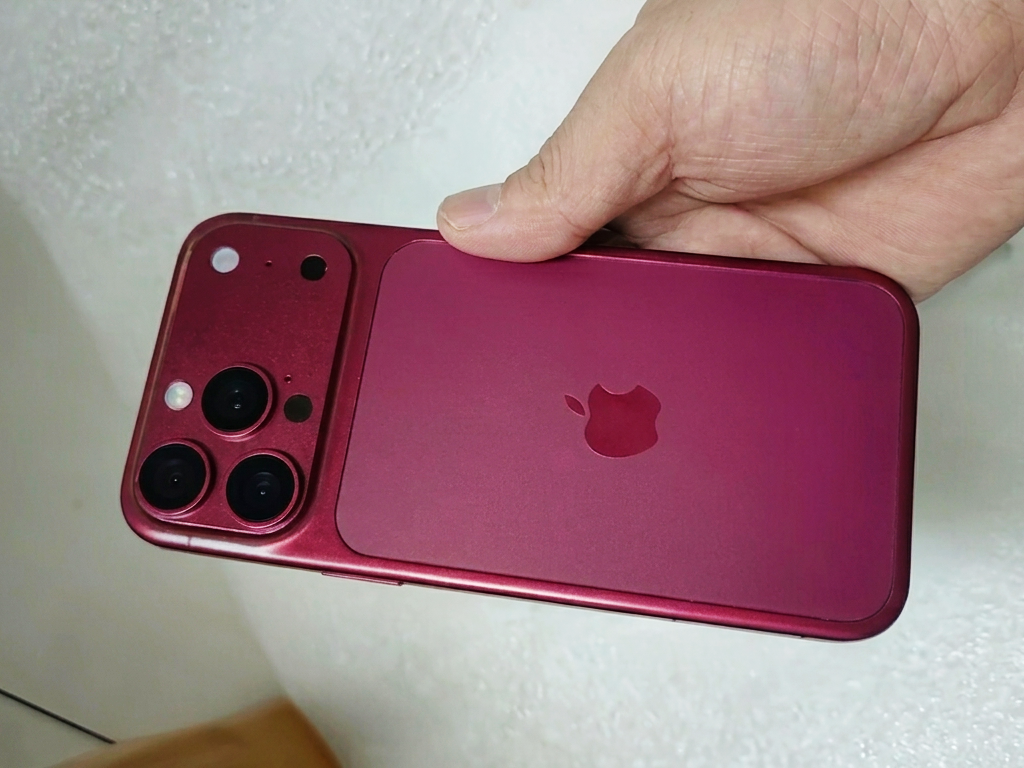
Apple’s iPhone 18 Pro battery leak has just rewritten the upgrade calculus for European buyers, exposing a regional divide that could soon vanish entirely. With the device set to launch in September 2026, leaked figures reveal the Pro model will pack a 4,056 mAh battery in physical SIM variants and 4,288 mAh in eSIM-only versions—yet the real story lies in Apple’s expansion of eSIM support to Europe, where millions will automatically receive the larger battery for the first time. Meanwhile, analyst Ming-Chi Kuo warns of a 50% cost spike for the Pro’s variable-aperture camera lens, raising questions about whether Apple will pass those expenses to consumers. The bigger question? Whether this incremental battery boost—and the looming 2027 iPhone’s rumored 6,000 mAh leap—will make the iPhone 18 Pro feel like a stepping stone rather than a must-have.
Europe Finally Gets the U.S.-Level iPhone 18 Pro Battery
For years, iPhone buyers outside the U.S. have faced a frustrating reality: their devices shipped with smaller batteries than their American counterparts, thanks to Apple’s stubborn insistence on including a physical SIM tray in most global markets. That tray, while necessary for carriers, comes at the cost of internal space—and thus, battery capacity. The iPhone 17 Pro, for example, shipped with a 3,988 mAh battery in China (where SIM trays persist) but a 4,252 mAh cell in the U.S. (eSIM-only). The iPhone 18 Pro continues this pattern, but with a twist: Europe is getting the U.S. treatment for the first time.

Regional Battery Disparities and the Future of Physical SIMs
According to leaks from Digital Chat Station, a prolific Weibo-based source corroborated by Ice Universe, the iPhone 18 Pro will offer 4,056 mAh in physical SIM models (a modest 68 mAh bump from the 17 Pro) and 4,288 mAh in eSIM-only variants (just 36 mAh more than last year’s U.S. model). The catch? Apple is finally rolling out eSIM support across the European Union, meaning buyers in Germany, France, and beyond will automatically receive the larger battery—something they’ve been denied for years. This isn’t just a capacity increase; it’s a regional equity fix, closing a gap that’s long frustrated power users and travelers.
The implications are clear: if you’re in Europe and buying an iPhone 18 Pro, you’re getting a better battery than your Chinese counterpart—for the first time ever. But here’s the kicker: this divide might not last. Sources suggest Apple could drop physical SIM support entirely in future models, forcing all regions onto eSIM and eliminating the battery discrepancy for good. For now, though, the iPhone 18 Pro Max is expected to follow the same regional split, with leaks pointing to 5,000–5,200 mAh capacities depending on whether you’re in China or the rest of the world.
Why the iPhone 18 Pro’s Battery Upgrades Might Not Be Enough
On paper, the iPhone 18 Pro’s battery upgrades look modest. A 68 mAh increase for China’s physical SIM model and a 36 mAh bump for the U.S./EU eSIM versions? That’s barely noticeable in raw numbers. But context matters. The iPhone 18 Pro will also ship with Apple’s A20 Pro chip, built on TSMC’s 2 nm process, which promises dramatic power efficiency gains. Pair that with the rumored C2 modem (Apple’s first in-house modem), and those small mAh increases could translate into real-world stamina—especially for heavy users.
Macworld puts it bluntly: "The iPhone 18 Pro won’t be a revolution—it’ll be an evolution." The question is whether that evolution is enough to justify upgrading from a 2025 model. If you’re on an iPhone 16 or earlier, the answer is likely yes. But if you’re already on an iPhone 17 Pro? The upgrades—variable aperture camera, smaller Dynamic Island, and a slightly snappier chip—might not feel worth the wait. Especially when the 2027 iPhone is rumored to bring curved displays, haptic buttons, and a 6,000 mAh battery—features that could make the 18 Pro feel like a placeholder.
The 2027 iPhone’s Radical Redesign and the iPhone 18 Pro’s Fading Relevance
Then there’s the camera cost bomb. Analyst Ming-Chi Kuo (via 9to5Mac) warns that Apple’s new variable-aperture lens—a headline feature for the iPhone 18 Pro—will cost 50% more than current models. With Sunny Optical supplying 40–50% of these components (and Largan as the primary supplier), Apple is betting big on this tech. But with RAM prices still inflated due to AI demand, the company may struggle to absorb the cost without raising prices. Mashable notes that Apple already hiked MacBook prices earlier this year, and iPhone increases could follow—though no official word yet.

Here’s the wild card: the 2027 iPhone, slated for Apple’s 20th anniversary. Leaks suggest this could be the most radical redesign since the iPhone X, with features that make the iPhone 18 Pro look like a stopgap.
- Curved "Liquid Glass" display (no bezels, four edges curving inward)
- Haptic side buttons (replacing mechanical buttons, like the iPhone 7’s Home button)
- 6,000 mAh battery (a massive jump from the 18 Pro’s ~4,300 mAh)
- Under-display Face ID (finally killing the notch)
- Custom LOFIC camera sensors (for better HDR and low-light performance)
- Reverse wireless charging (charge another device while charging yours)
- Apple’s in-house modem (better battery efficiency)
If even half of these rumors pan out, the 2027 iPhone could redefine what a flagship smartphone looks and performs like. The iPhone 18 Pro, by contrast, feels like a refinement over the 17 Pro—not a generational leap. That’s not to say it’s a bad phone. But for power users and early adopters, the calculus shifts: Why buy now when the next big thing is just a year away?
- Will Apple kill the SIM tray? If leaks are correct, the iPhone 18 could be the last model with physical SIM support in some regions. A full eSIM transition would mean uniform battery sizes globally—and potentially thinner, lighter designs in future models.
- Is the foldable iPhone coming? Rumors persist about an "iPhone Fold" or "iPhone Ultra" entering the mix in 2026 or 2027. If Apple goes all-in on foldables, the traditional iPhone lineup might become a budget-to-mid-range series, with the foldable taking the "Pro" crown.
Then there’s the camera roadmap. Kuo’s latest insights (via 9to5Mac) reveal Apple is already planning a 2028 shift for its ultra-wide camera module, moving from flip-chip packaging to an improved chip-on-board (COB) design. This isn’t just about better performance—it’s about cost efficiency as Apple scales production. The variable aperture lens in the iPhone 18 Pro is just the beginning; the real camera innovations may lie ahead.
For now, the iPhone 18 Pro’s battery leak tells one story: Europe is getting a long-overdue upgrade, but the real excitement is saving for 2027. Unless, of course, Apple pulls a rabbit out of the hat with the iPhone Ultra or a surprise foldable. One thing’s certain—this isn’t just about batteries. It’s about which iPhone era you’re willing to bet on.
"2028 iPhone’s ultra-wide CCM is expected to drop flip-chip in favor of an improved COB version."
