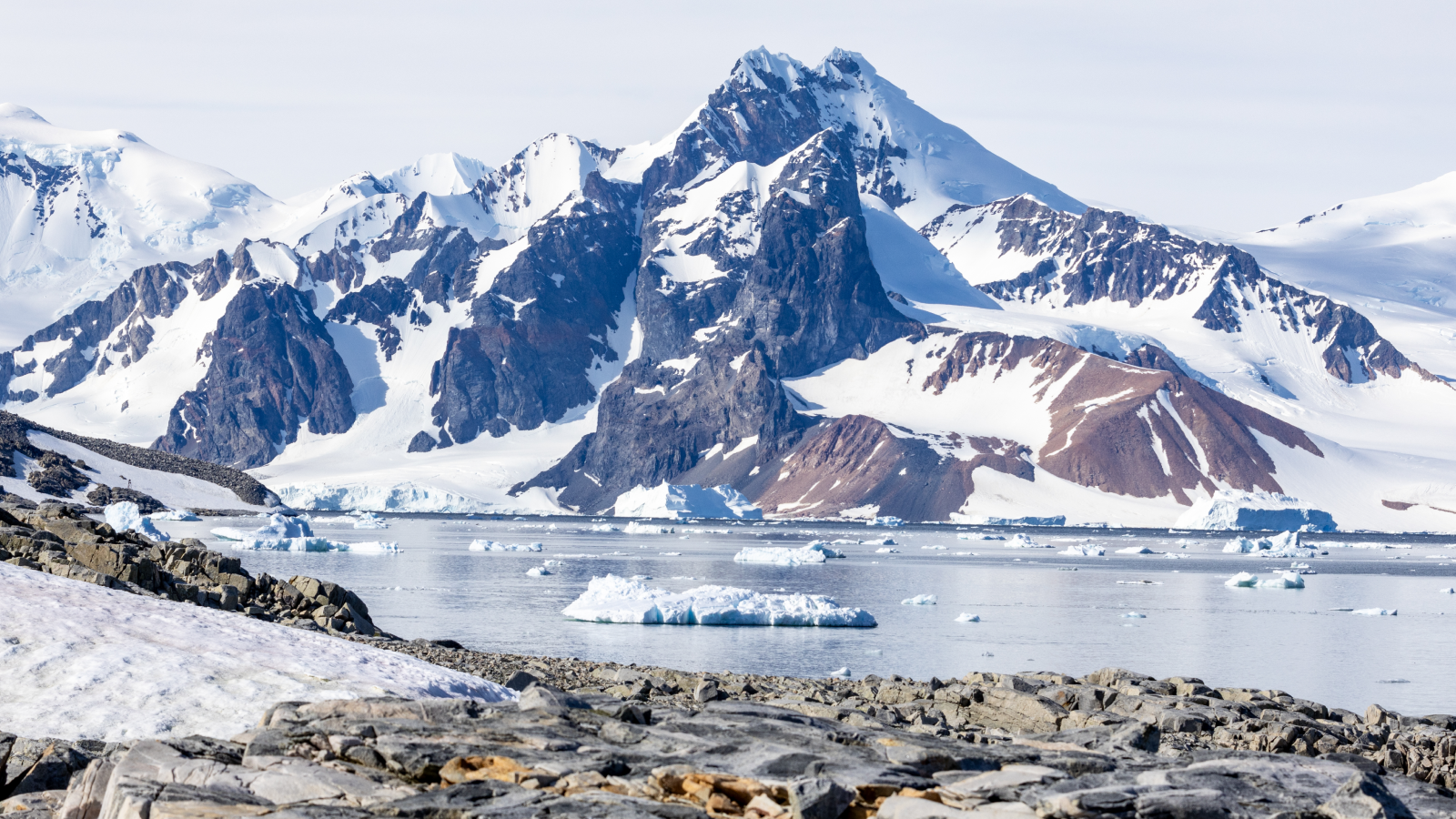
Researchers have identified a massive, fan-shaped geological province beneath East Antarctica, a finding that offers new insight into the continent’s tectonic history. This discovery, detailed in a recent analysis, reveals that the bedrock—long obscured by miles of ice—contains a coherent, radial pattern of basins that likely influenced the breakup of the ancient Gondwana supercontinent.
The East Antarctic Fan-Shaped Basin Province
Geophysicists have mapped an enormous collection of roughly 30 connected basins beneath the East Antarctic ice sheet, a structure now formally termed the East Antarctic Fan-Shaped Basin Province (EAFBP). According to reporting from ScienceAlert, the province widens toward the coast, suggesting a central inland pivot point that pulled the land apart.
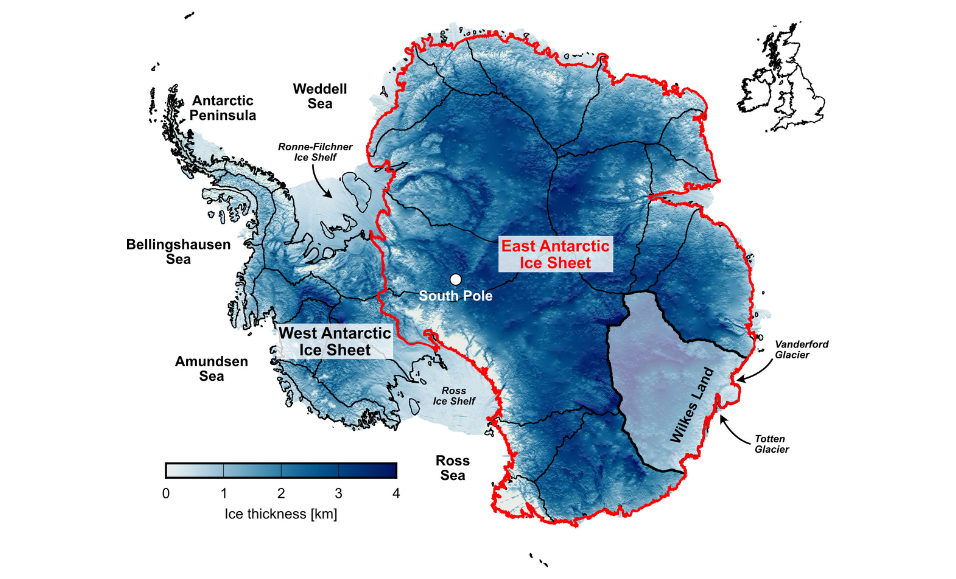
The geometry of this discovery mirrors a tectonic feature known as a sphenochasm. This term, first described in 1955, refers to a triangular gap of oceanic crust separating two cratonic blocks, with fault margins that converge at a single point. Researchers suggest that the EAFBP formed before the breakup of Gondwana, creating a zone of crustal weakness that subsequently helped steer the separation of Antarctica and Australia.
“Because these basins underlie about half of the East Antarctic Ice Sheet, they are likely to heavily influence both ice-flow and landscape evolution, making them essential to Antarctic glacial and hydrological processes,” researchers wrote in their paper.
The identification of the EAFBP relies on geophysical data that interprets the magnetic and gravitational signatures of the crust. Because the ice acts as an opaque shield, scientists rely on airborne geophysical surveys. These surveys involve aircraft equipped with gravimeters and magnetometers that detect subtle variations in the density and magnetic susceptibility of the underlying rock. The fan-shaped radial pattern is a diagnostic indicator of extensional tectonics, where the lithosphere stretches and thins, creating the deep basins now observed.
Mapping the Bedrock Beneath the Ice
Beyond the newly identified fan-shaped structure, a broader effort to map Antarctica’s subglacial topography has revealed a hidden world of mountains, river channels, and valleys. As Live Science reports, this mapping project utilized high-resolution satellite imagery combined with ice thickness measurements and physical analysis of how ice moves over uneven bedrock.

For more on this story, see Antarctica Unveils Hidden Fan-Shaped Structure 2 Miles Beneath Ice.
The map clarifies features located 1.2 to 18.6 miles beneath the ice sheet, including river channels that stretch for hundreds of miles—remnants of a landscape that predates the formation of the current ice sheet. These findings are significant because the topography of the bedrock directly shapes the glacial surface. By visualizing these hidden features, scientists can improve the accuracy of models predicting how ice sheets respond to climate change and subsequent sea-level rise.
The technical challenge of mapping these features is immense. The bedrock is not merely a static foundation; it is a dynamic interface. The subglacial environment is characterized by high-pressure conditions and, in some areas, liquid water at the base of the ice, which lubricates the flow of glaciers toward the ocean. Mapping these features requires integrating data from multiple sources, including the BedMachine Antarctica project, which uses mass conservation principles to estimate ice thickness in areas where direct radar measurements are sparse.
The Scale of the Antarctic Interior
Antarctica remains one of the least mapped planetary surfaces in our inner solar system. The continent contains approximately 27 million cubic kilometers of ice, a mass so significant that it physically depresses the Earth’s crust. Researchers estimate that if the ice were removed, the bedrock would bounce upward by as much as one kilometer. This phenomenon, known as isostatic rebound, is a testament to the colossal weight of the ice sheet.
Understanding this hidden geography is not merely an academic exercise. Because Antarctica makes up about 10 percent of Earth’s landmass, the continent holds vital clues to crustal evolution and ancient mountain building. However, direct observation remains difficult. While researchers have used radar, gravity, and seismic data to piece together these maps, the environment remains extreme. According to Reader’s Digest, the continent is defined by its isolation, with only 1,000 to 5,000 people living at research stations depending on the season, all of whom operate under the 1959 Antarctic Treaty, which mandates that the continent be used exclusively for peaceful, scientific purposes.
Implications for Future Glacial Research
The discovery of the EAFBP and the broader topographical mapping project provide a foundation for future climate research. The “coherent continent-scale radial pattern” identified by geophysicists suggests that geological history continues to dictate modern ice behavior. As the scientific community looks toward 2026 and beyond, these maps will serve as a primary tool for determining the speed and direction of glacial flow.
This follows our earlier report, Scientists Map Massive Hidden Basin Network Beneath Antarctica’s Ice.
The stakes of this research involve global sea-level projections. As the climate warms, the interaction between the ice and the underlying bedrock basins becomes a critical variable. Basins that slope toward the interior, known as retrograde slopes, are particularly susceptible to marine ice sheet instability, a process where warming ocean water enters the basin and triggers rapid, irreversible retreat. By identifying the specific geometry of the EAFBP, researchers can better pinpoint which sectors of the East Antarctic Ice Sheet are most vulnerable to these destabilizing forces.
Future studies will likely focus on how these deep-seated tectonic boundaries interact with current warming trends. By bridging the gap between ancient geological formation and modern hydrology, researchers hope to resolve long-standing uncertainties regarding how the East Antarctic Ice Sheet will evolve as the planet changes. The integration of tectonic history into glaciological modeling represents a shift in how scientists approach the Antarctic continent—moving from viewing it as a uniform mass to recognizing it as a complex, geologically diverse landscape that actively dictates the movement of the world’s largest ice reservoir.
Find more reporting in our Technology section.
